
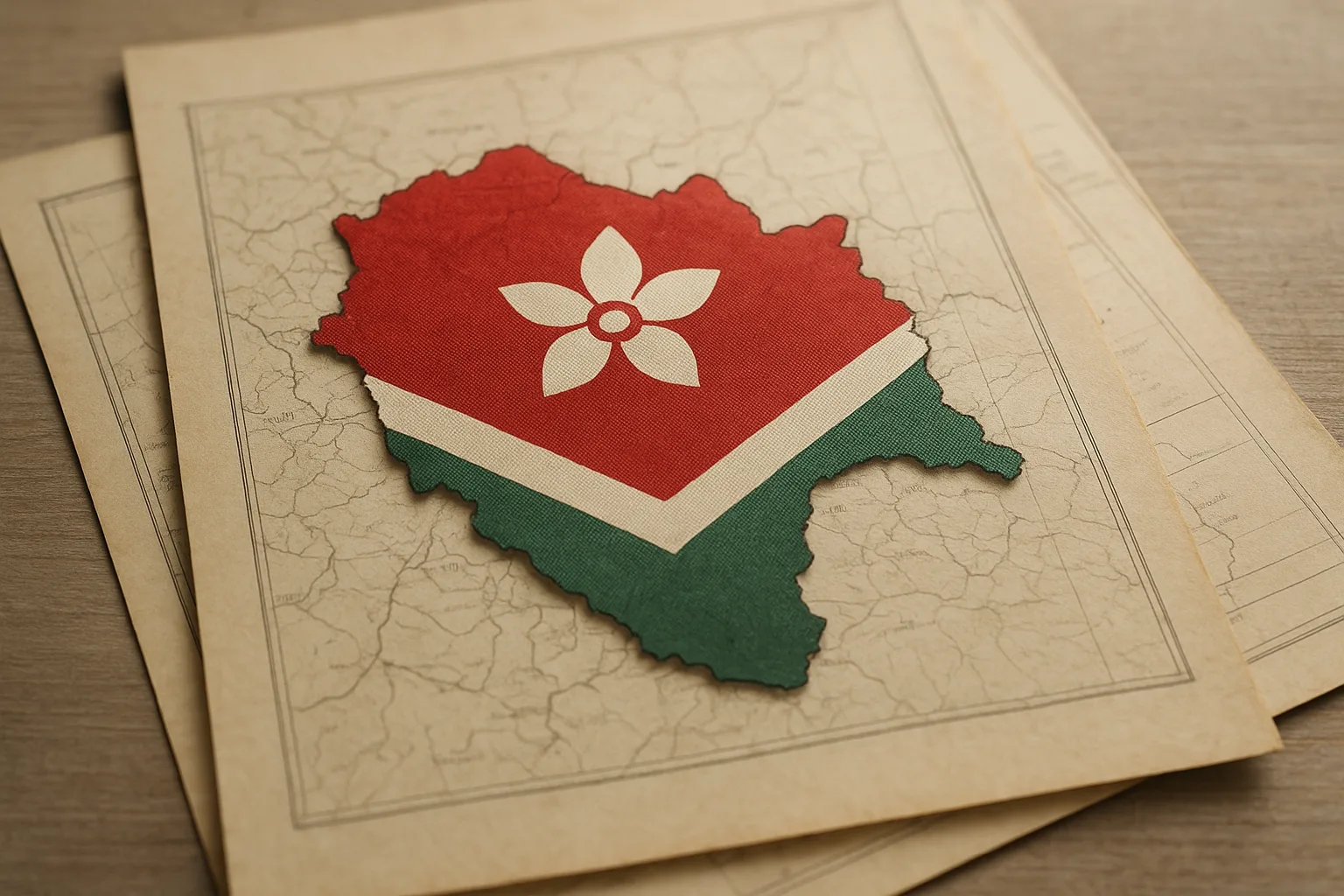
Series: History of Mandi, Himachal Pradesh, India
Phase 5: Post-Independence & Modern Mandi — Part 21 of 30
This article appears within a continuing historical series that follows the western Himalayas into the modern era. With the end of princely rule and the integration into independent India, long-standing social and political patterns were reconfigured. This phase examines how development, state formation, and memory interact with inherited landscapes, shaping contemporary life while carrying forward echoes of the past.
A Dawn on the Beas: Spring, 1948
The mist still clung to the banks of the Beas River as the first April sun touched the domes of Mandi’s palace. In the city’s heart, shopkeepers swept their thresholds and temple bells chimed. Yet, beneath this seemingly unchanging rhythm, an epochal transformation was underway. Mandi State—the ancient hill principality—stood on the brink of surrendering its sovereignty. Independence had swept through the Indian subcontinent, and now the time had come for Mandi to decide its future within the new nation.
From Hill Principality to Princely State
Mandi’s story stretches far back beyond this moment. The valleys and ridges of the region have long been home to Gaddi shepherds, Rajput clans, and artisans, their lives interwoven with the land’s rhythms and beliefs. Oral traditions recall ancient chiefs and the founding of settlements by mythic heroes—narratives preserved in folk tales, temple murals, and the annual festivals that still echo through the hills. Yet, as recorded in the Punjab Hill States Gazetteer and the chronicles kept by the rulers themselves, Mandi’s political identity solidified around the 16th century, when Ajbar Sen established the state, moving his capital from Bhiuli to the present site. The town’s very name, derived from ‘mandi’ or market, hints at its role as a crossroads for traders and pilgrims wandering between the plains and the high Himalayas.
Belief and Belonging
Mandi developed as a spiritual nucleus. Temples adorned every slope, and the annual Shivratri fair transformed the town into a confluence of faiths. Here, folk deities and mainstream Hindu pantheons met, reflecting the pluralism that marked society. Oral traditions sometimes blur into legend, with stories of sages, serpent spirits, and the blessings of gods called upon to legitimize the Sen dynasty’s rule. These tales, while not always verifiable, reveal how deeply spiritual identity and political authority intertwined.
The Tides of Colonial Power
The 19th century marked a new chapter. As the British Raj expanded, the princely states of the hills found themselves drawn into a shifting web of treaties and alliances. In the wake of the Anglo-Sikh wars, the Hill States Agency began to supervise Mandi and its neighbors, curbing their autonomy but preserving nominal rule under the Sen dynasty. The rulers sent annual tribute, but retained their courts, customs, and local authority—at least on the surface. A new class of administrators and intermediaries emerged, and the region’s economy became increasingly tied to the broader colonial system. The railhead at Pathankot brought textiles and salt, but also the first whispers of political change.
The Formation of Identity
Even under colonial oversight, the people of Mandi clung to their unique identity. The town’s bazaars remained vibrant, filled with the dialects of Kullvi, Pahari, and traders from as far as Ladakh and Punjab. Education slowly expanded, with elites sending sons to British-run schools, yet the rituals and rhythms of the valley endured. Political consciousness grew, shaped by both the rise of nationalist movements and the realities of life under a princely regime. The contradiction was not lost on the people: while the Maharaja presided with feudal authority, winds of modernity and reform began to rustle through the cedar forests.
Independence and the Question of Unity
August 1947 arrived with celebrations and anxiety. The British departed, but left the subcontinent cleaved by new borders and the daunting task of unifying hundreds of princely states. For Mandi, as for other hill states, the choice was clear but fraught with emotion. The last Raja, Joginder Sen, faced the reality that sovereignty as understood for centuries would end. Negotiations with Indian leaders were pragmatic—Mandi, along with Suket and other small states, signed the Instrument of Accession in 1948, agreeing to merge into the new political entity of Himachal Pradesh.
The Ceremony and the Cost
The formal ceremony in 1948 was understated but momentous. Flags were lowered, and the green-gold banner of the new Himachal Pradesh was raised. For many, the transition brought hope—access to new opportunities, the end of arbitrary rule, and a place in a democratic republic. Yet the loss of autonomy was real. Old courtiers shuffled out of the palace. Some families mourned the fading of royal patronage, while others, especially the youth, looked eagerly to the future. The integration was not only political, but deeply cultural: local customs, laws, and even the use of language in administration began to change.
Social Transformation and New Horizons
The years that followed were marked by rapid change. Land reforms, educational expansion, and the spread of infrastructure reshaped daily life. The old feudal order, once anchored in the authority of the Raja, gave way to new institutions—schools, courts, and municipalities now operated within the framework of Himachal Pradesh. Yet, the spirit of Mandi proved resilient. Festivals still drew crowds to the town’s ancient temples, and the sense of local identity remained fierce.
Continuity Amid Change
Despite the upheaval, echoes of Mandi’s princely past lingered. The palace, now a heritage site, continued to watch over the town, its courtyards alive with stories of old. The royal family adapted; some entered public life, others quietly receded. New leaders emerged from every community, shaping Mandi’s future within the state and beyond. The Beas River still wound its way through the valley, as steady and enduring as the region’s spirit.
Legacy of Integration
More than seventy years have passed since that decisive spring of 1948. The integration of Mandi into Himachal Pradesh stands as a testament to the region’s adaptability and resolve. While the trappings of royal rule have faded, the deep sense of place and community survives. The memory of autonomy, the blending of ancient customs with modern governance, and the resilience in the face of change—all continue to shape Mandi’s identity in the twenty-first century. As the series moves forward, we will see how these legacies inform Mandi’s evolving political, social, and economic life in the decades after integration, shaping the town and its people in ways both visible and subtle.
Previous: Daily Life in Mandi During British Times
Next: Mandi After Independence: Political and Social Change