
Series: History of Hamirpur, Himachal Pradesh, India
Phase 4: British Period — Part 20 of 30
This article is part of a wider series tracing the transformation of the western Himalayas under colonial influence. As British authority extended into the hills, existing political systems were restructured through treaties, administration, and new forms of governance. This phase considers how colonial rule reshaped society, economy, and space while leaving lasting imprints on local identity.
Twilight on the Hills: Hamirpur at the Dawn of Dissent
Evening falls gently on the undulating ridges of Hamirpur, the air tinged with the scent of pine and the distant murmur of the Beas River. It’s the late 19th century, and while the railway has yet to breach these hills, the tremors of change are palpable. In the small villages—Nadaun, Sujanpur, and Hamirpur town—elders gather beneath mud-walled verandahs, debating the latest decrees from the British Raj. There’s unease, and a quiet resolve is brewing beneath the surface.
Hamirpur’s story in the freedom movement is rarely told in grand gestures or sweeping battles. Instead, it is a tale of persistent resistance, shaped by geography, custom, and a deep sense of belonging. As we trace its journey, the distinction between myth and history becomes crucial, for this region’s memory is layered with both legend and lived experience.
Under the Raj: Hamirpur’s Place in Colonial Himachal
Historically, Hamirpur formed part of the ancient principality of Kangra, its fate entwined with the larger hill states that dotted the lower Himalayas. When the British East India Company consolidated control after the First Anglo-Sikh War (1846), Hamirpur’s administrative identity began to crystallize. It was carved out as a tehsil within the greater Kangra district, governed from afar by colonial officials whose understanding of hill society was superficial at best.
The British period redefined traditional authority. The Raj encouraged the consolidation of landholdings and more direct revenue collection. While the region remained mostly rural, with agriculture and forest produce dominating daily life, the growing web of colonial administration reached even the smallest hamlets. The Gazetteer of the Kangra District (1883-84) notes Hamirpur’s dense network of panchayats and hereditary headmen—a system that would soon become both an instrument of control and a seedbed for resistance.
Whispers of Discontent: Early Protests and Peasant Unrest
The late 19th and early 20th centuries saw the first organized murmurs of dissent. Oral traditions in villages like Bhota and Barsar recall stories—sometimes veiled as legend—of excessive taxation and forced labor (begar) imposed by colonial authorities. While the archives record only sporadic outbursts, local memory preserves tales of ordinary villagers refusing to carry supplies for British troops or to pay sudden levies during famines.
These protests were rarely spectacular, but they were persistent. Hill peasants, often supported by their panchayats, would petition district officers, sometimes walking for days across mountainous terrain to have their grievances heard. The British, wary of open rebellion in the sensitive borderlands, occasionally relented—an early sign that even quiet resistance could yield concessions.
The Tides of Nationalism: Hamirpur Awakens
By the 1920s, the larger Indian freedom movement began to ripple into the hills. News of the Non-Cooperation Movement, led by Gandhi, traveled slowly but surely along trade routes from Punjab and the plains. Schoolteachers, returning students, and itinerant traders brought tales of peaceful protest and civil disobedience.
In urban centers like Hamirpur town and Sujanpur Tira, small groups of youth—often from educated, landowning families—formed reading circles and discussion groups. Their activities, documented in colonial intelligence reports, involved distributing banned literature and organizing public meetings under the guise of religious or social gatherings.
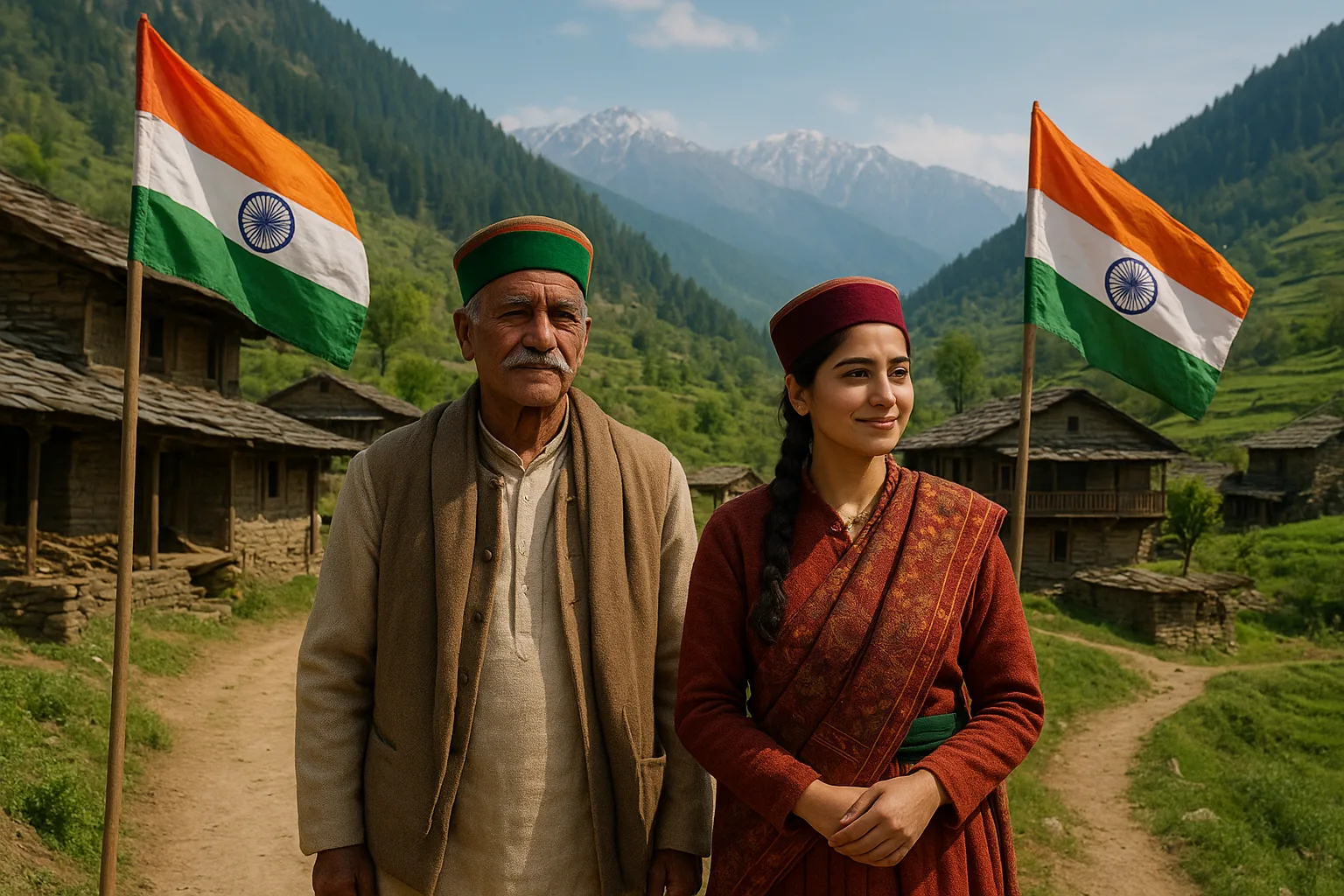
The 1930s saw the formation of the Praja Mandal in nearby princely states, with sympathetic ears in Hamirpur. Local tradition recalls the first public hoisting of the tricolor in Nadaun, an act that electrified the community and drew the watchful eye of the local police.
Revolt and Repression: The Quit India Years
The outbreak of the Quit India Movement in 1942 marked a turning point. Hamirpur, by now linked more closely to the political currents of Punjab and Kangra, became a covert hub for underground activity. Young men and women joined the nationwide call for “Do or Die,” helping to spread anti-British leaflets, disrupt communications, and shelter fugitives from the plains.
British authorities responded with a familiar mix of surveillance and repression. The district gazetteer notes a spike in arrests, interrogations, and the imposition of collective fines on entire villages suspected of harboring agitators. Oral histories from families in villages like Tauni Devi and Bhoranj remember the midnight knocks, the confiscation of property, and the silent courage of those who refused to betray their neighbors.
- Notable individuals—such as Ganga Ram, a schoolteacher in Hamirpur, and Lala Ram Chand, a merchant in Sujanpur—emerged as local heroes. Their names live on in community memory, even if official records are sparse.
Unlike the mass uprisings of the plains, Hamirpur’s resistance was quieter but no less determined. The legacy of these years is still visible in elders’ stories, in memorials, and in the pride of those who remember the sacrifices made for a free India.
Intersecting Traditions: Faith, Identity, and the Freedom Struggle
The freedom movement in Hamirpur was shaped not only by politics, but by the region’s unique social fabric. Predominantly inhabited by Rajputs, Brahmins, and a vibrant community of artisans and cultivators, Hamirpur’s society drew on both orthodox traditions and reformist impulses.
Temples and village shrines often became meeting points—safe places for sharing news, planning protests, or simply sustaining hope. The region’s deep-rooted belief in justice and collective action, nurtured by centuries of panchayat deliberations, gave the movement a distinctly local flavor. Oral traditions, while sometimes embellished, capture the sense of unity and purpose that animated even the most remote hamlets.
Folklore, especially the ballads sung during harvest, often wove together mythic tales of resistance—both ancient and modern—blurring the boundary between the legendary defenders of Kangra and the real men and women who risked their lives for India’s independence. This fusion of myth and memory provided comfort and inspiration, even as the struggle exacted a heavy toll.
The Eve of Independence: Hamirpur’s Quiet Triumph
On August 15, 1947, as the tricolor was hoisted across India, Hamirpur’s villages celebrated in their own way. There were no grand parades or flag-hoisting ceremonies by politicians; instead, families gathered in their courtyards, lighting lamps and sharing stories of those who had given their all. The first rays of freedom brought both relief and uncertainty, as the region prepared to carve out its place in the new Indian state.
In the months that followed, Hamirpur’s leaders helped ease the transition from colonial rule, advocating for equitable land distribution and continued investment in education. The spirit of self-governance, forged in the fire of resistance, would shape local politics and identity for decades to come.
Legacy and Living Memory
Today, the legacy of Hamirpur’s role in the freedom movement is felt not only in its memorials and annual celebrations, but in the values that guide daily life. The region’s commitment to justice, education, and self-reliance has deep roots in its struggle against colonial rule. Oral histories, passed down in homes and schools, keep alive the memory of those who stood up to power, often at great personal risk.
As we move forward in this series, the next chapter will explore how the end of British rule set the stage for Hamirpur’s emergence as a distinct district and its journey into the modern era. The echoes of past courage continue to shape its path, reminding us that the story of freedom is never truly finished.
Previous: Life of Ordinary People in Colonial Hamirpur
Next: Hamirpur After Independence: Administrative Changes