
Series: History of Hamirpur, Himachal Pradesh, India
Phase 4: British Period — Part 19 of 30
This article is part of a wider series tracing the transformation of the western Himalayas under colonial influence. As British authority extended into the hills, existing political systems were restructured through treaties, administration, and new forms of governance. This phase considers how colonial rule reshaped society, economy, and space while leaving lasting imprints on local identity.
The Dawn Over Hamirpur: A Day Begins
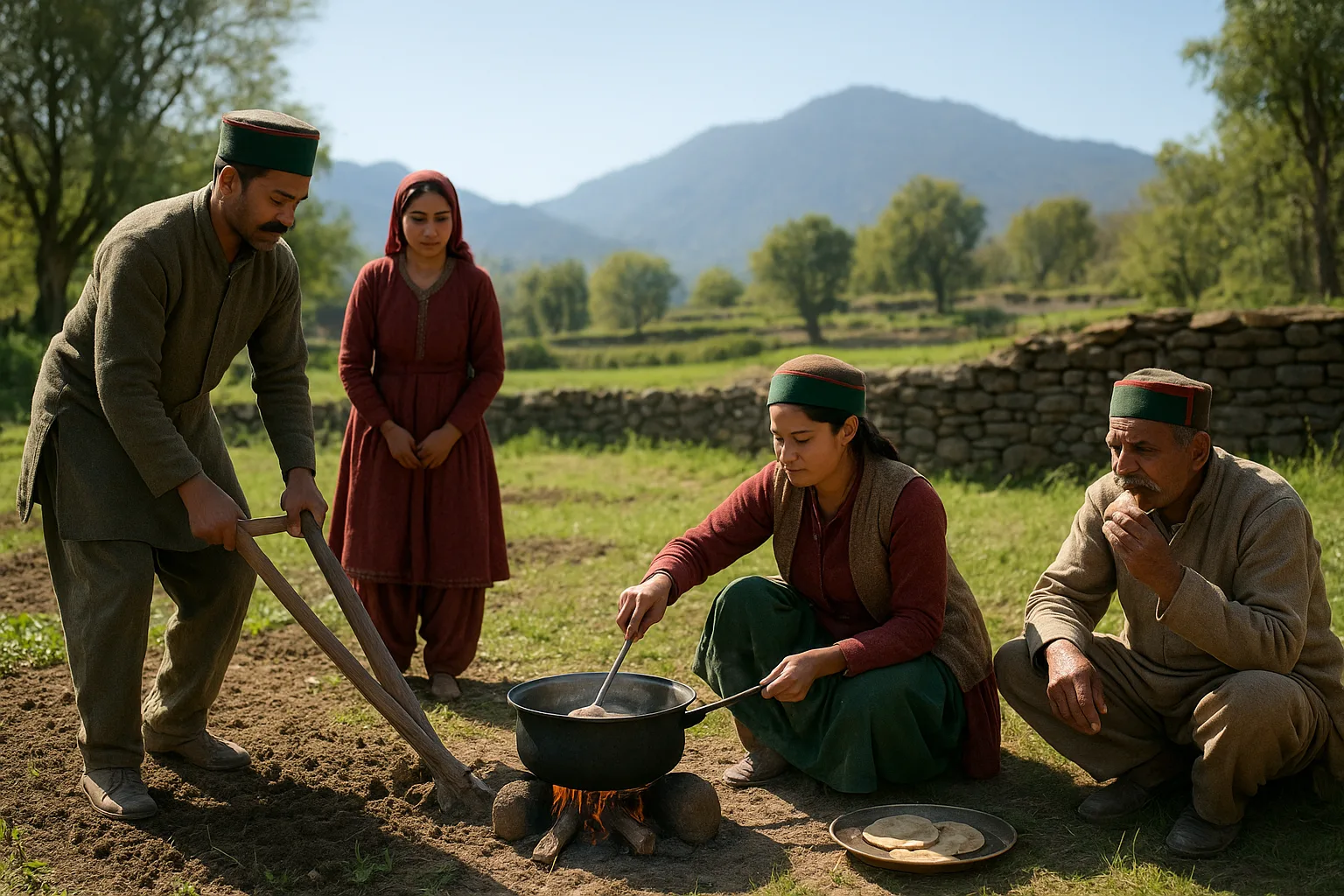
It is 1890. The pale gold of early morning spills over the undulating hills of Hamirpur—a landscape framed by forests, scattered villages, and whispers of rivers below. The sound of a wooden plough scraping earth, the scent of cow dung fires, and the distant clang of temple bells mark the start of another day. For the ordinary men and women of Hamirpur, life’s rhythm is set not by the ticking of clocks, but by the seasons, the land, and the customs passed quietly from parent to child.
Hamirpur in the Colonial Web
By the late 19th century, Hamirpur had become part of the princely state of Kangra, itself under the suzerainty of the British Raj. While distant Calcutta and Simla plotted the subcontinent’s fate, Hamirpur’s hills remained a world apart—yet never untouched. Early British gazetteers describe the region as a tapestry of minor estates, villages, and hamlets, each with its own headman, traditions, and tensions. The British imposed new forms of taxation and administration, but daily life in Hamirpur remained stubbornly local, rooted in the land’s memory.
Communities and Kinship: The Web of Village Life
Hamirpur’s people traced their ancestry to Rajput, Brahmin, and artisan lineages, each with particular roles and ritual status. Families lived in mud-and-stone houses, organized around courtyards and shared wells. The extended family—the joint parivar—was both safety net and source of friction, bound by custom and necessity. Oral traditions, still recited in village gatherings, tell of migrations from the plains during earlier centuries, of legendary protectors, and of fierce loyalty to clan and land. While such tales blend myth and memory, the broad outlines find some echo in regional chronicles and the recollections of elders recorded by colonial officers.
Work, Worship, and the Wheel of the Year
For most, toil meant the fields. Wheat, barley, and maize grew on terraced hillsides, irrigated by painstakingly maintained kuhls—traditional water channels. Men and women labored side by side: men ploughed and harvested; women sowed, weeded, and carried water. The agricultural calendar was marked by festivals—Makar Sankranti, Holi, Diwali—each blending Hindu ritual with local mountain customs. Shrines to village deities stood beside the fields, their origins lost in antiquity. Oral tradition credited these deities with protecting crops, livestock, and people from the caprice of weather and fate.
Trade routes that once skirted Hamirpur’s border had faded, but small markets—weekly haats—remained hubs of news, barter, and social exchange. Salt, cloth, and iron goods arrived from the plains, exchanged for grain, ghee, and livestock. The British presence, mostly indirect, brought new coins and the occasional traveling official, but the pulse of commerce still ran along old, familiar paths.
Customs, Conflicts, and Colonial Change
Village panchayats, or councils, settled disputes over land, water, and marriage. Caste hierarchies persisted, but the relative isolation of the hills granted some fluidity—local custom often trumped rigid rule. Early colonial surveys noted the persistence of customary law, and the reluctance of villagers to bring matters before distant British courts unless compelled.
Education, where it existed, was basic and usually limited to boys. A few mission schools appeared in the late 19th century, but most knowledge was transmitted orally—stories, proverbs, and practical skills. The arrival of new taxes, occasional recruitment for distant wars, and the slow encroachment of colonial law unsettled some rhythms, but Hamirpur’s people adapted with resilience. Oral histories recall both resentment and adaptation: the memory of a particularly harsh tax collector, the pride of a young man who returned from army service with tales of distant lands.
Faith, Fear, and the Hill States’ Shadows
Hamirpur’s spiritual landscape was as layered as its hills. Hinduism shaped daily rituals—puja at dawn, the honoring of ancestors—but local deities and animist practices persisted, their shrines tucked beneath ancient trees or beside rivers. Hill state rulers, the descendants of warrior clans, claimed divine sanction, but their direct involvement in village life was sporadic. British officers occasionally recorded tensions between rival chieftains or between state authority and village autonomy, but for most villagers, the distant politics of rulers mattered less than the health of crops, the outcome of a village fair, or the favor of a local goddess.
Droughts, floods, or epidemics—recorded in the region’s gazetteers—could test the community’s endurance, drawing on networks of kinship and charity. Oral tradition remembers these times with a mix of stoicism and reverence: stories of holy men who interceded for rain, of neighbors who opened stores to the hungry, of rituals performed to ward off disease.
From Past to Present: The Roots That Endure
By the dawn of the twentieth century, the pattern of life in colonial Hamirpur was both ancient and quietly changing. The British Raj brought new pressures and opportunities, but the hills insulated and preserved old ways. The ordinary people—farmers, artisans, priests, and traders—carried on, their lives woven into the fabric of the land and the slow-turning wheel of the seasons. The stories told in twilight courtyards, the reverence for local gods, and the rhythms of work and worship formed a quiet resistance to the tides of empire.
Today, much of Hamirpur’s spirit endures. Modernity has brought roads, schools, and new aspirations, but the deep-rooted customs of kinship, community, and reverence for land remain visible in daily life. In the next part of our series, we will journey deeper into the pivotal moments of resistance and adaptation during the late British period, exploring how ordinary villagers navigated the shifting sands of colonial rule.
Previous: Education and Social Reforms Under British Rule
Next: Hamirpur’s Role in India’s Freedom Movement