
Series: Finance for Kids
Phase 13: Resources, Environment & Society — Part 148 of 166
Helping Kids Understand Reusing and Recycling Saves Money
Teaching children about money can be a fun and rewarding experience. One great way to do this is by helping them understand the importance of reusing and recycling. Not only does this practice help our planet, but it can also save money in the long run. Here are some simple ways to teach kids about reusing and recycling while saving money!
Why Reusing and Recycling Matter
Before diving into tips, it’s essential to explain why reusing and recycling are important. When we recycle, we turn old items into new ones instead of throwing them away. This process reduces waste and the need for new materials, which can be costly. Reusing items means you get more life out of them, saving money and resources.
Simple Ways to Teach Kids About Reusing and Recycling
Here are some practical tips that can help children understand these concepts:
- Start at Home: Encourage kids to find items around the house they can reuse. For example, old jars can become storage containers, and cardboard boxes can be turned into toys or art projects.
- Craft Projects: Organise craft sessions using recycled materials. Use things like newspapers, plastic bottles, and egg cartons. This not only teaches creativity but also shows how much can be made from what we often throw away.
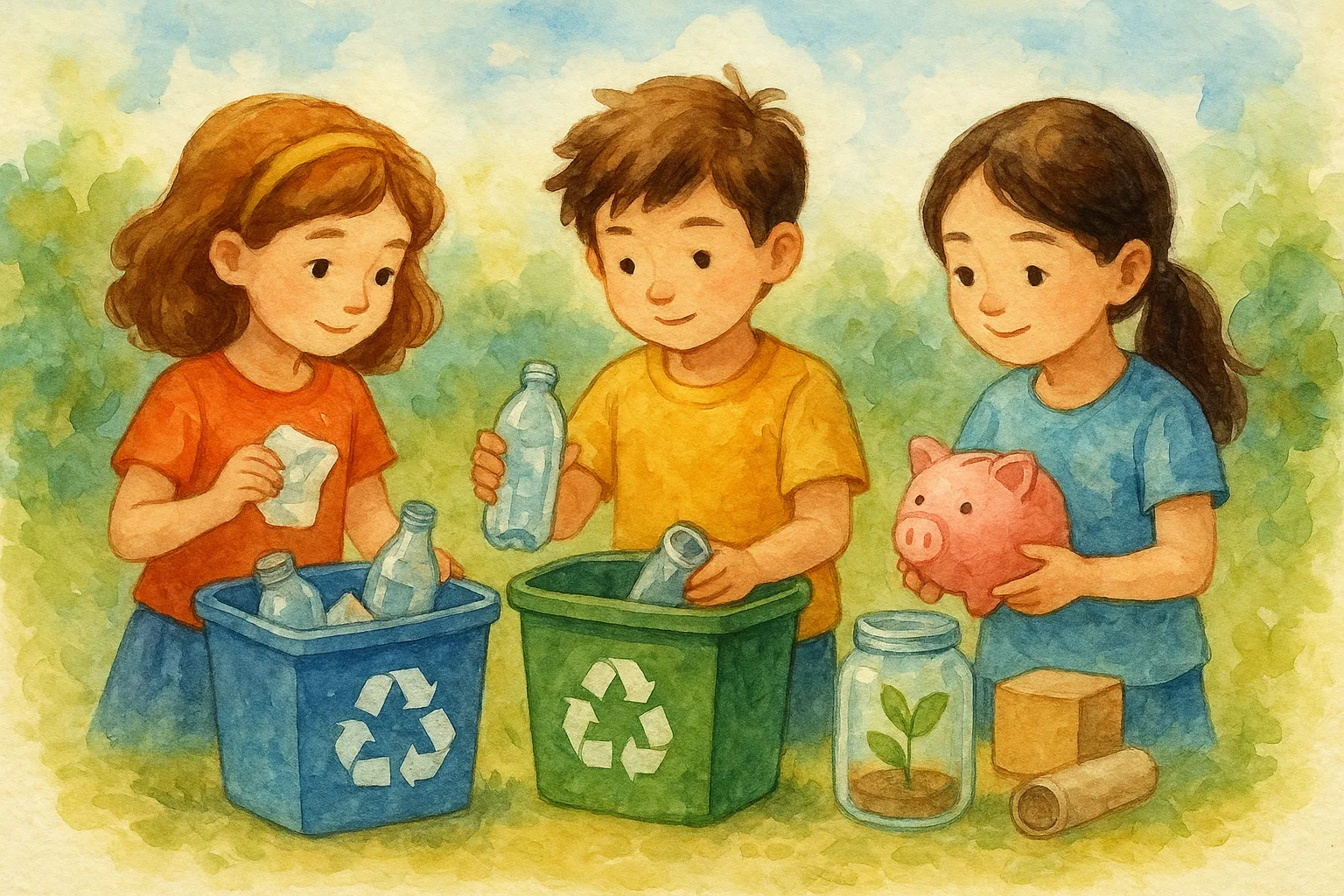
- Set Up a Recycling Station: Create a designated area for recyclable materials at home. Let kids help sort items like paper, plastic, and glass. This hands-on activity will make them feel involved and teach them the importance of recycling.
- Visit a Recycling Centre: If possible, take kids to a local recycling centre. Seeing how recycling works in action can make a lasting impression and spark their interest.
- Lead by Example: Show your commitment to reusing and recycling. Share your experiences, like bringing your own shopping bags or using refillable water bottles. Children learn a lot by observing adults.
Linking Reusing and Recycling to Saving Money
Help children understand how reusing and recycling can save money:
- Save on Purchases: When kids reuse items, they don’t need to buy new ones. For instance, using a reusable lunchbox instead of disposable bags saves money over time.
- Sell or Swap: Encourage kids to sell or swap items they no longer need. This can include clothes, toys, or books. They earn money or get something new without spending!
- Homemade Gifts: Teach kids to make gifts using recycled materials. Not only do they save money, but they also create something unique for their friends and family.
Addressing Common Myths
There are some myths about reusing and recycling that can confuse children. Here are a few to clarify:
- Myth 1: Recycling is Too Complicated: Many think recycling is too difficult. In reality, it just takes a little effort to sort items correctly. Once kids understand the basics, it becomes second nature.
- Myth 2: Reusing is Only for Poor People: Some believe that only those with little money reuse items. In truth, many people who care about the environment and saving money choose to reuse, regardless of their financial situation.
- Myth 3: Recycling Doesn’t Really Matter: Every small effort counts! Even if it seems small, recycling helps reduce waste and conserve resources. Teach kids that their actions contribute to a larger cause.
Fun Activities to Reinforce Learning
Incorporating fun activities can help reinforce these lessons:
- Recycling Bingo: Create bingo cards with different recyclable items. As children spot these items, they can mark them off. This game reinforces recognition of what can be recycled.
- Upcycling Challenge: Organise a friendly competition to see who can come up with the best idea to upcycle an item. This activity fuels creativity and encourages thinking outside the box.
Conclusion
By teaching kids the value of reusing and recycling, we can help them develop a responsible attitude toward money and the environment. These lessons not only save money but also instill a sense of care for our planet. With simple activities and open discussions, children will learn that every small effort counts.
This article provides general educational information only and is not financial advice. Always seek guidance from a qualified professional for personal financial decisions.
Previous: Why Buying Less Can Help the Planet
Next: Teaching Kids to Repair Instead of Replace Items