
Series: History of Una, Himachal Pradesh, India
Phase 4: British Period — Part 18 of 30
This article is part of a wider series tracing the transformation of the western Himalayas under colonial influence. As British authority extended into the hills, existing political systems were restructured through treaties, administration, and new forms of governance. This phase considers how colonial rule reshaped society, economy, and space while leaving lasting imprints on local identity.
Whistle of Change: The Arrival of Modern Transport
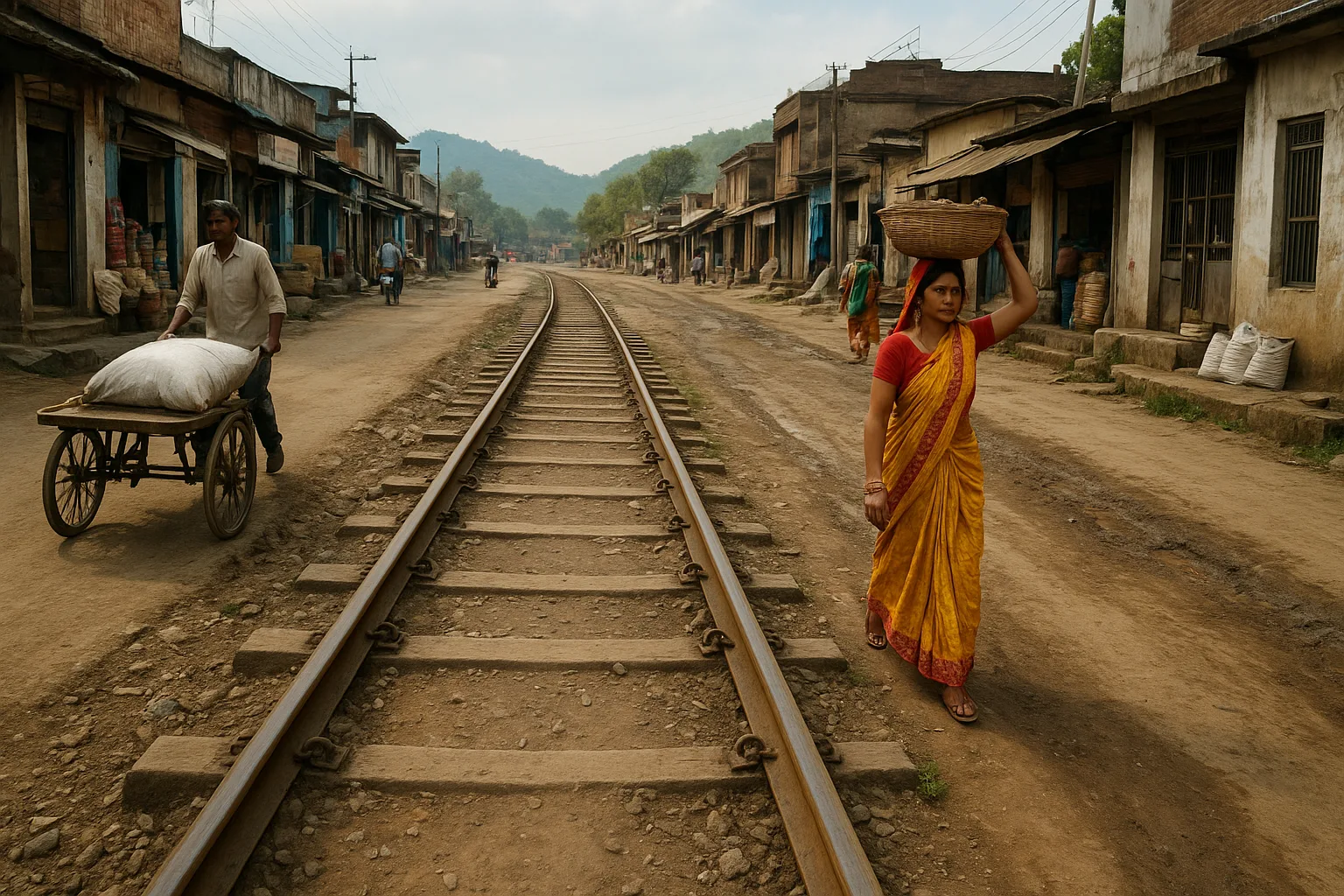
It was a late summer morning in the 1920s when a new sound echoed through Una’s fields—a shrill, unfamiliar whistle, followed by the rhythmic clatter of wheels on steel. Villagers paused, oxen carts drawn to a halt, as the train from Amb approached the budding station. For centuries, Una’s trade and movement had depended on rugged trails and winding rivers. Suddenly, steel and tar promised to redraw the region’s destiny.
Before the Tracks: Una’s Traditional Economy
Long before the British surveyed the Shivalik foothills, Una’s economy rested on age-old patterns. The fertile plains between the Sutlej and Swan rivers nourished rice, wheat, and sugarcane. Merchants from Kangra or Hoshiarpur arrived on foot or by bullock cart, their journeys hampered by monsoon floods or crumbling mountain paths. Markets thrived, but always at the mercy of geography.
In these decades, access meant everything. The Mughal and Sikh rulers had maintained rough roads for armies and taxes, but little changed for the peasant or trader. Una’s villages remained largely self-sufficient, with only rare goods—like salt or textiles—trickling in from afar. The promise of connection, and the threat of isolation, shaped every harvest and festival.
Imperial Ambitions: The British Survey the Hills
The East India Company eyed Himachal’s borderlands with growing interest after the Anglo-Sikh wars. Una, perched at the gateway between Punjab’s plains and the Himalayan valleys, became a strategic outpost. British engineers, notebooks in hand, traced the region’s contours, dreaming of roads and rails to secure their rule and extract its bounty.
By the late 19th century, the British Raj had begun its grand project of integration—linking the farthest corners of its dominion. Military roads were carved to move troops quickly. More crucially for Una, plans emerged to extend the Punjab railway network northward, making even remote markets accessible to colonial commerce.
Tracks Laid, Barriers Broken: The Railway Reaches Una
In 1929, the slow progress of the Amb-Una railway line culminated in a moment that villagers would recount for generations. The opening of the rail station, marked by a brass band and the presence of the local Deputy Commissioner, symbolized more than a feat of engineering. It marked Una’s entry into a new economic orbit.
Suddenly, produce from Una’s fields could reach the bustling markets of Lahore, Delhi, or Amritsar in days, not weeks. Timber, salt, and manufactured goods flowed in return, altering consumption patterns. The railway also brought people: traders, government officials, and laborers, some settling permanently, others passing through. An era of migration—both seasonal and permanent—began to reshape Una’s demography.
Roads to Opportunity: The Rise of Motor Transport
Parallel to the railway’s advance, British authorities invested in metalled roads. The strategic Grand Trunk Road, running close to Una, became a lifeline for lorries and trucks by the 1930s. New feeder roads connected villages like Bangana, Mehatpur, and Gagret. Horse-drawn mail coaches gave way to rickety buses, and trade fairs—once occasional events—grew into bustling weekly bazaars.
The road network had subtler effects as well. Forest produce, previously consumed locally, now found buyers in distant cities. Artisan communities—potters, weavers, blacksmiths—adapted their crafts to suit urban tastes. For the first time, Una’s youth began to seek seasonal work in Punjab’s factories, sending remittances that transformed village life. Stories of fortunes made and lost on the roads became part of local lore.
Economic Transformation: Winners, Losers, and New Possibilities
The arrival of railways and roads was not without its hardships. While many farmers prospered by selling surplus crops, others struggled as cheap imports undercut traditional crafts. The influx of outsiders brought competition, but also fresh ideas and alliances. Local leaders, such as the influential Chaudhary Bishan Singh, advocated for better freight rates and lobbied for branch lines to serve neglected hamlets.
Women, too, saw their roles evolving. Easier transport meant new access to schools, medical care, and markets. Yet, the pull of the city—and the promise of wage labor—sometimes fractured extended families. Old rhythms gave way to the steady pulse of the train and the unpredictable roar of motor traffic.
Government records from the 1940s describe a region in flux: population growth, rising literacy, and a sharp uptick in cash crops. The British Raj, ever eager for revenue, taxed these gains, but also invested in irrigation and market yards. By the eve of Independence, Una’s economy was unmistakably transformed: more outward-looking, more connected, and more dependent on the tides of national and global trade.
From Colonial Legacy to Modern Networks
After 1947, the legacy of British infrastructure would prove invaluable. Partition severed many of Una’s old commercial ties, but the railway and road links to the new Indian heartland ensured that the region did not wither. Cooperative societies formed to market dairy, grains, and fruit—many of them tracing their origins to the railway sidings where goods had first been loaded decades earlier.
As Himachal Pradesh became a full-fledged state in 1971, Una’s status as a transport hub only grew. New highways, such as the Una-Hoshiarpur and Una-Amb roads, brought investment and industry. The construction of the Bhakra Dam, just across the border, generated jobs and spurred migration. Schools, health clinics, and banks followed the paths first mapped by colonial engineers, their presence testament to the enduring impact of those early rails and roads.
Echoes on Today’s Highways
The story of railways and roads in Una is written not just in history books but in daily life. Every bus that departs the modern ISBT, every train that halts at Una Junction, is a reminder of the choices and chance moments that shaped the region. Today, Una’s markets bustle with goods from every corner of India. Young people dream of careers in Chandigarh or Delhi, yet return for festivals and family gatherings, bound by the very roads and rails their ancestors watched being built.
The impact of these networks remains profound. In connecting Una to the wider world, railways and roads made possible the region’s transformation from a remote outpost to a thriving node of commerce and culture. The sense of possibility, so palpable on that first day the train arrived, continues to animate Una’s journey—linking past, present, and future along the ever-expanding web of its transport routes.
Previous: Colonial Administration and Revenue Systems in Una
Next: Education, Reform, and Social Change Under British Rule