
Series: History of Kangra, Himachal Pradesh, India
Phase 4: British Period — Part 18 of 30
This article is part of a wider series tracing the transformation of the western Himalayas under colonial influence. As British authority extended into the hills, existing political systems were restructured through treaties, administration, and new forms of governance. This phase considers how colonial rule reshaped society, economy, and space while leaving lasting imprints on local identity.
April 4, 1905: The Valley Shudders Awake
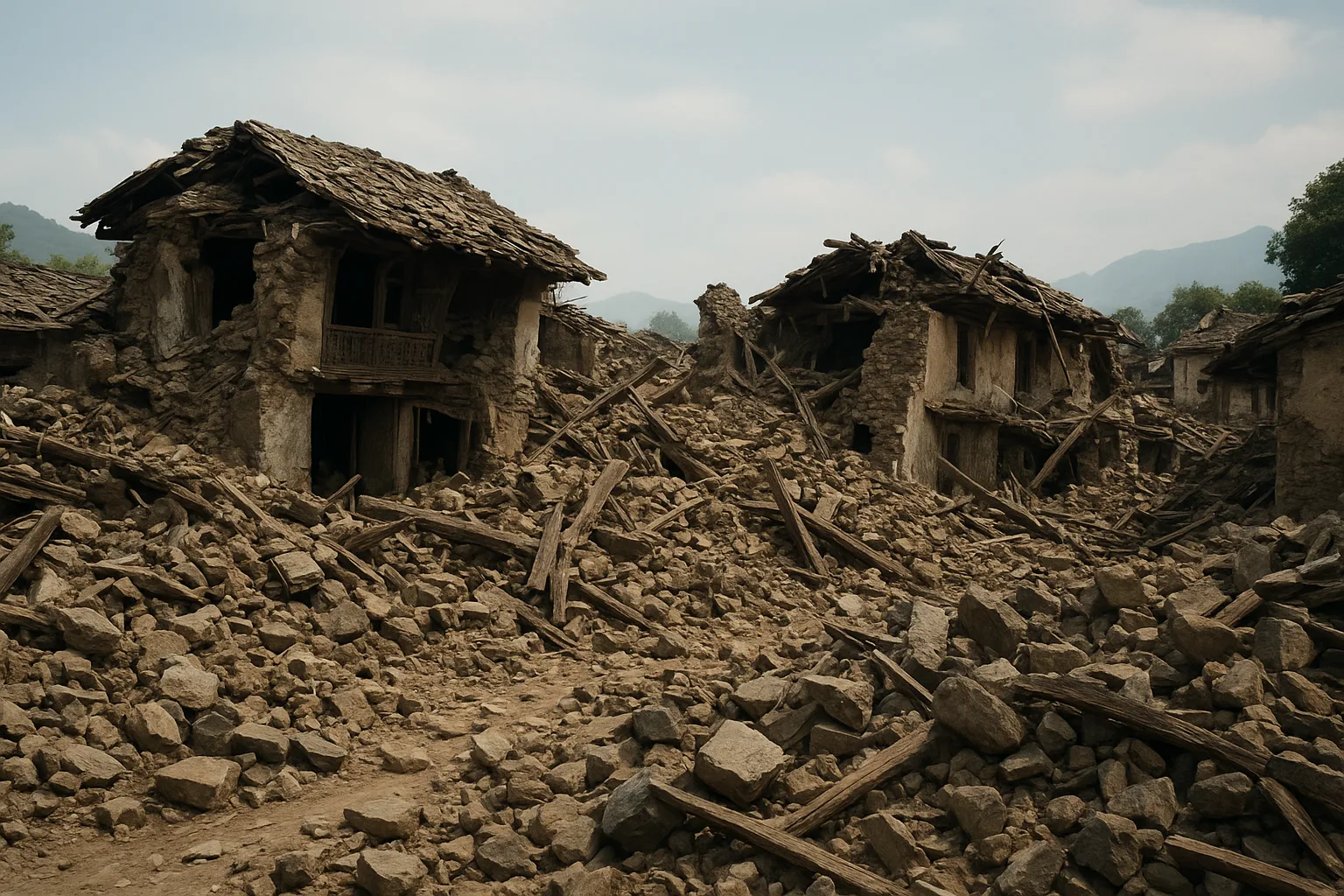
In the earliest hours of a spring morning, the Kangra valley slumbered beneath the towering shadows of the Dhauladhar range. The air was chill, carrying the scent of deodar and pine. Villagers in Dharamshala, Palampur, and Kangra town woke to distant rumblings. It was just after 6:00 a.m. when the earth began to convulse with a violence no living memory recalled. Homes of mud and stone split apart. Temples collapsed. In just a few minutes, centuries of history were shaken to their foundations.
Kangra Before the Quake: A Region Rooted in History
For centuries, Kangra had been a crossroads of culture and power. The town’s ancient fort—the very heart of the valley—had stood through countless invasions and dynastic struggles. Since the annexation by the British in 1846, the region had become part of the Punjab Province, administered from Lahore and then Simla. Tea plantations flourished on the slopes, and narrow-gauge railways had recently reached the valley, threading market towns together in a web of colonial commerce.
The people of Kangra—Brahmins, Rajputs, Gaddis, and artisans—maintained traditions and beliefs rooted in the land. Religious life centered around the temples of Jawalamukhi, Baijnath, and especially the revered Devi in Kangra town. Myths told of the goddess Sati, whose body was said to have fallen here, sanctifying the valley. But the fabric of daily life was woven from hard work, ritual, and the rhythms of the seasons.
The Quake Strikes: Destruction Unleashed
At 6:19 a.m. on April 4, 1905, an earthquake of magnitude 7.8 struck with its epicenter near Kangra. The violence of the shock was unprecedented in living memory. In seconds, entire neighborhoods were flattened. The famed temples of Kangra and Baijnath crumbled. The bustling bazaar of Kangra town became a field of rubble; Dharamshala’s colonial bungalows and barracks fared no better. Eyewitnesses described fissures opening in the ground and the air filling with dust and cries. Some survivors, drawing on oral tradition, saw the disaster as divine retribution or the wrath of the land itself—a motif echoed in Kangra’s folk songs and later recollections.
Official records and British gazetteers soon chronicled the devastation with clinical precision: over 19,000 lives lost across the district, tens of thousands injured, and more than 100,000 buildings destroyed. The railway lines twisted, bridges collapsed, and the tea estates that symbolized colonial prosperity were left scarred and broken.
From Survival to Rescue: The Aftermath Unfolds
The hours following the quake were marked by chaos and heroism. Survivors clawed through debris to find relatives and neighbors. Makeshift camps sprang up in open fields. The British authorities, stunned by the scale of the disaster, scrambled to organize relief. Colonial officials, military units, and missionaries joined local volunteers to provide food, water, and medical care. Yet the scale of need dwarfed their efforts. Disease soon threatened the camps, and aftershocks sowed terror among already traumatized survivors.
For the hill communities, the disaster also exposed the limits of distant rule. The Raj’s administration, with its unfamiliar priorities and formal procedures, often appeared slow or indifferent to local suffering. Oral accounts passed down in Kangra’s villages tell of mutual aid—families sharing grain, Gaddi herders offering shelter, and temple custodians tending to the wounded. The quake became a crucible, reforging bonds of kinship and community that had endured for generations.
Memory and Meaning: Interpreting the Disaster
The 1905 earthquake quickly entered the region’s oral and written memory. While British officials recorded casualty lists and property losses, local tradition remembered the quake through stories, songs, and rituals of mourning. Some interpreted the disaster in cosmological terms—as a sign of imbalance or a test of faith. Others framed it through historical consciousness, comparing it to earlier invasions, famines, or the collapse of the Kangra fort in times past.
Historic chronicles, such as the Kangra district gazetteers, noted the resilience with which the population rebuilt. The fort itself, battered but still standing, became a symbol of endurance. The temples were reconstructed, often with collective effort and donations from across the Punjab and beyond. Even as the colonial government invested in seismic studies and stricter building codes, the people of Kangra found continuity in their rituals and relationships to place.
Rebuilding and Recovery: The Valley Changes Course
The earthquake’s impact went far beyond immediate destruction. It altered settlement patterns—many survivors chose to rebuild on higher ground or away from collapsed hillsides. The disaster spurred the British administration to reconsider urban planning and construction. New guidelines for earthquake-resistant buildings slowly emerged, though poverty and tradition meant that many returned to old ways.
Trade and pilgrimage routes were disrupted, but also redirected. The reconstruction of the temples became a regional project, drawing artisans and laborers from distant valleys. The changes brought by the quake—social, economic, and psychological—echoed through decades. For Kangra’s hill states and communities, the disaster became a historical marker, dividing life into before and after, and shaping memories for generations.
Echoes in the Present: Kangra’s Enduring Resilience
The legacy of the 1905 earthquake remains etched into the landscape and the consciousness of Kangra’s people. Ruined sections of the old fort, rebuilt shrines, and stories told at family hearths all recall that morning when the earth itself turned against its children. The disaster hastened changes in governance, architecture, and community life, reminding the valley of its deep vulnerabilities—but also its capacity for renewal.
Today, as Kangra continues to grow and change, the memory of the earthquake serves both as a warning and a testament to resilience. The events of 1905 shaped not only the physical contours of the valley, but also the ongoing conversation between tradition and modernity. In our next post, we will follow Kangra’s path into the decades of British reform and local adaptation that followed—years marked by new challenges and new opportunities for the valley’s people.
Previous: Colonial Administration in Kangra
Next: Social and Educational Changes Under British Rule