
Series: History of Hamirpur, Himachal Pradesh, India
Phase 4: British Period — Part 18 of 30
This article is part of a wider series tracing the transformation of the western Himalayas under colonial influence. As British authority extended into the hills, existing political systems were restructured through treaties, administration, and new forms of governance. This phase considers how colonial rule reshaped society, economy, and space while leaving lasting imprints on local identity.
Whispers in the Morning Mists: Hamirpur in the 19th Century
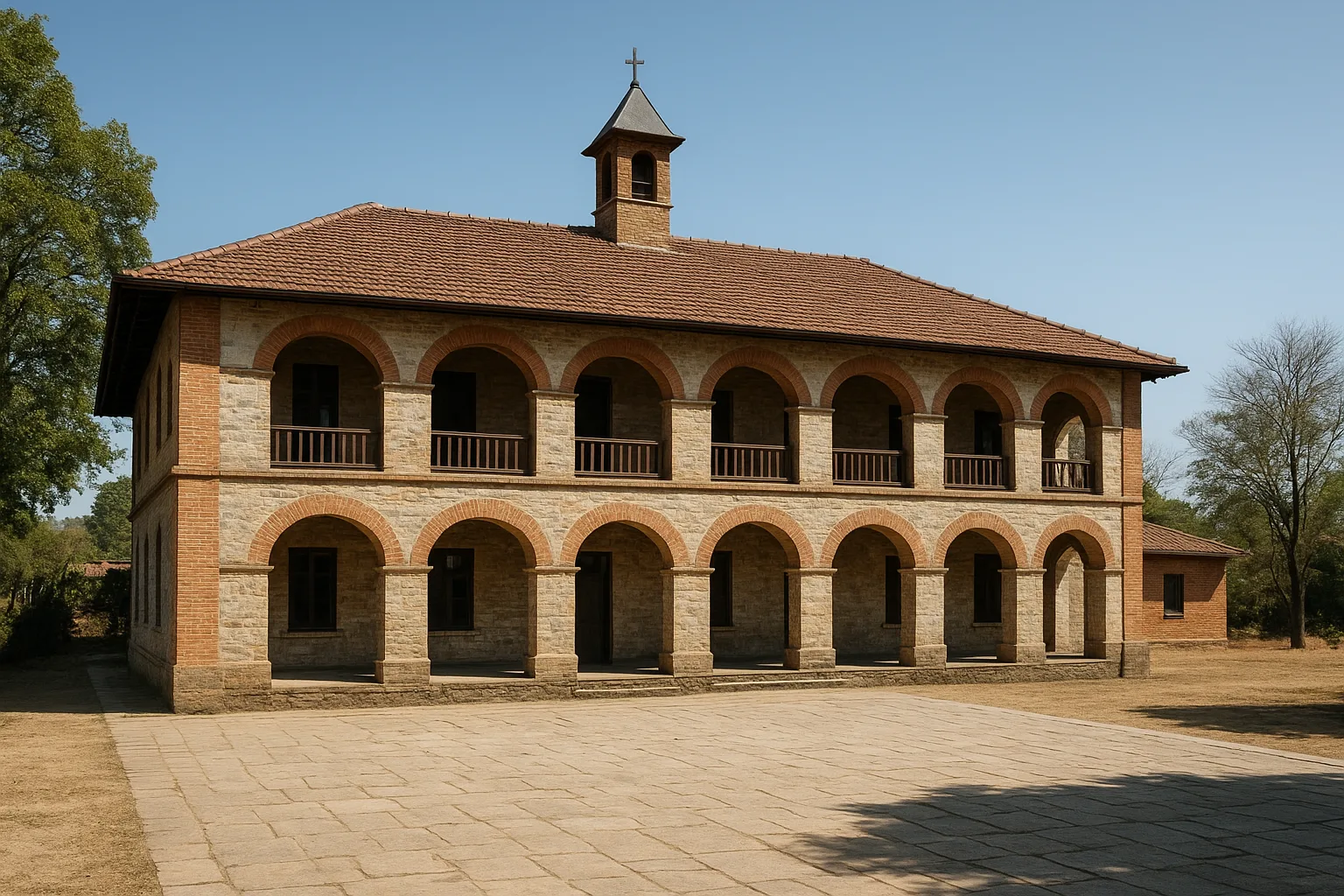
The dawn mist clings to the deodar slopes as a school bell rings out across a quiet hamlet. It is the late 1800s, and a handful of children gather in a modest room—some curious, others wary. Outside, elders discuss the unfamiliar changes sweeping their mountain world. For centuries, Hamirpur’s rhythms were governed by tradition, oral lore, and the slow pulse of the Beas and Sutlej rivers. But under the British Raj, these rhythms would be challenged, recast, and—occasionally—reaffirmed in unexpected ways.
Before the Raj: Traditions and Early Knowledge
Hamirpur’s story, before the arrival of the British, is one of small kingdoms, ancient clans, and enduring oral traditions. The hills were home to Rajput lineages, Gaddis, Gujjars, and Brahmins, each carrying their own tales and customs. Education, as it existed, was informal—passed from elders to youth, from priests to disciples, within temples and village courtyards. The earliest written references to the region surface in the Gazetteer of the Kangra District (first compiled in the mid-19th century), which records a society structured by kinship, custom, and a deep connection to the land.
Formal schooling was rare, reserved for a privileged few—often sons of local rulers or influential Brahmin families. Knowledge of the epics, rituals, and land rights moved orally, weaving together myth, memory, and practical guidance. The great trade routes between the plains and the Himalayan passes occasionally brought new ideas, but Hamirpur’s relative isolation preserved its distinctive character well into the colonial period.
The British Arrive: New Structures, New Tensions
By the early 19th century, after the Anglo-Gorkha War and the subsequent annexation of the hill states, Hamirpur found itself under the administrative shadow of the British East India Company. The British, seeking to control and modernize their domains, began introducing new forms of record-keeping, policing, and—crucially—education.
Missionaries and colonial agents established the first vernacular schools in the 1850s and 1860s, typically teaching a curriculum that blended basic literacy, arithmetic, and moral instruction. Instruction was often in Hindi or Urdu, but English was introduced for select groups. For the first time, education became a tool not just of tradition, but of governance—a means to create clerks, interpreters, and intermediaries for the colonial state.
The response was mixed. Some local elites saw opportunity in these new institutions, sending their sons to learn the language of power. Others viewed the reforms with suspicion, fearing a loss of cultural autonomy. Oral accounts from village elders—preserved in local memory and referenced in early 20th-century gazetteers—describe both pride and ambivalence as the old ways met the new.
Agents of Change: Social Reformers and Local Voices
While British policy often prioritized stability over transformation, the late 19th century saw a gradual awakening of social reform within Hamirpur and neighboring hill districts. Inspired by broader movements in Punjab and the plains, regional reformers began to question entrenched norms—especially those regarding caste, gender, and education.
One notable figure was Pandit Ram Singh, a teacher from a small village near Nadaun, who is remembered in oral tradition for his efforts to open school doors to children of all castes. His work, echoed in other hill communities, reflected a slow but growing recognition that education could be a force for social mobility rather than mere compliance.
Women’s education, however, remained a distant goal. Early attempts to establish girls’ schools often met resistance, both from colonial administrators wary of unrest and from local elders protective of custom. Yet by the early 20th century, a handful of girls attended classes in Hamirpur’s larger settlements—small seeds of a transformation that would flower decades later.
New Currents: The Spread of Print and Reformist Thought
The arrival of the printing press in nearby Kangra and Hoshiarpur brought new ideas into Hamirpur’s valleys. Pamphlets, newspapers, and reformist tracts—often smuggled in by itinerant teachers, traders, or reform-minded priests—stirred debate within village gatherings. Debates over widow remarriage, child marriage, and caste discrimination entered local consciousness, if only in muted tones.
The British, wary of disturbance, kept a cautious eye on such developments. But the genie of reform could not be contained. Students educated in colonial schools began to question not only tradition, but the legitimacy of colonial rule itself. By the 1920s, as nationalist fervor rose across India, Hamirpur’s educated youth played modest but meaningful roles in spreading calls for swaraj (self-rule), often using the very tools—literacy, debate, organization—that colonial education had provided.
The Social Fabric Shifts: Networks and New Aspirations
By the close of the British period, Hamirpur’s social landscape had changed in subtle but enduring ways. New networks—of schools, teachers, reformers, and town committees—began to knit together previously isolated communities. The old order of hereditary privilege was challenged, though not overthrown, as education became a new marker of status and aspiration.
Yet the process was uneven. Many villages remained untouched by formal schooling well into the 1940s. The divide between those with access to education and those without—often mapped onto lines of caste, gender, and geography—persisted, even as the dream of a more equal society took root in popular imagination.
Through it all, Hamirpur’s people navigated the crosscurrents of change with resilience. Oral traditions adapted to new realities; old festivals began to incorporate commemorations of reformers and martyrs. The past remained present, even as the future beckoned.
Echoes in the Present: The Living Legacy of Colonial Reform
Today, the legacy of British-era education and social reform continues to shape Hamirpur’s identity. Schools and colleges dot the landscape, and debates over inclusion, language, and tradition remain lively. The region’s pride in its educational achievements is matched by a stubborn commitment to local culture, embodied in festivals, folk songs, and the enduring bonds of community.
In the next part of our series, we will journey deeper into the final years of British rule, as Hamirpur’s people confront the turmoil and hope of the independence movement—carrying forward the lessons, tensions, and aspirations forged in an age of reform.
Previous: Colonial Administration and Revenue Systems in Hamirpur
Next: Life of Ordinary People in Colonial Hamirpur