
Series: History of Kangra, Himachal Pradesh, India
Phase 3: Mughal & Sikh Era — Part 13 of 30
This article belongs to a historical series examining how expanding empires and regional powers reshaped life in the western Himalayan hills. As external influences pressed into the mountains, local rulers navigated diplomacy, resistance, and accommodation. This phase explores how wider political currents intersected with entrenched hill traditions, altering governance without entirely displacing older structures.
Echoes Beneath the Fort Walls: Kangra, 18th Century
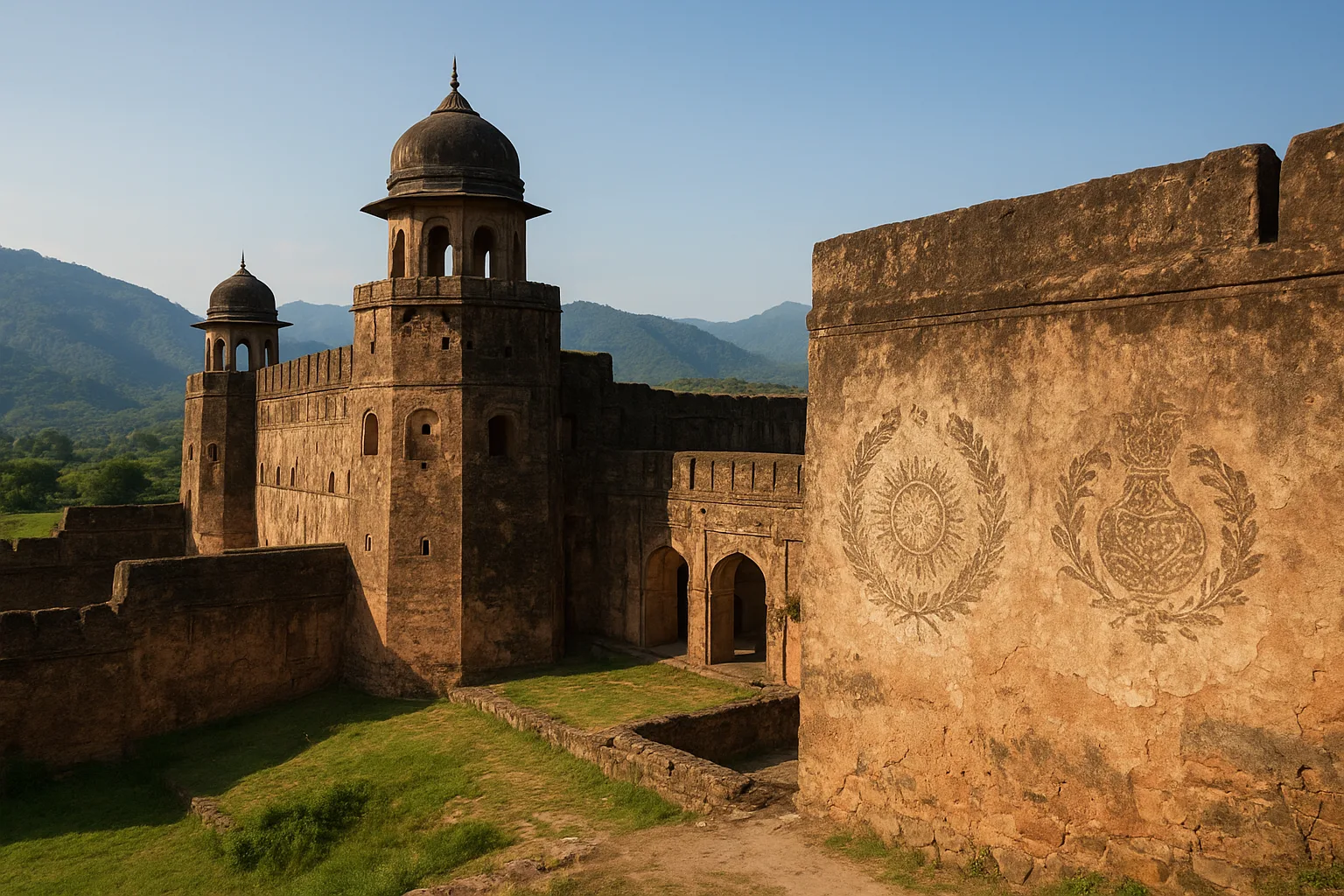
In the dry heat of a late summer evening, the ancient stones of Kangra Fort cast long shadows over the Beas Valley. Once, the Mughal banner fluttered confidently above these ramparts, promising imperial order and prosperity in the hills. By the early 1700s, however, the pulse of power in Kangra was faltering. The fort’s silence was punctuated by the distant calls of herders and the wary patrol of local sentries—a stark contrast to the disciplined bustle of Mughal garrisons decades before.
Kangra’s Place in the Mughal World
Kangra, with its rugged terrain and formidable citadel, had stood as a coveted jewel on the northwestern fringe of the Mughal empire. Akbar’s siege and Jahangir’s eventual conquest in 1620 bound Kangra to the imperial system, introducing new administrative norms and integrating the region into the vast networks of trade and taxation that defined Mughal India. Persian scribes noted the strategic and spiritual value of the region, famed for its temples and legendary resistance.
But beneath the grand narratives of conquest lay a complex reality. Mughal officers—often outsiders to the hills—struggled to impose authority beyond the fort and select revenue villages. Kangra’s Rajput chieftains, while nominally loyal, maintained deep roots in local custom, clan loyalties, and hill traditions. Accounts from regional gazetteers and chronicles like the Tarikh-i-Kangra echo the tensions between imperial order and indigenous autonomy.
Oral Traditions and the Shape of Memory
In Kangra, history is not only written in chronicles but whispered in valleys and sung in folk ballads. Oral traditions recount the exploits of hill rajas—some lionized as defenders of dharma, others depicted as pragmatic survivors. The Mughal presence is remembered in stories of tribute, broken treaties, and the shifting allegiances of local rulers. These tales, embroidered over generations, sometimes blur the lines between fact and legend, but they reveal an enduring sense of distinct hill identity. The mythology of Kangra’s resilience, passed down in village gatherings, became a subtle form of resistance as imperial control loosened.
The Fraying of Imperial Bonds
The Mughal decline in Kangra mirrored the unraveling of empire across northern India. By the late 17th century, Aurangzeb’s relentless campaigns in the Deccan drained resources from the peripheries. Administrative posts in Kangra were left vacant or filled by opportunistic adventurers. The once-regular flow of revenue and soldiers from Delhi slowed to a trickle, and the imperial treasury’s promises grew hollow. Local rajas, including the Katoch dynasty, seized the initiative, reasserting ancient rights and negotiating new coalitions with neighboring chiefs.
Documented political history hints at a delicate balance: hill rulers paid lip service to imperial authority, dispatching occasional tributes to distant emperors, but increasingly governed as independent sovereigns. Mughal-appointed faujdars in Kangra often relied on local intermediaries, further entrenching indigenous power structures. Some contemporary chronicles describe these years as a time of “double loyalty,” when the outward trappings of Mughal rule masked the return of local autonomy.
Communities, Trade, and Belief in a Changing Era
Even as political authority shifted, the everyday life of Kangra’s peoples revealed both change and continuity. Brahmins, Rajputs, artisans, and traders continued to anchor village society. The region’s temples—most notably the Shree Bajreshwari Devi temple—remained centers of faith, drawing pilgrims from across the hills and plains. The Mughal retreat did not erase these networks; instead, it allowed local systems of patronage and ritual to flourish.
Trade routes that once carried imperial goods now saw a resurgence of older patterns: salt from the Punjab plains, wool and timber from the high hills, and the famed Kangra paintings and textiles moving through new channels. Hill merchants forged ties with Sikh, Dogra, and Tibetan traders, adapting to the shifting political landscape. The decline of Mughal oversight fostered a cautious revival of regional autonomy and economic ingenuity.
The Rise of Hill States and New Powers
As Mughal influence ebbed, the patchwork of hill states around Kangra grew more assertive. The Katoch rajas, tracing their lineage to antiquity, rallied support from rival chiefs and emerging Sikh leaders. The vacuum left by the waning empire invited both opportunity and danger: ambitious neighbors threatened border raids, while Sikh confederacies offered alliance or challenge. The chronicles of the time record tense negotiations, sudden betrayals, and the forging of new identities in the crucible of uncertainty.
It was in this period of flux that the seeds of Kangra’s future were sown. The region’s rulers navigated a world of shifting allegiances, balancing the memory of Mughal grandeur with the realities of local survival. The fort, battered but unbroken, stood as a symbol of Kangra’s ability to endure and adapt.
Legacy and Living Memory
The decline of Mughal authority did not bring chaos, but rather a reassertion of older patterns—local governance, resilient community bonds, and the enduring power of memory. Today, the echoes of that era persist in Kangra’s architecture, its festivals, and its sense of identity. The fort’s weathered stones remind visitors of imperial ambitions and local defiance, while the stories of hill rajas and their people remain central to Kangra’s self-understanding.
In the next part of our series, we journey into the age of Sikh ascendancy—when Kangra became a crossroads for new powers, and the struggle for the fort intensified in ways that would shape the region for generations.
Previous: Life Under Mughal Shadow
Next: Sikh Rule Under Maharaja Ranjit Singh