
Series: Finance for Kids
Phase 10: Giving & Values — Part 112 of 166
Helping Kids Choose a Charity That Matters to Them
Teaching children about giving and charity is a wonderful way to help them understand the importance of helping others. Choosing a charity can be a meaningful experience for kids, allowing them to connect with causes that matter to them. Here’s how you can guide your child in selecting a charity that resonates with their values and interests.
Step 1: Explore Their Interests
Start by talking to your child about what they care about. Ask questions like:
- What animals do you love?
- Are there any issues in the community that worry you?
- What activities do you enjoy that could help others?
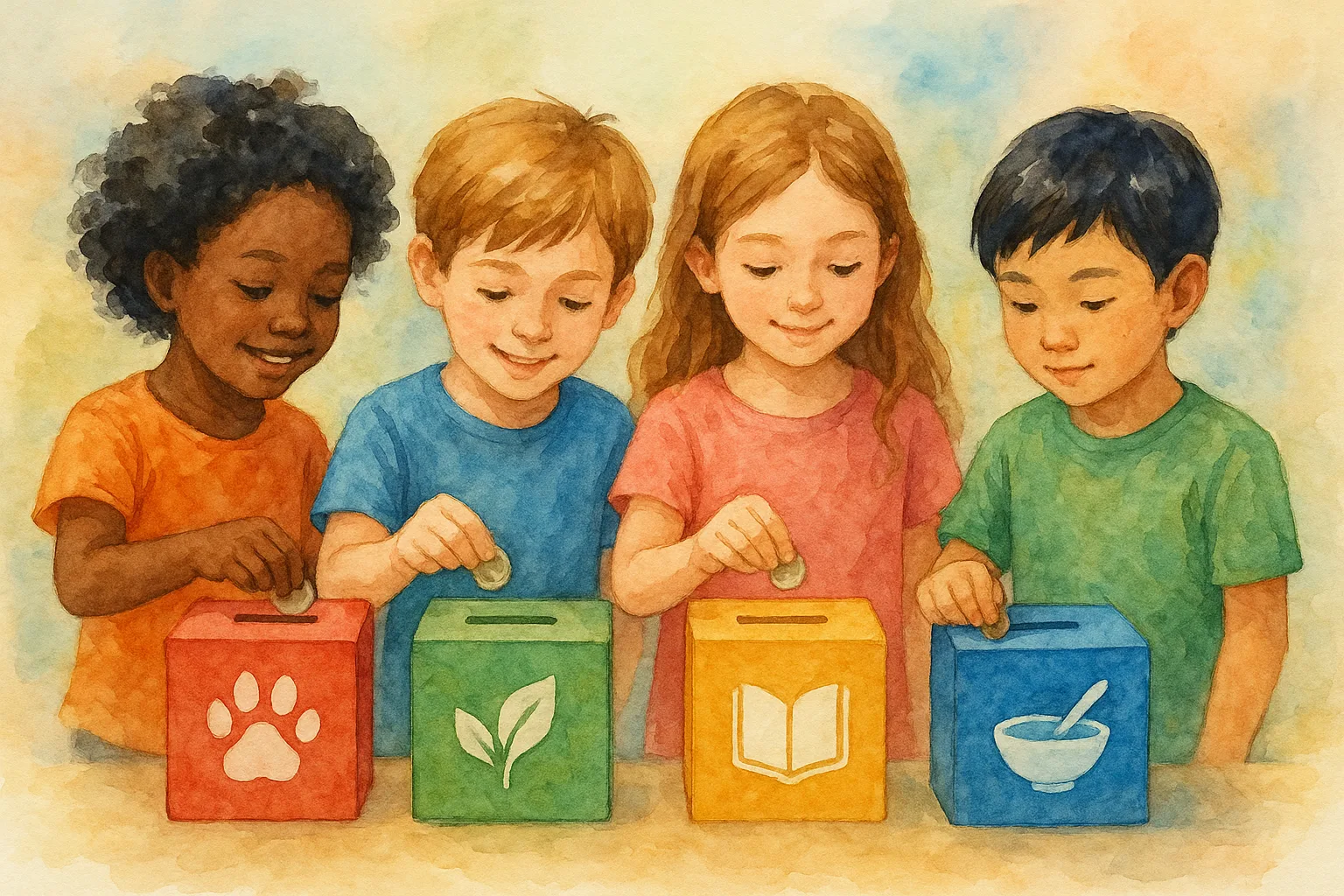
For example, if your child loves animals, they might be interested in charities that support animal shelters. If they’re passionate about the environment, they could look into charities focused on conservation.
Step 2: Research Together
Once your child has some ideas, it’s time to do a little research together. Look for charities that align with their interests. Here are some ways to find information:
- Search online for local charities.
- Visit charity websites to learn more about their work.
- Read articles or watch videos about the charity’s impact.
Encourage your child to ask questions about the charity, such as:
- What projects do they support?
- How do they help people or animals?
- How are donations used?
Step 3: Discuss Values and Impact
Talk about the values that are important to your family. Discuss how these values connect to the charity’s mission. This will help your child understand the impact their choice can have. For instance, if your family values education, supporting a charity that provides school supplies or tutoring for children in need may resonate.
Step 4: Involve Them in Decision-Making
Let your child have a say in which charity to support. This decision-making process can help them feel more invested. You can create a shortlist of charities based on your earlier research and let your child pick their favourite. This is a great way to teach them about responsibility and the importance of their choices.
Step 5: Plan a Fundraising Activity
Once your child has chosen a charity, consider planning a fundraising activity together. This could be a bake sale, a sponsored walk, or even a talent show. This not only raises money for the charity but also encourages your child to think creatively about how they can contribute.
For example, if your child loves to bake, they could make treats to sell at school. This teaches them about effort, teamwork, and the joy of giving.
Step 6: Reflect on the Experience
After the fundraising event or donation, take some time to reflect together. Talk about how it felt to help others and what they learned from the experience. This can reinforce the importance of giving back and encourage them to continue supporting their chosen charity in the future.
Common Myths About Charity
When it comes to charity, there are several myths that can confuse kids (and adults!). Here are a few to clear up:
- Myth 1: You need a lot of money to help. Truth: Every little bit counts! Whether it’s time, skills, or a small donation, every effort helps.
- Myth 2: Charities only help people in faraway places. Truth: Many charities focus on local issues, so your support can make a difference right in your community.
- Myth 3: Charities are not trustworthy. Truth: While it’s essential to research charities, many are transparent about their work and impact.
Conclusion
Helping kids choose a charity that matters to them can be a rewarding experience. By exploring their interests, researching together, and involving them in the decision-making process, you can teach them the joy of giving. This not only helps them understand the value of charity but also nurtures their empathy and sense of responsibility.
This article provides general educational information only and is not financial advice. Always seek guidance from a qualified professional for personal financial decisions.
Previous: Involving Children in Family Giving Decisions
Next: Teaching Kids the Joy of Helping Others Through Money