
Series: History of Solan, Himachal Pradesh, India
Phase 3: Religion & Culture — Part 12 of 30
This article belongs to a historical series examining how expanding empires and regional powers reshaped life in the western Himalayan hills. As external influences pressed into the mountains, local rulers navigated diplomacy, resistance, and accommodation. This phase explores how wider political currents intersected with entrenched hill traditions, altering governance without entirely displacing older structures.
Dawn on the Shoolini Mata Hill
Mist clings to the slopes above Solan town as the first rays of sunlight catch the gilded finial of the Shoolini Mata Temple. Every June, thousands ascend these steps, some barefoot, some humming hymns, all drawn by a centuries-old promise of protection and prosperity. The air is thick with the scent of incense and wild rhododendron. Nearby, elders recount how the city itself, Solan, takes its very name from Shoolini—an echo of the goddess whose presence is said to guard these hills. But the story of sacred sites here is older than the town, older even than the legends that swirl through the pines. It is a story written in stone, in forest clearings, in the collective memory of Himachal’s hill people.
Ancient Groves and Mountain Spirits
Long before formal temples, the first inhabitants of the Solan region—tribes such as the Koli and Kanet—worshipped the forces of nature. In thick oak groves and on wind-swept ridges, they honored deotas (local spirits) believed to inhabit streams, trees, and boulders. Archaeological surveys have uncovered evidence of megalithic sites and ritual stones, hinting at a world where sacredness was woven into the land itself. Oral tradition tells of seasonal gatherings at these spots, with offerings of millet and honey to propitiate rain, fertility, and safe passage through the mountains.
As Indo-Aryan influences seeped into the lower Himalayas by the first millennium BCE, these local animist traditions began to blend with new Vedic forms. The Sun, known here as Surya Narayan, and river goddesses gained prominence. Yet, even today, village festivals often begin with a silent prayer to the forest, a whispered acknowledgment of the ancient pact between people and place.
The Rise of Temples: Early Dynasties and Faith
By the 7th century CE, the region fell under the sway of the powerful rulers of the nearby hill states—Kuthar, Baghal, and Keonthal among them. These dynasties, seeking divine legitimacy, patronized the construction of stone temples and shrines. The area’s first recorded temple complexes, such as the Jatoli Shiva Temple and the Karol Ka Tibba caves, date to this era.
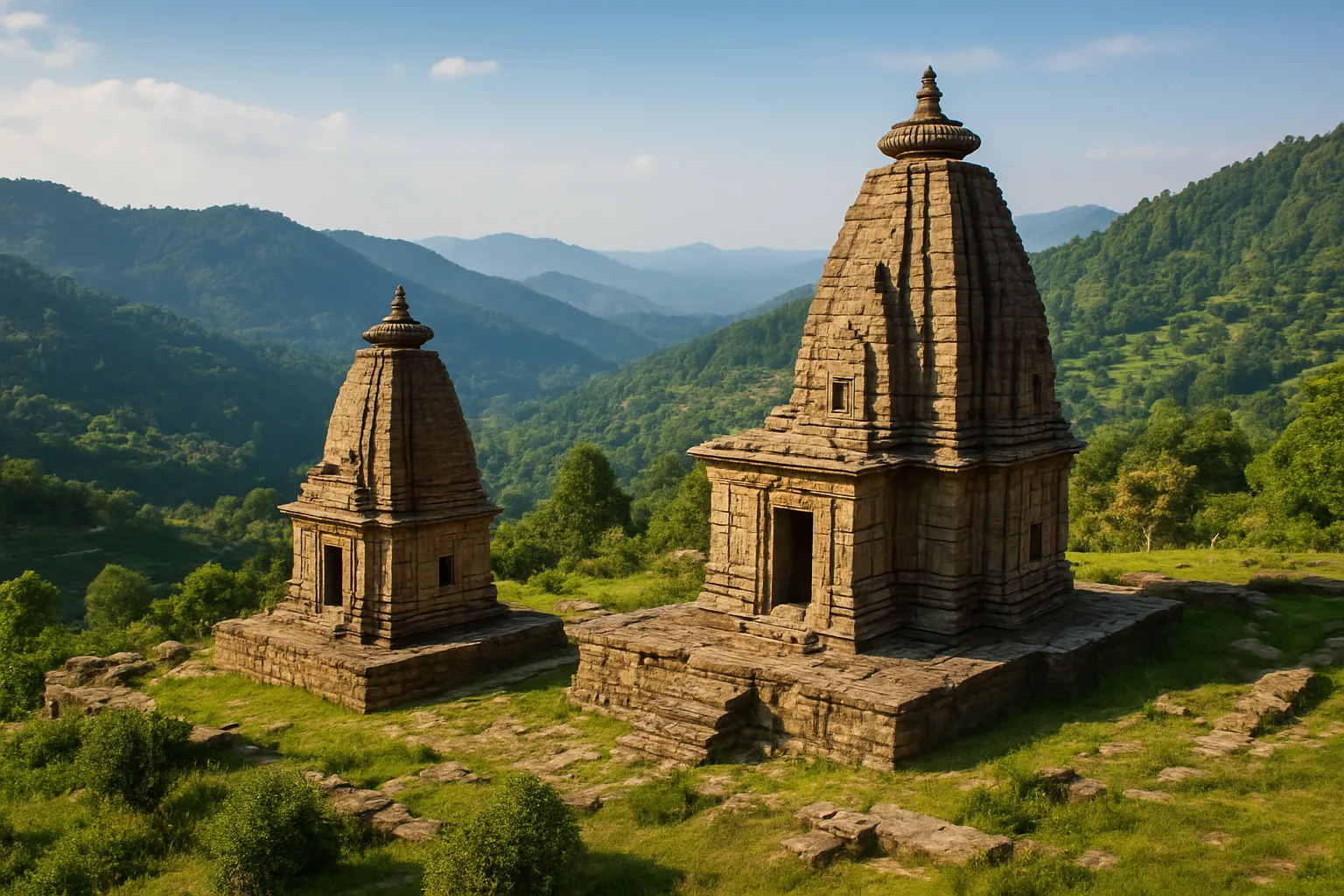
The Jatoli Shiva Temple, perched above present-day Solan, is a marvel of indigenous craftsmanship. Its towering shikhara (spire) rises above the forest, echoing architectural motifs seen in early Himalayan temple-building. Local lore claims the sage Jagat Guru Ji performed penance here, drawing ascetics and seekers from across the subcontinent. The Karol caves, meanwhile, are said to have sheltered the Pandava brothers during their exile, and their sanctity is attested in both folk memory and medieval records.
Temples were not just religious centers—they were hubs of learning, trade, and social exchange. Copper plate inscriptions from the reign of Raja Shyam Sen of Baghal (late 16th century) refer to land endowments for temple upkeep, and mention fairs that drew pilgrims from as far as Kangra and Sirhind. The sacred landscape was coming into focus, anchored by shrines that stitched disparate communities together.
Mughal Shadows and the Endurance of Local Faith
From the 16th to 18th centuries, the Solan region, like much of Himachal, lived under the looming shadow of Mughal expansion. While direct control was rare in these rugged hills, the threat of invasion and periodic forays by imperial generals forced the hill rajas to fortify both their domains and their devotion. It was during this era that the Shoolini Mata Temple was rebuilt and lavishly endowed by Raja Bhupendra Sen of Baghal. The annual Shoolini fair (mela), still celebrated with fervor, began as a public assertion of local identity in the face of outside threats.
Elsewhere, the Narsingh Temple at Kasauli and smaller village shrines continued their rituals, sometimes incorporating Islamic motifs or stories—testimony to a period of cultural resilience and syncretism. British travelers in the early 19th century, such as Captain R. Strachey, noted the “astonishing tenacity of the mountain people in preserving their sacred customs, even as the world around them changed.”
Colonial Encounters and New Sacred Spaces
With the British annexation of hill territories in the mid-1800s, Solan’s sacred landscape was transformed once again. The construction of the Kalka-Shimla railway and cantonments at Dagshai, Kasauli, and Solan brought new populations—soldiers, administrators, and merchants—each with their own beliefs. Churches rose alongside temples, and the town of Solan became a unique confluence of spiritual paths.
Yet, traditional shrines did not fade. The Darlaghat Hanuman Temple, for instance, became a rallying point for workers and villagers alike, its festivals providing continuity amidst rapid change. British officials, for their part, often attended local fairs and documented them with a mixture of curiosity and respect. The colonial period also saw the rise of new gurudwaras, reflecting the migration of Sikh families into the region—an echo of Solan’s openness to spiritual diversity.
Modern Reverence: Continuity and Revival
The decades after independence in 1947 saw a renewed pride in Solan’s sacred heritage. Restoration projects, often led by local trusts and community elders, breathed new life into crumbling temples. The Jatoli Shiva Temple’s spire was reconstructed in the 1970s, and the Shoolini Mata Temple complex expanded to accommodate growing numbers of pilgrims.
Today, the district’s sacred landscape is a vibrant tapestry: ancient groves where villagers still tie prayer threads to trees; gleaming temples bustling with daily rituals; new ashrams and meditation centers drawing seekers from across India and beyond. Every year, the Shoolini fair transforms Solan into a sea of color, music, and faith—a living link to centuries past.
Even as urbanization and modernity reshape the town, the old rhythms persist. Calendars are still set by festival cycles. Family journeys to Karol Ka Tibba or the Narsingh Temple mark rites of passage. Stories of sages and miracles are retold at every gathering, ensuring that the past remains a palpable presence.
Legacy in Stone and Spirit
The temples and sacred landscapes of Solan are not relics—they are living witnesses to endurance and adaptation. Through invasion, colonization, and the churn of modern life, these sites have shaped the district’s identity and unity. They remind us that faith is both shelter and compass, a shared inheritance that transcends generations.
As contemporary Solan grows, its sacred geography continues to guide hearts and decisions. The bells of Shoolini Mata still ring out each morning across the valley, calling residents to remember their roots. In the interplay of history and devotion, Solan’s temples stand as guardians—not only of the gods, but of the community’s deepest sense of belonging.
Previous: Shoolini Devi: The Goddess Who Gave Solan Its Name
Next: Folk Traditions and Cultural Life of Solan