
Series: History of Shimla, Himachal Pradesh, India
Phase 3: British Era — Part 14 of 30
This article belongs to a historical series examining how expanding empires and regional powers reshaped life in the western Himalayan hills. As external influences pressed into the mountains, local rulers navigated diplomacy, resistance, and accommodation. This phase explores how wider political currents intersected with entrenched hill traditions, altering governance without entirely displacing older structures.
Arrival at the Heights: Shimla in the Early Nineteenth Century
It is the spring of 1864. Early morning sunlight glimmers along the forested ridges above the valleys of Himachal, while a cool mist settles on the gabled rooftops of a town in the making. Shimla, perched at over 2,200 meters on the southern slopes of the Himalayas, is transforming before the eyes of its British inhabitants. From the moment the East India Company’s officials and their families first arrived in the wake of the Gurkha War (1814–1816), this once-remote outpost of the Hill States has been remade into something faintly resembling an English spa town—yet it is unmistakably Indian in its geography, climate, and rhythms.
Historical records indicate that prior to British arrival, the area now known as Shimla consisted mainly of scattered hamlets and forest lands under the nominal suzerainty of the local rulers of Keonthal and Patiala. The ancient ridge, which would become the Mall Road, was traversed by shepherds, traders, and pilgrims, its deodar forests sheltering shrines to local deities such as Shyamala—whose name, in oral tradition, would lend itself to “Shimla.”
The Summer Capital Emerges
In 1864, Shimla was declared the official summer capital of British India. The documented history of the colonial administration shows that this decision was driven by the need to escape the oppressive heat of the Indian plains. The town, with its bracing climate and panoramic views, soon attracted not only senior officials but also their families, military officers, and an ever-growing retinue of Indian and British staff. By the late nineteenth century, Shimla had become a vibrant administrative and social hub, its population swelling each year with the arrival of the seasonal elite.
With this influx came a flurry of construction: grand bungalows, boarding houses, and the iconic Viceregal Lodge—each an assertion of imperial presence amid Himalayan pines. The layout of the town itself was shaped by the priorities of its new rulers. The Mall, a broad promenade running along the ridge, became the axis of public life, flanked by stone churches, busy markets, and the offices of government.
Daily Rituals and Social Hierarchies
Life for the British elite in Shimla was marked by a careful choreography of ritual and hierarchy. Mornings often began with horseback rides along the winding forest paths, followed by breakfast on broad verandahs overlooking the hills. The cool, dry air was said to be invigorating—a restorative for those worn down by months in Calcutta or Lahore.
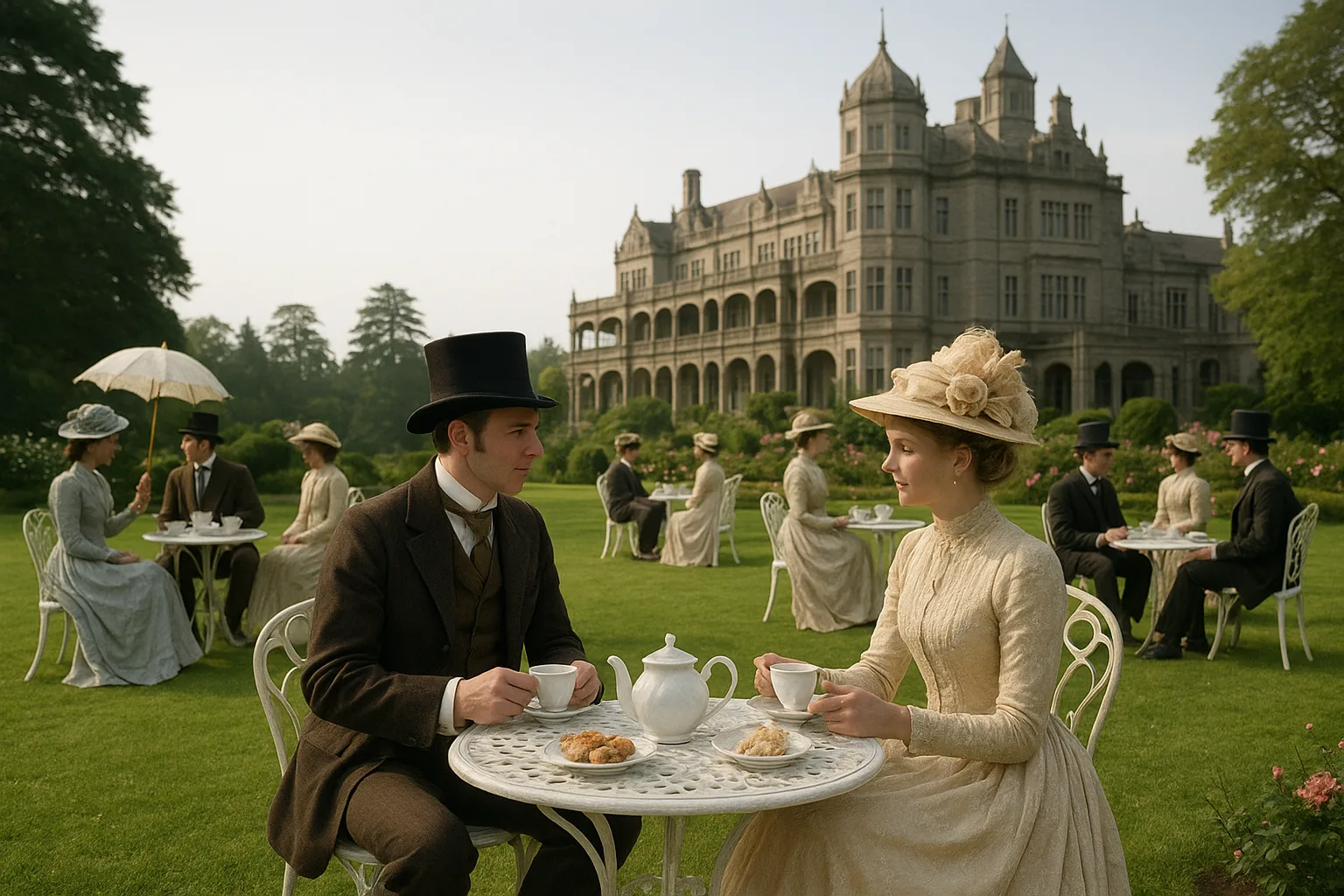
The social calendar was meticulously maintained. Afternoon teas, hosted in manicured gardens or at the grand hotels, provided opportunities for gossip and informal networking. The Gaiety Theatre staged amateur dramatics, while the Ball Room at the Town Hall saw an endless succession of dances and official functions. The tennis courts and racquet clubs, open only to the British and select Indian elites, served as informal arenas for social maneuvering.
The rigid stratification of colonial society was mirrored in these daily rituals. Senior civil servants and military officers occupied the most desirable residences on the higher ridges, while junior staff and Indian employees lived in the lower reaches or outlying villages. Access to certain clubs and events was tightly controlled, reinforcing the lines of class, rank, and race that structured life in the summer capital.
The Interplay of Empire and Environment
The British presence in Shimla was not merely administrative or social—it was deeply environmental. Colonial records and regional gazetteers describe the transformation of the landscape: forests were cleared for bungalows and gardens, roads cut into the hillsides, and ornamental trees imported from Europe. The architecture of Shimla, with its steep gables and deep eaves, reflected a deliberate attempt to recreate the familiar comforts of England, even as the realities of monsoon rains and Himalayan winters demanded adaptation.
Yet, this colonial endeavor was always shaped by the enduring presence of local communities. Hill folk from surrounding villages supplied the markets, worked as domestic staff, and maintained the growing town. Many British residents developed a fascination with local customs—some adopting aspects of Pahari dress for expeditions, others collecting folk tales or commissioning paintings of the landscape. The interplay of imported sensibilities and indigenous practices created a distinctive hill-station culture, at once separated from and entwined with its Indian context.
Cultural Life and the Season of Scandal
Shimla’s elite social life was both a source of pride and anxiety for the British administration. The annual season, stretching from April to October, was marked by elaborate entertainments: garden parties, theatrical performances, charity balls, and the famous Shimla Races. These events brought together an eclectic mix of officials, aristocrats, and occasional Indian princes, all bound by the protocols of colonial etiquette.
The town was also infamous, even among the British in India, for its undercurrent of intrigue. Letters and memoirs from the era speak of flirtations, clandestine affairs, and the relentless scrutiny of public opinion. The phrase “the season of scandal” became shorthand for the particular intensity of social life in the hills, where isolation and proximity bred both excitement and risk. The Viceregal Lodge, seat of the Viceroy’s household, became the symbolic heart of this world—a place where imperial policy was debated over dinner, and where the personal often collided with the political.
The Indian Presence: Service, Adaptation, and Ambition
While the British elite shaped the public face of Shimla, it was Indian communities—artisans, merchants, and laborers—who sustained its daily life. Contemporary chronicles and gazetteers record the growth of bustling bazaars along the Lower Bazaar Road, where goods from across northern India were traded. Local craftsmen adapted their skills to new markets, carving decorative woodwork for bungalows or tailoring European-style garments for British clients.
For some Indians, Shimla offered opportunities for advancement. A handful of wealthy traders and professionals acquired property on the outskirts of the town; others entered government service or provided specialized goods to the elite. Yet, the boundaries of participation were sharply drawn: most remained at the margins of colonial society, their presence acknowledged but rarely celebrated in the official histories of the hill station.
Legacy and Continuity: Shimla Beyond Empire
As the twentieth century unfolded, the character of Shimla began to change. The arrival of the Kalka–Shimla railway in 1903 brought new visitors and altered patterns of settlement. The First and Second World Wars, the movement for Indian independence, and the Partition of 1947 each left their mark on the town’s identity. Yet, the legacy of the British elite—visible in architecture, landscape, and memory—remains woven into the fabric of Shimla today.
Walk the Mall on a cool evening and echoes of colonial rituals are still discernible: the promenade, the theatre, the old hotels. But beneath these surface continuities, the meanings of place have shifted, claimed and reshaped by new generations. In the next part of this series, we will turn to the everyday lives of Indian residents—those whose stories unfolded in the shadows, markets, and margins of colonial Shimla, and whose enduring presence would ultimately redefine the town for a new era.
Previous: Building a Colonial City in the Himalayas
Next: Architecture That Still Defines Shimla Today