
Series: History of Kinnaur, Himachal Pradesh, India
Phase 2: Medieval Period — Part 10 of 30
This article forms part of a continuing series that follows the gradual emergence of organised power in the western Himalayas. As small communities gave way to clans, chieftainships, and hill states, patterns of rule, alliance, and conflict began to take shape. This phase examines how authority was negotiated through land, ritual, and warfare, laying the groundwork for regional kingdoms that would dominate the medieval landscape.
On the Roof of the World: A Meeting Place of Civilizations
The wind at Shipki La carries a sharp, clean chill, and the silence is broken only by the distant clang of a yak bell. Here, at one of the highest border passes between Kinnaur and Tibet, the ancient stones seem to remember every footfall—traders, monks, and kings who once crossed these heights. It is the eleventh century, and the valleys of Kinnaur are alive with a quiet dynamism that belies their isolation. Villages cling to the slopes, prayer flags flutter above wooden roofs, and every path seems to lead both east to Tibet and west toward the broader Indian subcontinent.
Geographical Roots and Early Human Footprints
Kinnaur’s geography made it more than a remote hill district. Wedged between the Sutlej River and the towering Himalayas, its valleys provided natural corridors linking India and Tibet. Early settlements, likely established by tribal groups such as the Kinners—whose name echoes through both local lore and classical Sanskrit texts—found sustenance in these high-altitude landscapes. Oral traditions recall ancestors who tamed the wild rivers and terraced the mountain flanks, their stories later woven into the region’s mythic tapestry.
Yet, while mythology speaks of demi-gods and celestial marriages, archaeological traces and early travelogues suggest a more prosaic, though no less remarkable, pattern of seasonal migration and settled agriculture. Even by the seventh century, Kinnaur was no stranger to travelers: the route from Rampur, through Sangla and Nako, to the Tibetan plateau had become a conduit for both people and ideas.
The Silk and Salt Roads: Networks of Trade and Encounter
From at least the early medieval period, Kinnaur’s fortunes were shaped by its role as a gateway. Salt, wool, gold dust, and turquoise made their way from the plateau into the Indian plains, while grains, jaggery, and textiles flowed the other direction. The Shipki La and other passes became arteries of exchange, and the Kinnauri themselves—adept at negotiating both terrain and custom—emerged as indispensable intermediaries.
Regional gazetteers compiled in the late 19th century recount the annual caravans of Bhotia traders, whose journeys were as much about forging kinship as commerce. The barter fairs (notably at Khab and Sumdo) were occasions when distant communities mingled, and many Kinnauri families still recall ancestors who spoke both languages and maintained ties across the crest.
Belief Systems: Between Animism, Hinduism, and Buddhism
The spiritual landscape of Kinnaur was—and remains—a palimpsest of influences. Oral tradition preserves the memory of an older animistic faith, where every river and peak was inhabited by a local deity or spirit. With the expansion of Hindu kingdoms and the arrival of Buddhist missionaries from Tibet, new layers were added.
By the tenth and eleventh centuries, Kinnaur’s religious world had become strikingly syncretic. Small stone temples dedicated to Shiva stood beside chortens (Buddhist stupas) adorned with prayer wheels. Local chronicles, such as the early Buran texts, describe how Buddhist monks from the great monasteries of Tholing and Tabo brought with them not only scripture but new art forms, script styles, and even agricultural innovations.
It was not uncommon for the same Kinnauri household to host both a Hindu pujari and a Buddhist lama during festivals, a living testament to the region’s layered identity.
Political Currents: Hill States and the Tibetan Connection
Documented political history reveals a complex interplay between Kinnaur’s indigenous chiefs and the powerful polities on either side of the Himalayas. The rising sway of the Guge and Purang kingdoms in western Tibet during the early medieval era brought both conflict and alliance. Kinnaur’s ruling chieftains—later known as the Bushahr dynasty—navigated these currents with pragmatic diplomacy, at times paying tribute to Tibetan lamas, at others forging ties with the princely houses of Rampur and Chamba.
Early chronicles and later Mughal-era records both note that Kinnaur’s borderlands were rarely static. Control of key passes shifted with the fortunes of war, trade, and weather. The region’s autonomy often depended on its ability to balance these external pressures while preserving its distinct traditions at home.
Language, Lore, and Material Culture
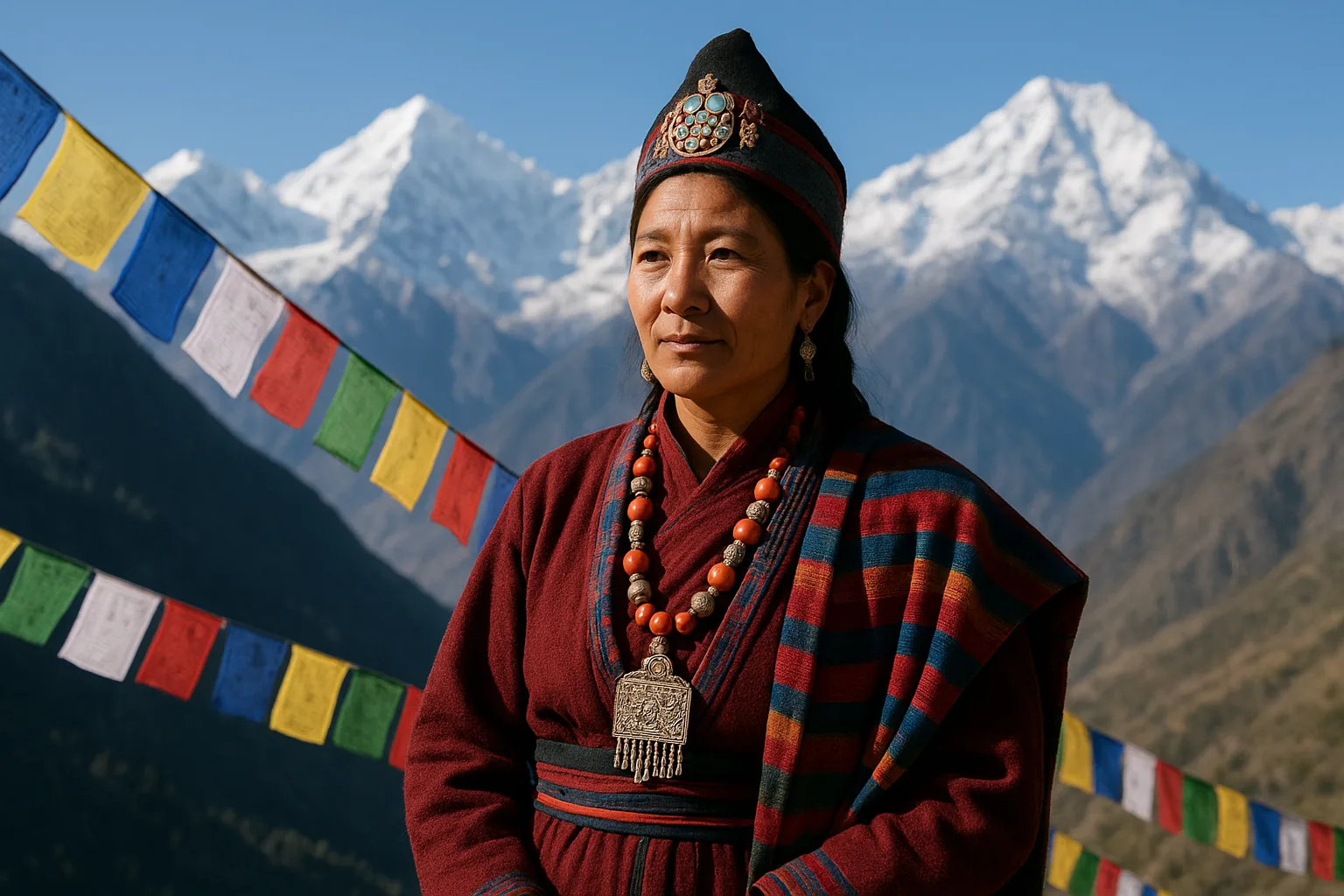
The deepest legacy of this cross-border exchange lies in the everyday life of Kinnaur’s people. The Kinnauri language, with its strong Tibeto-Burman roots, carries echoes of centuries of contact. Traditional dress—such as the woolen chuba or the distinctive green cap—reflects both Himalayan practicality and Tibetan aesthetics.
Oral epics sung by village bards recall not only local heroes but distant wars and marriages with Tibetan princesses, some legendary and some rooted in real dynastic alliances. Wood carvings on temple doors depict tales from both the Mahabharata and the Jataka stories, while the region’s cuisine—tsampa flour, buckwheat, and yak butter—remains unmistakably Himalayan.
Continuity and Change: The Living Heritage of Kinnaur
Even in the twenty-first century, the cultural legacy of Kinnaur’s exchange with Tibet is more than a memory. It lives on in rituals, languages, and the rhythms of daily life. Villages still celebrate Losar, the Tibetan New Year, with as much fervor as Shivratri. Prayer flags flutter above apple orchards, and the border passes, now tightly controlled, remain symbols of both connection and resilience.
As we prepare to trace the evolution of Kinnauri society under the later medieval and early modern states in the next part of this series, it is clear that the region’s identity has always been forged at the crossroads—where trade, faith, and kinship traverse the high Himalayas, and where memory itself is a bridge between worlds.
Previous: Agriculture and Survival in Harsh Himalayan Conditions
Next: Arrival and Spread of Buddhism in Kinnaur