
Series: History of Una, Himachal Pradesh, India
Phase 3: Sikh Period — Part 11 of 30
This article belongs to a historical series examining how expanding empires and regional powers reshaped life in the western Himalayan hills. As external influences pressed into the mountains, local rulers navigated diplomacy, resistance, and accommodation. This phase explores how wider political currents intersected with entrenched hill traditions, altering governance without entirely displacing older structures.
The Dawn at the Sutlej: Una in the Shadow of Empire
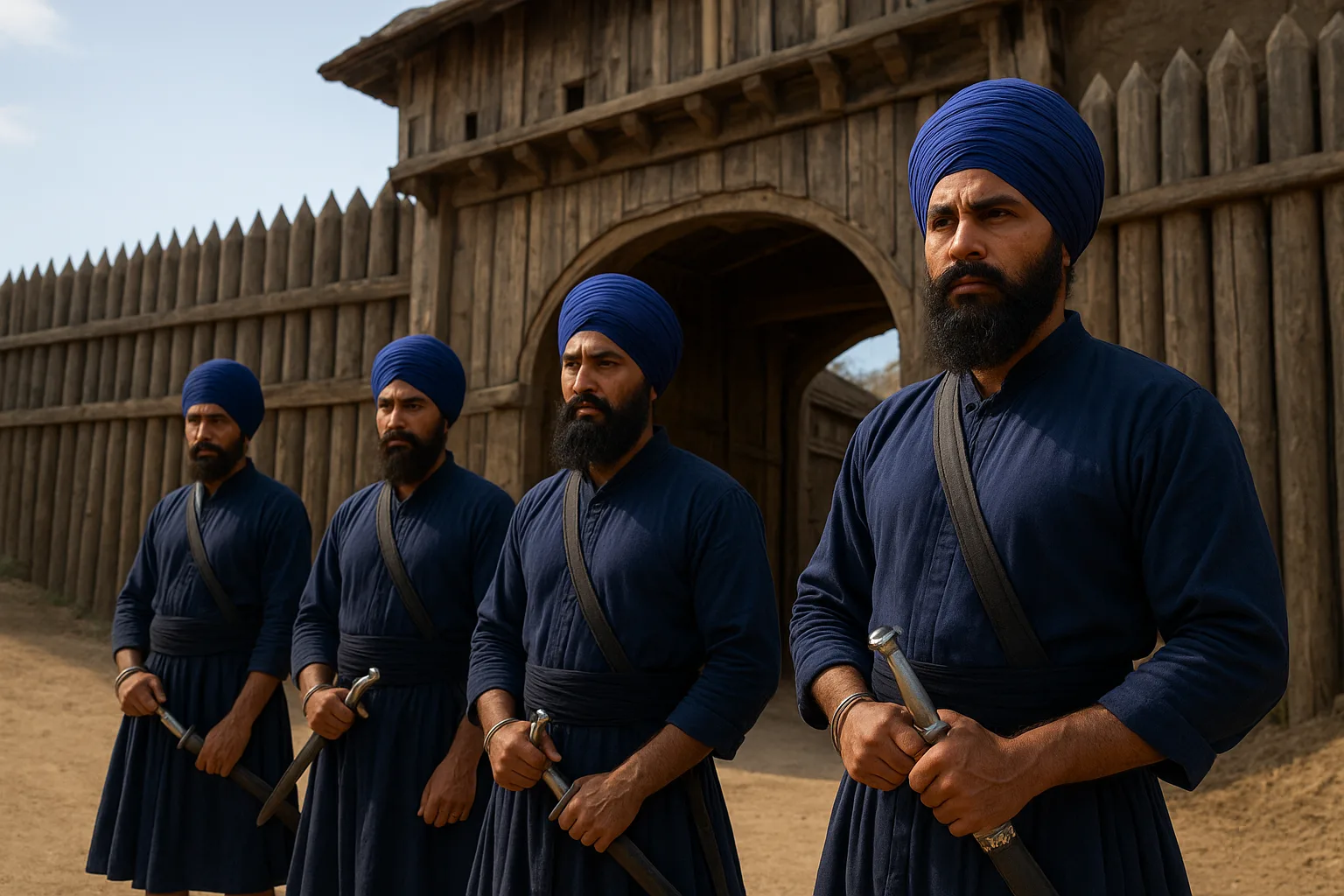
The year is 1761. The early morning mist lingers over the banks of the Sutlej, swirling above the fields outside Una. Villagers gather in small groups, anxious and alert, as rumors ripple through the land: Sikh horsemen, bearing the blue and saffron banners of the Khalsa, have crossed into these valleys. Some whisper of plunder, others of liberation. Few realize that these moments will mark the beginning of a transformation for Una, a place long caught between powerful neighbors and warring empires.
Before the Sikhs: Una’s Tumultuous Borders
For centuries, Una occupied a strategic corridor between the fertile plains of Punjab and the hill kingdoms of Kangra, Bilaspur, and Mandi. The Mughal Empire, at its height, claimed the region as part of its northern periphery. Yet, by the mid-18th century, Mughal authority had crumbled. Local Rajput rulers—like the Katoch dynasty in Kangra and the princely lineages of Jaswan and Datarpur—vied for influence, sometimes clashing, sometimes forging uneasy alliances.
But the chaos of the declining Mughal era also brought fresh dangers. Afghan invader Ahmad Shah Abdali’s repeated raids left scars across Punjab and the lower hills. In this vacuum of power, a new force emerged: the Sikh misls, confederacies of warrior bands united under the flag of Guru Gobind Singh’s Khalsa.
First Encounters: Sikh Bands and the Hill States
The earliest Sikh presence in Una was not a grand invasion but a series of bold forays. By the 1750s, Sikh chieftains such as Sardar Jassa Singh Ahluwalia and Sardar Charat Singh were pushing northward, seeking to contain Abdali’s incursions and to secure their own northern frontiers. The borderlands of Una became a stage for skirmishes, ransom raids, and shifting alliances.
Rajput rulers faced difficult choices. Some, like Raja Ghamand Chand of Kangra, initially tried to resist Sikh encroachment, fearing for their autonomy and ancestral lands. Others saw opportunity—allying with the Sikhs to check Mughal or Afghan threats. The result was a patchwork of war and negotiation, with villages like Amb and Bangana often caught in the crossfire.
Conquest and Accommodation: The Sikh Grip Tightens
By the 1770s, Sikh dominance over the Punjab plains was nearly complete. The hill tracts, including Una, became the next frontier. Maharaja Ranjit Singh, ascending as the leader of the Sukerchakia misl and later as founder of the Sikh Empire, recognized the strategic importance of these hills. Control over Una meant access to trade routes, natural resources, and a buffer against invasions from the north and east.
Ranjit Singh’s campaigns were as political as they were military. His generals—Hari Singh Nalwa, Ventura, and others—led expeditions into Una and neighboring regions. Sikh forces established forts at key crossings and negotiated treaties with local chieftains. Unlike the earlier cycles of plunder, Ranjit Singh’s administration sought durable governance. The granaries of Una supplied the growing Sikh army, and its border towns became hubs of commerce and military logistics.
Life Under Sikh Rule: Change and Continuity
For the people of Una, the Sikh period brought both disruption and opportunity. Gurdwaras appeared alongside ancient temples, reflecting the new religious landscape. Sikh revenue officials replaced Mughal and Rajput tax collectors, introducing new systems of land tenure and record keeping. For some Rajput families, Sikh rule meant diminished status; for others, it offered a path to power as collaborators or administrators.
Yet daily life for most villagers changed slowly. Fields were sown, fairs held, and festivals celebrated as before. But the sense of security was stronger, with Sikh patrols curbing banditry and protecting trade. Oral traditions in Una still recall the imposing figures of Sikh cavalrymen, the clang of their swords in the fords, and the justice—sometimes harsh, often impartial—delivered under the Khalsa’s watchful gaze.
A Region Transformed: Faith, Identity, and Memory
The Sikh period left deep imprints on Una’s culture and collective memory. Local legends recount Guru Gobind Singh’s passage through the hills, and stories of the region’s resistance or accommodation to Sikh authority pass from generation to generation. The construction of gurdwaras and the migration of Sikh families into Una altered the area’s demographic fabric, weaving new strands into its tapestry of faiths and languages.
Trade flourished under the relative stability of Sikh rule, drawing artisans, merchants, and pilgrims from as far as Amritsar and Lahore. The once-isolated town of Una found itself at the intersection of broader currents—connected by caravan and correspondence to the centers of Sikh power.
Twilight of Sikh Power: The British on the Horizon
By the 1830s, the Sikh Empire had reached its zenith. Una, now firmly under Sikh administration, saw both prosperity and the strains of imperial overreach. But the shadow of a new power loomed. The British East India Company, expanding relentlessly from Bengal and Delhi, watched the hills with growing interest.
Local Rajputs, Sikhs, and the broader population sensed the coming storm. The First Anglo-Sikh War (1845–46) would soon redraw boundaries and upend centuries of tradition. Una, once a borderland between empires, would once again find itself at the crossroads of history.
Legacy: Una’s Sikh Past and Its Modern Identity
Today, traces of the Sikh era endure in Una’s architecture, festivals, and family histories. The gurdwaras stand as witnesses to a period of upheaval and renewal. Rajput and Sikh surnames mingle in the region’s schools and markets; old tales of conquest and kinship still shape civic memory.
As Una continues to grow as a gateway between Himachal Pradesh and Punjab, its Sikh past offers both lessons and inspiration. The stories of resistance, adaptation, and coexistence remind us that identity is never static, but forged in the fires of history. The hills and rivers of Una have seen many banners rise and fall, but the legacy of the Sikh expansion remains woven into the very fabric of the land.
Previous: Una’s Strategic Role Between Kangra and Punjab
Next: Una Under Maharaja Ranjit Singh’s Rule