
Series: History of Sirmaur, Himachal Pradesh, India
Phase 2: Medieval Kingdom — Part 9 of 30
This article forms part of a continuing series that follows the gradual emergence of organised power in the western Himalayas. As small communities gave way to clans, chieftainships, and hill states, patterns of rule, alliance, and conflict began to take shape. This phase examines how authority was negotiated through land, ritual, and warfare, laying the groundwork for regional kingdoms that would dominate the medieval landscape.
Under the Shivalik Shadows: Sirmaur in the Early Medieval Ages
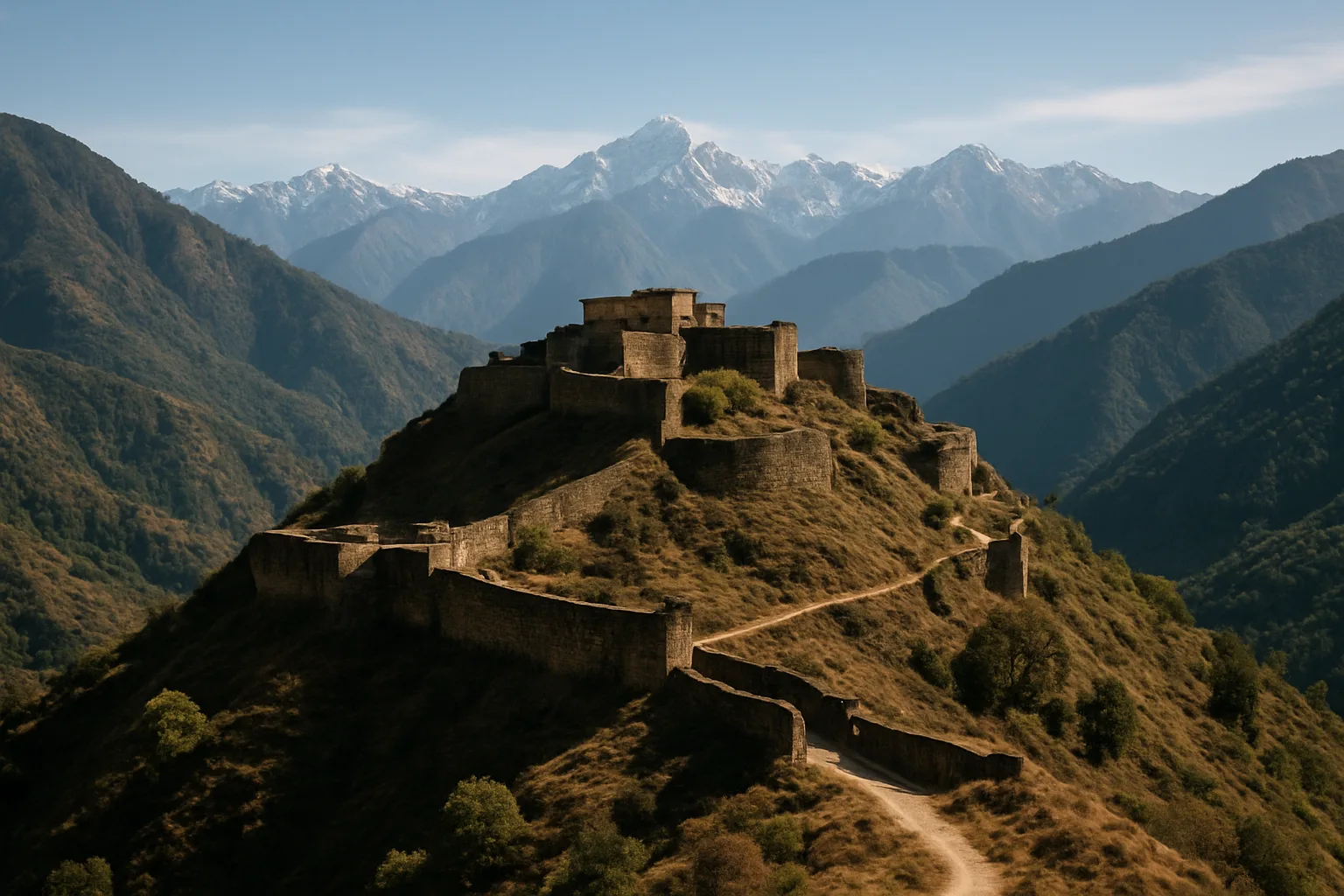
The first light of dawn brushes the scrubby ridges above the Giri river. Below, morning mist coils between terraced fields and half-ruined fort walls, their stones still holding the memory of ancient watchfires. Here, in Sirmaur, the past lingers not only in the landscape but in the very rhythm of life—a region where medieval politics was as complex and unpredictable as the Himalayan weather itself.
By the 10th century CE, Sirmaur was already emerging as a strategic node in the hill country of present-day Himachal Pradesh. The region’s unique geography—nestled between the Shivalik foothills to the south and the higher hills to the north—made it both a coveted prize and a crossroads. Its river valleys and passes linked not only local settlements but also broader trade and pilgrimage routes stretching from the plains of Haryana and Punjab up into the Himalayan interior.
Oral Traditions, Myths, and the Fog of Origins
Stories told beside hearths in Sirmauri villages speak of ancient chieftains, miraculous escapes, and divine interventions. Some claim the region was once ruled by powerful Rakshasas, others that Rajput princes descended from the Mahabharata era brought civilization to the wild hills. The names of legendary founders—such as Raja Sirmaur, after whom the region is said to be named—drift between myth and memory.
Yet, when historians sift these tales, distinguishing myth from fact is challenging. Local bards and genealogists kept alive dynastic stories in song and verse, while later chroniclers embroidered these with feats of valor or tales of defeat. The regional gazetteers compiled during the colonial period, such as the Gazetteer of the Sirmur State, attempt to reconcile the oral record with fragmentary inscriptions and early documents. From this tapestry emerges a consensus: by the early medieval period, Sirmaur’s rulers traced their descent to Rajput lineages migrating northward in response to shifting power centers in the plains.
The Rise of the Sirmaur Kingdom
Historical inference, backed by early chronicles and copper plate grants, points to the establishment of a recognizable Sirmaur kingdom around the 11th century CE. It was during this period that the seat of power began to shift from the older strongholds—likely in the Giri or Tons valleys—towards what would become Nahan, the later capital.
The ruling house, by most accounts, was of Rajput stock, claiming links to the Surya (solar) dynasty. Their legitimacy rested not only on ancestry but on their ability to command fealty from local chieftains and to defend the territory from both hill rivals and lowland incursions. The king’s authority was fragile, shaped as much by negotiation and alliance as by force of arms.
Medieval Sirmaur was not a closed domain. Its rulers maintained ties with neighboring hill states such as Jubbal, Keonthal, and Bushahr, as well as with larger powers on the plains—at times recognizing the suzerainty of the Delhi Sultanate, and later the Mughal Empire, in exchange for autonomy.
Communities, Faiths, and the Weave of Sirmauri Society
The hill kingdom was always more than its palace intrigues. Across the slopes and valleys, communities of cultivators, shepherds, artisans, and small landholders formed the backbone of Sirmaur’s society. The Sirmauris themselves—a distinct Pahari-speaking group—were joined by migrants from the plains and from neighboring hills, weaving a patchwork of castes and clans: Brahmins, Rajputs, Thakurs, Gujjars, and artisans such as the Lohar (blacksmiths) and Kumhar (potters).
Faith and belief in medieval Sirmaur reflected the region’s plural influences. Shaivism and local goddess traditions dominated, with shrines to Mahasu Devta and various Devi cults dotting the hillsides. Buddhism and early Jain influences, though faded by the 13th century, left subtle marks in place names and local legends. Sufi saints and Nath yogis sometimes traveled the trade routes, their teachings echoing in folk songs and local customs, especially in southern Sirmaur where contact with the plains was greatest.
Trade, Forts, and the Lure of the Giri Valley
Sirmaur’s valleys were not just picturesque—they were lifelines. The Giri, Tons, and Markanda rivers carved out natural corridors for trade, migration, and communication. From as early as the 11th century, merchants moved salt, jaggery, wool, and iron between the hills and the markets of Ambala, Jagadhri, and Saharanpur. The region’s salt mines, particularly at Dadahu, were fiercely contested and contributed heavily to the kingdom’s wealth.
To control these routes, Sirmaur’s rulers—and their rivals—built forts at key locations: the ruins of Rajban, Paonta, and Kamrau speak to centuries of warfare and shifting boundaries. These strongholds also served as administrative centers, tax posts, and refuges during times of invasion. The architecture, blending Rajput and indigenous hill styles, testifies to the region’s constant negotiation between tradition and adaptation.
Rivalries and Alliances: Hill Politics in Action
Medieval Sirmaur’s history is as much a chronicle of conflict as of coexistence. The fragmented nature of the hill states—each ruled by its own lineage, each fiercely protective of its autonomy—meant that alliances were often temporary and betrayals frequent.
Local chronicles record recurring disputes with neighboring states over grazing rights, water usage, and control of trade routes. The Sirmaur-Bushahr rivalry was legendary, marked by skirmishes and shifting alliances with enemies’ enemies. In some periods, Sirmaur found itself allied with lowland powers against hill rivals; in others, it was forced to submit to tribute demands from stronger neighbors or imperial overlords. The arrival of the Delhi Sultanate’s influence in the hills, and later that of the Mughals, brought new diplomatic dynamics, with Sirmaur’s rulers sending envoys and gifts, and occasionally offering military support in exchange for recognition of their titles.
Yet, these external influences never entirely erased local autonomy. Even at their weakest, the Sirmauri rajas remained adept at playing larger powers against each other, preserving a measure of independence—and a distinctly Sirmauri identity.
The Legacy of Medieval Sirmaur: Roots Beneath the Surface
As one walks today through the bustling markets of Nahan or pauses at a centuries-old fort above the Giri, the echoes of medieval Sirmaur are never far away. The alliances and rivalries, the integration of diverse communities, and the resilient negotiation between tradition and change continue to shape the region’s politics and culture. Oral traditions still inform local identity, even as historians work to separate fact from fable.
The next chapter in this series will trace how Sirmaur weathered the great upheavals of the early modern period, from Mughal suzerainty to the rise of new powers in the Himalayan foothills—setting the stage for the dramatic transformations of the colonial era.
Previous: Nahan: The Capital That Shaped Sirmaur’s Identity
Next: Administration and Village Life in Medieval Sirmaur