
Series: History of Solan, Himachal Pradesh, India
Phase 2: Medieval Period — Part 8 of 30
This article forms part of a continuing series that follows the gradual emergence of organised power in the western Himalayas. As small communities gave way to clans, chieftainships, and hill states, patterns of rule, alliance, and conflict began to take shape. This phase examines how authority was negotiated through land, ritual, and warfare, laying the groundwork for regional kingdoms that would dominate the medieval landscape.
Dawn over the Valleys: A Day in Medieval Solan
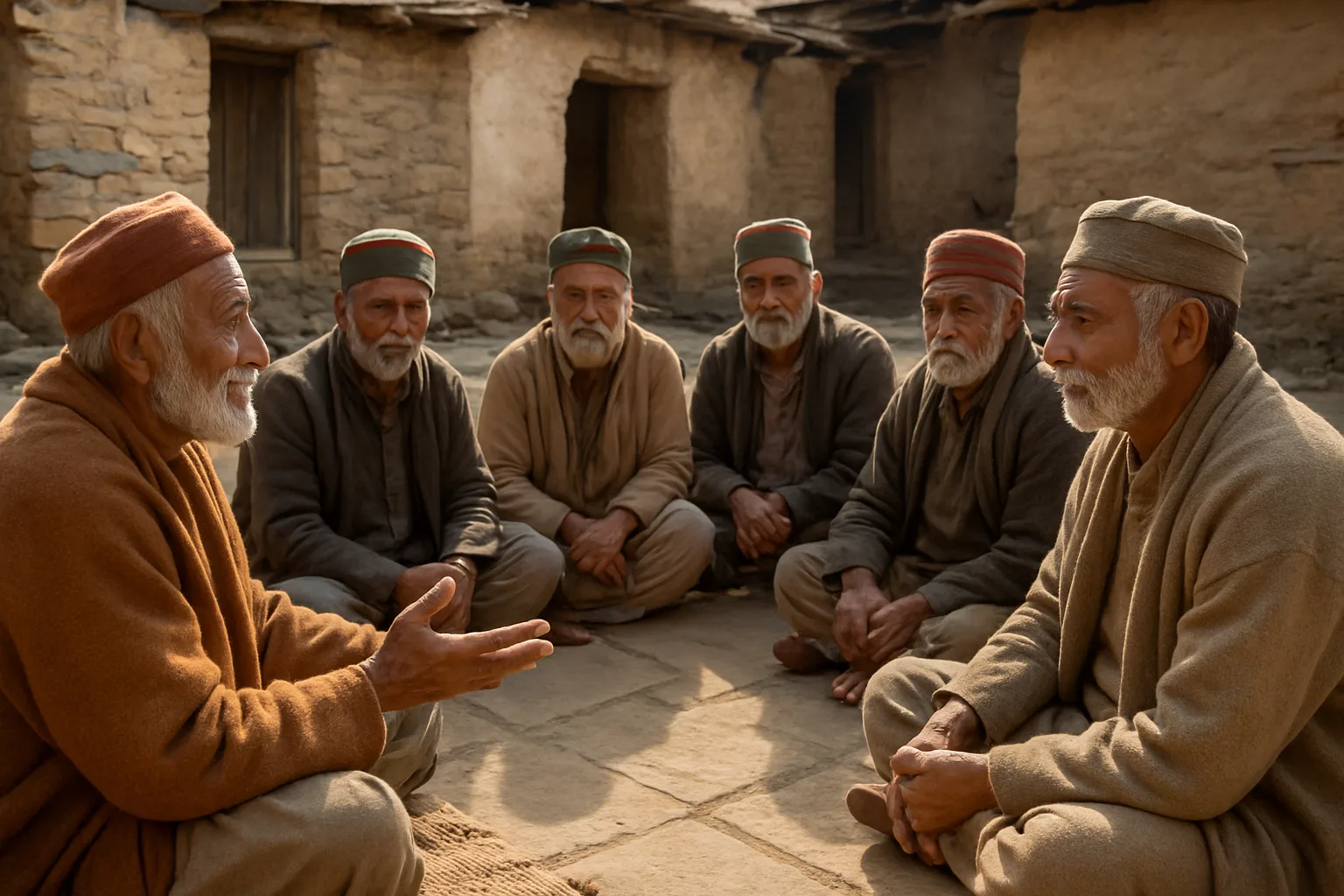
The sun crests silently above the pine-clad ridges of what we now call Solan. It is the late 1300s, and the crisp morning air carries the distant clang of a blacksmith’s hammer, the lowing of cattle, and the soft voices of villagers gathering beneath a banyan tree. Here, at the heart of a small settlement perched above the Giri river, the pulse of medieval life beats steadily—anchored by the rhythms of the land and the quiet authority of the panchayat, the village council.
In this moment, we witness not only the start of a daily routine but the unfolding of a social and economic structure that would shape the region for centuries. The people of medieval Solan are not isolated; their villages are nodes in a web of mountain trade, local governance, and evolving tradition. Their world is one of negotiation—between forests and fields, rulers and villagers, custom and change.
The Panchayat: Pillar of Village Order
At the center of every village in Solan, the panchayat holds sway. This council, composed of respected elders and occasionally landholding families, gathers beneath the shade of a central tree or within a mud-walled chopal. Their authority is unquestioned—charged with settling disputes, allocating communal lands, and overseeing the collection of taxes for local chieftains or distant kings.
In an era when distant rulers in Kangra or Bilaspur rarely set foot in the hills, these councils represent the first and most tangible layer of governance. The panchayat’s decisions—whether to levy a fine for grazing cattle in forbidden woods, or to redistribute the use of a vital irrigation channel—are binding. Oral tradition, social memory, and ancient custom blend into a living law, passed down through generations with little written record.
Occasionally, emissaries from the ruling families—such as the Katoch dynasty of Kangra or the Baghal chieftains—would arrive, bearing news, new edicts, or demands for tribute. Yet for most villagers, the panchayat remains the face of justice and order, mediating between the needs of the people and the demands of the state.
Land, Labor, and Life: The Economic Backbone
Medieval Solan is a tapestry of terraced fields, scattered hamlets, and dense forests. The economy is deeply rooted in the land, with wheat, barley, and pulses sown in narrow plots carved by hand from the mountainside. The monsoon’s arrival each June is a moment of collective hope—or anxiety. A good rain promises abundant harvests; a poor one risks hunger and hardship.
Land is power. Families measure their status by the extent of their holdings, known as zamin. The panchayat oversees disputes about boundaries, inheritance, and water rights. In some villages, local customs allow women to inherit land, a rare practice in medieval India, reflecting the unique social fabric of the hills. Sharecropping is common: poor peasants, or muzaras, work the fields of wealthier landowners, giving up a portion of their crop as rent.
Forests, too, are vital. They provide timber for homes, fodder for cattle, and herbs for medicine. The right to collect firewood or graze animals is closely regulated by the village, with strict penalties for outsiders who trespass. The forest is both a resource and a sanctuary—sheltering fugitives, ascetics, and, occasionally, bandits seeking refuge from the lowlands.
Taxation and Tribute: The Distant Hand of Power
While Solan’s villages often seem self-governing, the shadow of higher authority is never absent. The rulers of nearby hill states—Kangra, Bilaspur, Baghal—lay claim to the region, each vying for influence and tribute. Taxes are extracted in grain, livestock, or coin, depending on the strength of the ruler and the prosperity of the year.
Village headmen, known as muqaddams or lambardars, act as intermediaries. They travel to the nearest fort or administrative post, bearing the village’s tribute and returning with receipts, new decrees, or—on rare occasions—a personal audience with the raja or his officials. The process is both a burden and a lifeline: while taxes can be heavy, the patronage of a distant lord may secure protection from rival clans or neighboring states.
Records from the Mughal chronicler Abu’l-Fazl, and later British surveyors, describe these hill villages as fiercely independent, but always aware of the shifting tides of power in the plains below. When the Mughals extend their influence into Himachal in the late 16th century, Solan’s villages must negotiate new demands—sometimes through resistance, sometimes through accommodation.
Markets and Trade: The Pulse of the Hills
Beyond the fields and forests, Solan’s economy is entwined with the wider world through trade. Village markets—held weekly or during seasonal fairs—become crossroads where farmers, herders, and traveling merchants converge. Salt from the plains, wool from the highlands, and iron tools crafted in Kangra or Nalagarh find their way into even the smallest settlements.
The old trade routes, traced by generations of foot traffic and mule caravans, wind through the valleys and passes. Solan’s location—perched between the Punjab plains and the higher Himalayas—makes it a strategic stopover. Pilgrims headed for shrines in Nahan or Chail mingle with grain traders and peddlers of fine Kangra textiles.
This flow of goods brings not only wealth, but news and ideas. Stories of distant battles, new rulers, or religious reformers filter into village gossip. Over time, these connections subtly reshape local customs, from dress and diet to religious practice.
Faith, Festivals, and Social Fabric
Religion is woven into the daily life of medieval Solan. Local temples, often dedicated to Devi or village deities like Shoolini Mata, serve as centers of both worship and communal gathering. Major festivals—such as Baisakhi and Shivratri—are occasions for collective celebration, trade, and social negotiation.
Village priests, or pujaris, hold spiritual and sometimes administrative authority, maintaining temple lands and overseeing rituals. These lands—granted by rulers or wealthy patrons—are exempt from certain taxes, making temples both spiritual and economic hubs.
Social hierarchies are evident but not rigid. While Brahmins and Rajputs hold prestige, Solan’s rugged environment often demands cooperation across castes and communities. Festivals and fairs blur boundaries, allowing for moments of unity amid difference.
Conflict, Adaptation, and Change
Life in medieval Solan is not without its hardships. Drought, crop failure, or raids from rival clans can bring periods of acute crisis. Oral histories speak of entire villages relocating after catastrophic landslides or epidemics. Yet, the resilience of the people is legendary. Mutual aid, hospitality to strangers, and collective labor—such as building irrigation channels or repairing roads—form the backbone of survival.
As the centuries pass, new influences arrive. The spread of Islam in the plains, the growing power of the Mughal Empire, and the influx of trade goods from Tibet and Central Asia all leave their mark. Some villages adapt by forging alliances with new rulers; others retreat further into the hills, preserving ancient customs against the encroachment of outsiders.
The Shadows of the Past: Solan’s Legacy Today
Walk through a Solan village in the present day, and echoes of the medieval past are everywhere. The panchayat remains the first recourse for many disputes; the forests are still carefully managed; and the rhythms of rural life, though changed by modernity, retain a deep connection to the land and its history.
This legacy of self-governance, communal cooperation, and adaptability continues to shape Solan’s identity. In a rapidly changing world, the lessons of the past—etched in the stones of old temples, the patterns of terraced fields, and the memories of elders—remind us that resilience and community are the true foundations of prosperity.
Previous: Solan Under the Influence of Surrounding Hill States
Next: Agriculture and Rural Life in Medieval Solan