
Series: History of Shimla, Himachal Pradesh, India
Phase 2: Medieval Period — Part 9 of 30
This article forms part of a continuing series that follows the gradual emergence of organised power in the western Himalayas. As small communities gave way to clans, chieftainships, and hill states, patterns of rule, alliance, and conflict began to take shape. This phase examines how authority was negotiated through land, ritual, and warfare, laying the groundwork for regional kingdoms that would dominate the medieval landscape.
Amidst Cedar and Mist: Spiritual Life in Early Shimla
As the first rays of sun filtered through dense deodar and oak, the high ridges around present-day Shimla would often echo with the soft tolling of bells and the low hum of devotional songs. Long before the British built their summer capital here, these hills harbored a network of shrines and sacred sites, woven into both the landscape and the consciousness of its people. The medieval period in Himachal Pradesh marked a gradual crystallization of faith traditions, shaped by geography, trade, and the slow rise of regional polities.
Early Anchors: Geography and the Roots of Settlement
Shimla’s history is inseparable from its physical setting. Perched along the lower Himalayas, the region’s valleys and ridges offered both sanctuary and challenge. Archaeological evidence for the earliest settlements is sparse, but historical inference and oral tradition suggest that by the early medieval era—between the 8th and 12th centuries CE—small agrarian and pastoral communities had begun to cluster around natural springs and forest clearings. These sites would later become focal points for village shrines, marking the first phase of organized religious life in the hills.
Shimla itself lay at a crossroads of ancient routes connecting the Sutlej valley to the plains, and further north toward the upper Himalayas. While little is documented about large-scale urbanization, the area’s strategic position encouraged the movement of traders, pilgrims, and itinerant ascetics, each leaving traces in the region’s evolving spiritual landscape.
Oral Traditions and the Pantheon of the Hills
Much of what we know about early faith in Shimla comes from oral traditions, preserved in local legends and ritual practice. Village elders still recount tales of the region’s tutelary deities—devtas and devis—believed to inhabit specific groves, rocks, or streams. Among these, the goddess Shyamala, from whom the town of Shimla is said to derive its name, occupies a central place. Oral accounts describe her as a fierce manifestation of Kali or Durga, invoked for protection and fertility. Yet, there is no contemporary inscription or textual record from the early medieval period that confirms the formal establishment of a Shyamala temple in this era; the tradition instead points to a gradual sacralization of the site over centuries.
Other local deities, such as Bhimakali and Mahasu, have similarly complex lineages, often blending Hindu Puranic motifs with older animistic and shamanistic elements. The oral tradition holds that these gods once roamed the forests, intervening in the affairs of villagers and shaping the moral order of the hills. Seasonal festivals and processions—many of which endure—served as living enactments of these myths, binding communities to their land and to one another.
Temples as Social and Political Anchors
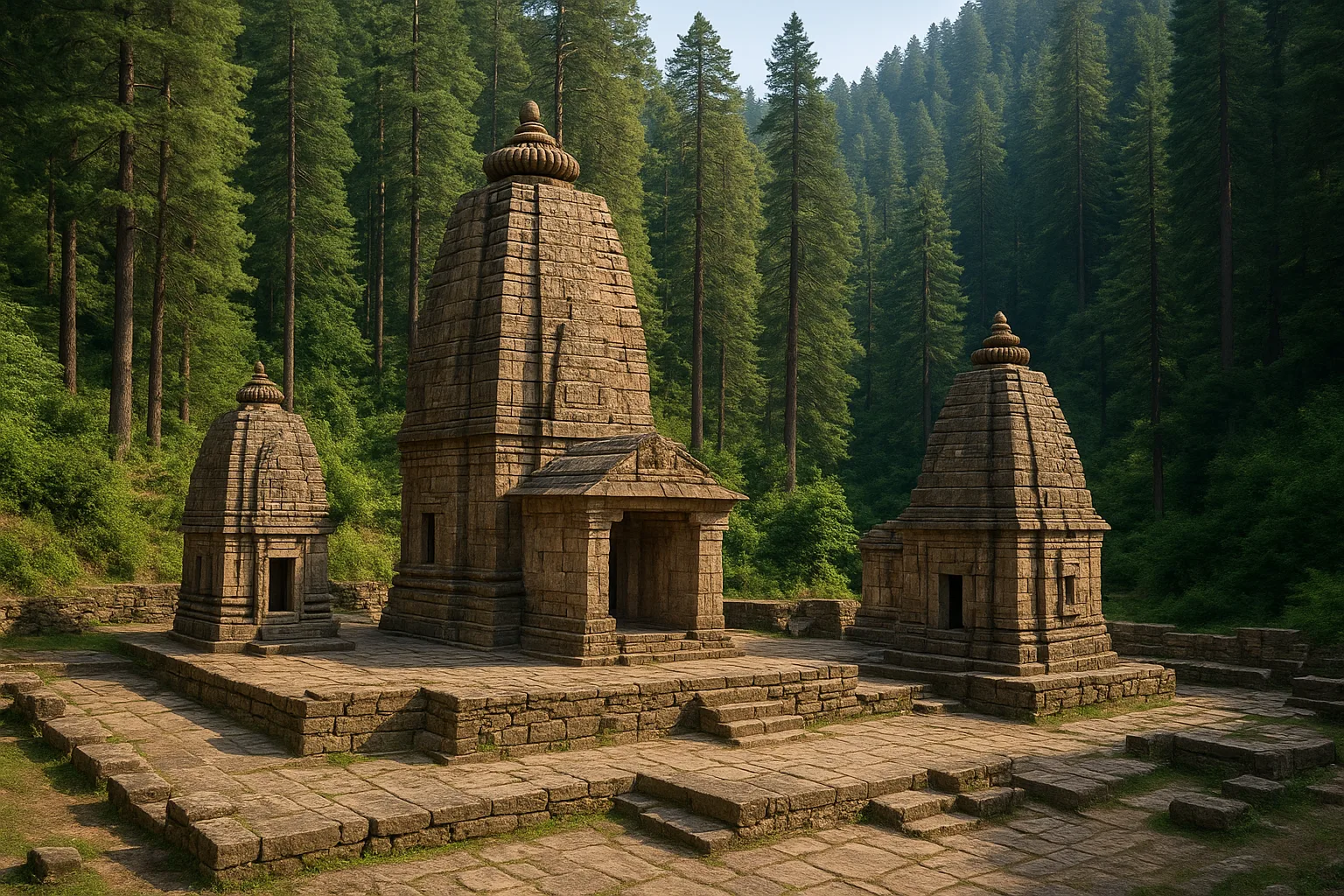
The construction of temples in the Shimla hills accelerated during the period of regional state formation, roughly between the 12th and 17th centuries CE. While earlier shrines were typically simple stone platforms or wooden shelters, the rise of hill principalities—such as Keonthal, Bushahr, and the smaller states of Koti and Jubbal—brought new patronage and architectural ambition. Gazetteers from the late 19th century often reference much older temple foundations, indicating a longstanding pattern of royal endowment.
Temples in pre-colonial Shimla were rarely grand in scale, but their placement was deliberate: sited on promontories, beside sacred groves, or at village centers, they functioned as both spiritual and administrative nodes. The temple priest, or pujari, sometimes doubled as the local record keeper or arbitrator, and the annual temple fair became a venue for trade, dispute resolution, and the reaffirmation of social bonds.
Historical records from neighboring regions—such as the chronicles of Bushahr and Kullu—suggest close ties between temple networks and the early hill rulers. It is plausible that similar dynamics existed in Shimla, with local chiefs seeking legitimacy through temple patronage and ritual sponsorship, though direct documentation from Shimla itself remains limited before the colonial period.
Communities, Pilgrims, and the Exchange of Belief
Religious life in pre-colonial Shimla was neither static nor insular. The region stood at the confluence of several cultural currents: influences from the plains mingled with traditions from the upper Himalayas and Tibet. Pilgrims traveling to the high-altitude shrines of Sarahan or the Buddhist monasteries of Spiti would often pass through the Shimla hills, sometimes leaving behind votive offerings or stories that became woven into local lore.
By the late medieval period, itinerant sadhus and Nath yogis were a common sight along hill paths, offering healing, prophecy, and spiritual instruction. Some accounts in regional gazetteers mention the presence of small Buddhist enclaves or the occasional Jain wayfarer, though the dominant ethos remained shaped by Shaivism and local goddess worship. These crosscurrents enriched the religious tapestry of Shimla, fostering a spirit of quiet tolerance and adaptation.
Faith and Everyday Life: Rituals, Festivals, and the Seasons
For most inhabitants of the Shimla hills, faith was embedded in the rhythms of daily existence. The agricultural calendar—marked by the sowing and harvest of barley, millet, and buckwheat—was punctuated by village festivals, processions, and communal rituals. The annual Jatar or Mela brought together far-flung hamlets in collective worship, feasting, and dance, reinforcing both religious and social cohesion.
Traditional wooden temples, with their tiered roofs and intricate carvings, bore witness to these cycles. While some of these structures have been rebuilt or renovated in recent centuries, their foundations often date back to earlier times. Oral histories recall the careful selection of timber, the invocation of local spirits, and the role of hereditary craftsmen in shaping sacred spaces.
Continuity and Change: The Legacy of Pre-Colonial Devotion
As the medieval period drew to a close and the shadow of new powers began to gather on the plains, the spiritual life of Shimla remained deeply anchored in its ancient roots. Many of the region’s most celebrated temples—such as those dedicated to Shyamala, Tara Devi, and Jakhoo Hanuman—trace their origins, at least in legend, to this formative era. The rituals, festivals, and communal bonds forged in pre-colonial times continue to animate the city’s religious calendar, linking modern Shimla to its ancestral past.
The next part of this series will explore the arrival of colonial influence in the Shimla hills, and how faith, identity, and sacred space adapted in the face of momentous change.
Previous: Village Life and Economy in Medieval Shimla Hills
Next: Why Shimla Remained a Quiet Backwater Before the British