
Series: The UK Allotment Year
Phase 1: The Allotment Year — Month by Month — Part 4 of 50
This phase walks through the UK allotment year month by month — from planning in January to reflecting in December. Perfect for beginners or seasoned growers who want a month-by-month checklist for thriving plots.
April Growing Guide: Potatoes, Peas, and Polytunnel Action
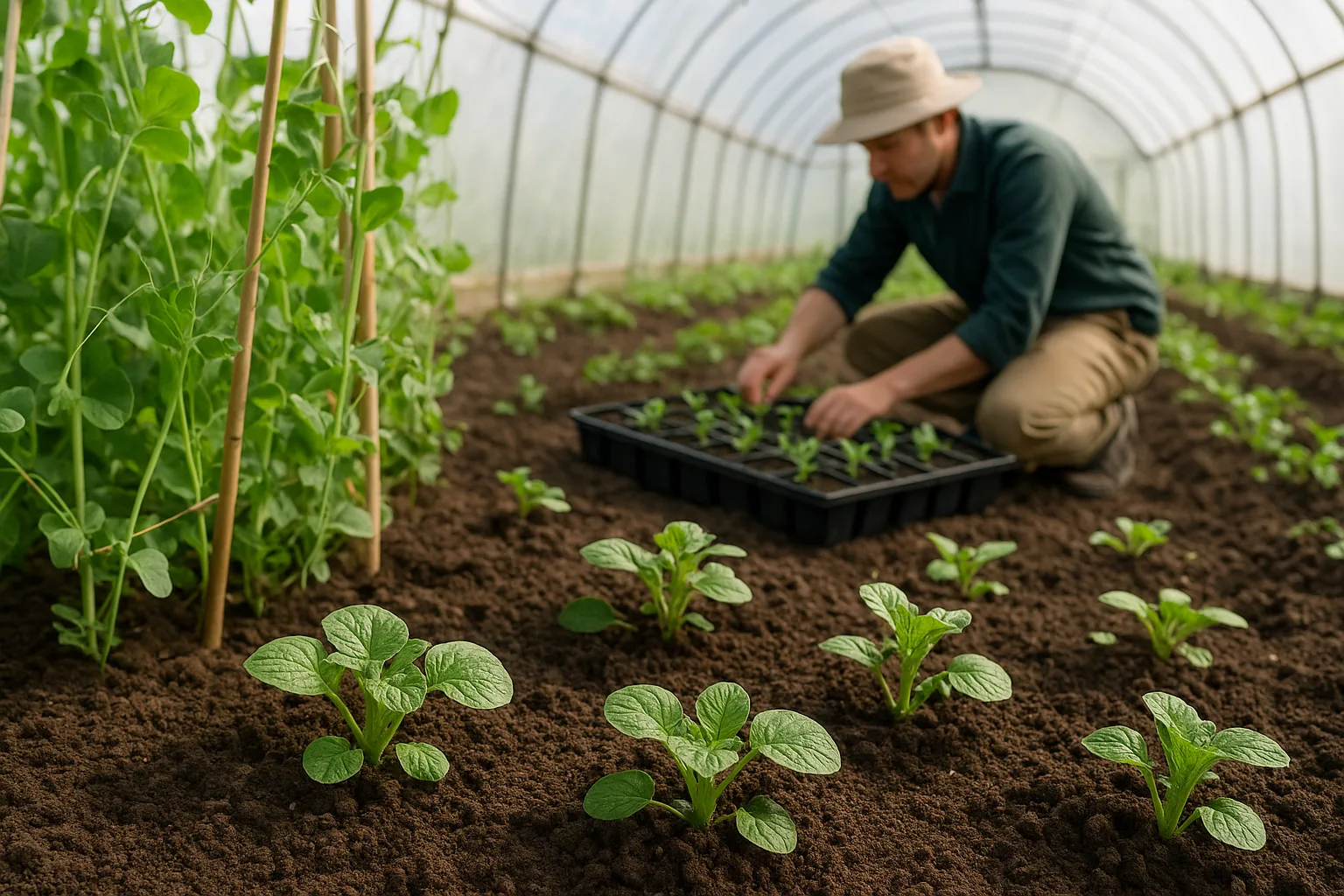
April marks a turning point on your UK allotment. The soil is warming, daylight hours are stretching, and this is the perfect window to get key crops like potatoes and peas in the ground. Your polytunnel is also coming into its own, offering a sheltered environment to start tender crops and extend the growing season. With a few well-timed tasks, you can set yourself up for a productive spring and early summer harvest.
Planting Potatoes in April
Potatoes are a staple crop and April is often the ideal month to plant most early and maincrop varieties across the UK, depending on your local soil conditions and frost risk.
- Choose your seed potatoes: Select certified seed potatoes from a reliable source. Early varieties can go in from early April, while maincrop types can be planted later in the month.
- Prepare your soil: Potatoes prefer well-drained, fertile soil with a pH of 5.0–6.0. Remove weeds, fork over the soil to a depth of about 20cm, and add well-rotted compost or organic matter to improve texture and nutrients.
- Chit your potatoes: Before planting, leave seed potatoes in a cool, light place to encourage short, sturdy shoots (chitting). This usually takes 2–4 weeks but if you haven’t done this, plant them anyway — better late than never.
- Planting technique: Dig trenches about 15cm deep and 30cm apart. Place seed potatoes with the shoots facing upwards, spaced roughly 30cm apart in the trench. Cover lightly with soil.
- Earthing up: As shoots grow, earth up soil around the stems to protect tubers from sunlight (which causes greening) and support the plants.
- Watering and mulching: Keep the soil moist but not waterlogged, especially during dry spells. Mulching with straw or well-rotted manure can help retain moisture and suppress weeds.
Sowing Peas Outdoors and Under Cover
Peas are one of the easiest and most rewarding crops to grow in April, thriving in cooler weather and improving soil with their nitrogen-fixing roots.
- Varieties: Choose from early, maincrop, or sugar snap peas depending on your preference.
- Sowing outdoors: Sow peas directly into well-prepared soil, about 5cm deep and 5cm apart. Rows should be spaced 40–50cm apart. April is perfect for sowing early peas.
- Under cover: If you have a polytunnel, sow peas a little earlier in pots or modules to get a head start, then transplant or sow direct inside for protection from late frosts and slugs.
- Support: Provide pea sticks, netting, or canes for climbing varieties. This keeps plants off the ground and improves airflow.
- Watering: Keep soil moist, especially during germination and flowering.
Making the Most of Your Polytunnel in April
Your polytunnel is a valuable asset in April, allowing you to extend the growing season and protect tender plants from unpredictable spring weather.
- Ventilation: As temperatures rise during the day, open vents or doors to prevent overheating and maintain airflow.
- Soil preparation: Clear out any debris and add fresh compost or manure to boost fertility.
- Sow early crops: Start tomatoes, peppers, aubergines, cucumbers, and salad leaves from seed. These thrive in the warmer, sheltered environment.
- Pot up seedlings: Harden off any plants started indoors by gradually exposing them to outdoor conditions before moving outside later in the season.
- Watering and feeding: Polytunnel soil can dry out quickly—water regularly and consider organic liquid feeds like seaweed or comfrey teas to support vigorous growth.
Quick Checklist for April
- Prepare and drill potato trenches; plant seed potatoes.
- Sow peas outdoors and under cover; provide supports.
- Prepare polytunnel soil and start warm-loving seeds.
- Maintain polytunnel ventilation on sunny days.
- Water young plants and mulch where possible.
- Remove weeds and monitor for pests like slugs.
Common Mistakes to Avoid in April
- Planting potatoes too early in cold, wet soil: This can cause rotting. Wait until soil is workable and not waterlogged.
- Overcrowding peas: Crowded plants reduce airflow, increasing disease risk. Follow spacing guidelines.
- Neglecting polytunnel ventilation: Without airflow, heat and humidity build-up can encourage fungal problems.
- Ignoring soil preparation: Skipping compost or organic matter additions limits growth potential.
- Failing to protect young plants from late frosts: Use fleece or cloches if a cold snap is forecast.
Tools and Materials You’ll Need
- Spade and fork for soil preparation.
- Garden trowel for planting and potting on.
- Seed potatoes and pea seeds.
- Compost and well-rotted organic matter (manure or leaf mould).
- Mulch materials like straw or grass cuttings.
- Pea sticks, netting, or canes for support.
- Watering can or hose with a fine rose.
- Polytunnel venting tools or manual vent openers.
- Organic liquid feeds (e.g. seaweed or comfrey tea).
- Garden fleece or cloches for frost protection.
Next Steps for April and Beyond
Once you’ve got potatoes and peas planted and your polytunnel bursting with seedlings, keep an eye on soil moisture and temperature. Continue sowing successive batches of peas every few weeks to extend your harvest. In the polytunnel, gradually introduce more tender crops as the month progresses.
Also, start planning your summer sowings and consider preparing beds for brassicas and root vegetables. Regularly inspect your plot for pests and diseases, using organic controls and encouraging beneficial insects where possible.
April is about building momentum. With steady care and attention now, you’ll enjoy a satisfying harvest later in the season.
Previous: March Allotment Jobs: Soil Prep and First Seed Sowing
Next: May on the Plot: Protecting Seedlings from Frost and Pests