
Series: History of Sirmaur, Himachal Pradesh, India
Phase 1: Ancient & Early Roots — Part 3 of 30
This article is part of a broader historical series exploring the earliest layers of human presence in the western Himalayas. Beginning with landscape, belief, and early patterns of movement and settlement, the series traces how communities adapted to mountainous environments long before formal states or written records emerged. These foundational centuries shaped cultural memory, local traditions, and relationships with the land that would endure through later periods of change.
Before the Kingdom: Sirmaur’s Ancient Morning
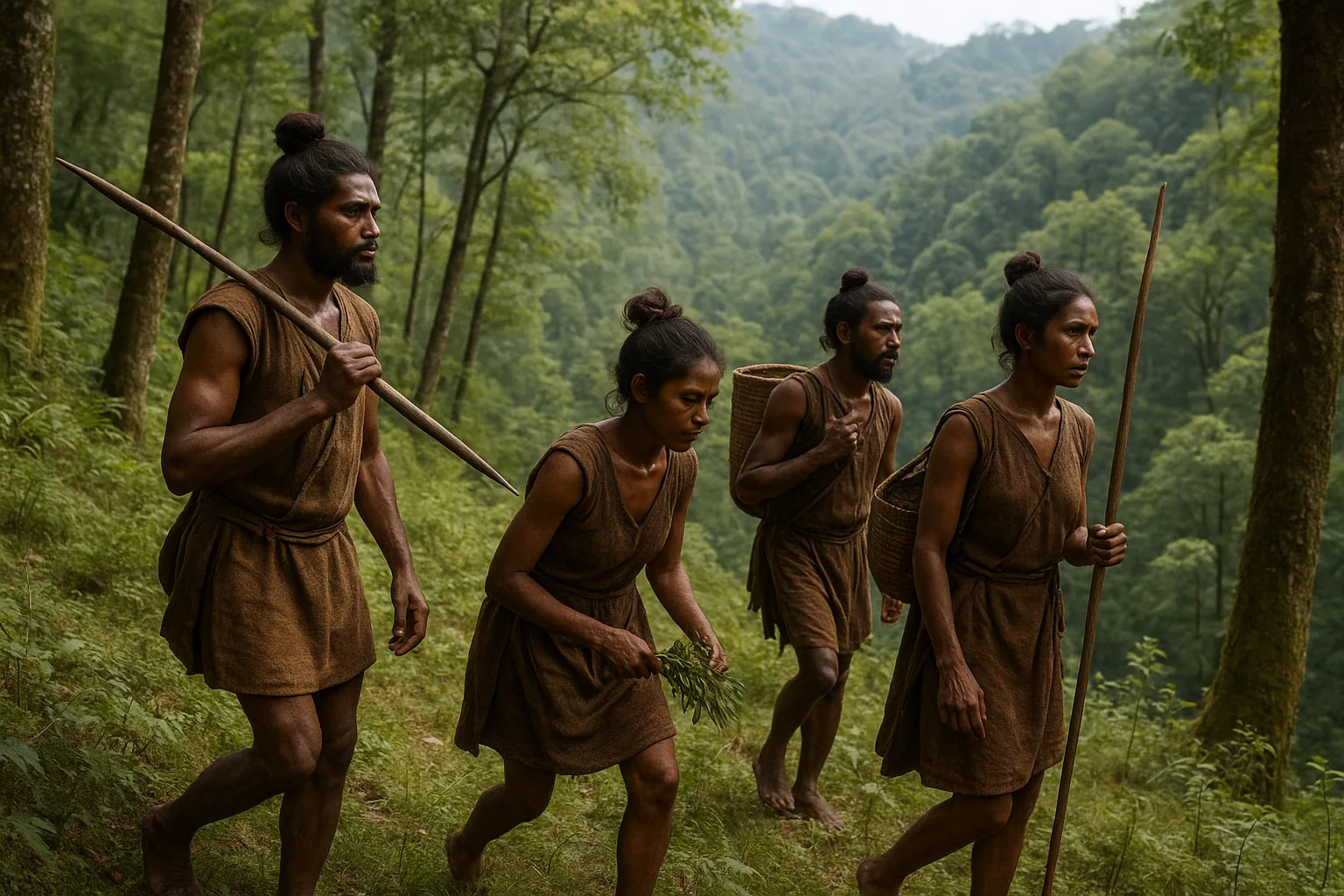
The mists of early morning drift across the Shivalik foothills. Before the clang of palace bells or the intrigue of royal courts, the valleys and ridges of what would become Sirmaur echoed with different voices—voices of the region’s earliest communities, who called these forests and rivers home long before the idea of kingship was born.
Land at the Crossroads: Sirmaur’s Prehistoric Setting
Sirmaur, situated at the south-eastern edge of present-day Himachal Pradesh, occupies a landscape where the hills begin their slow ascent from the plains. Archaeological traces suggest that human presence here stretches deep into the Stone Age, with microlithic tools occasionally surfacing in the riverbeds of the Giri and Bata. These hints set the stage for a region shaped by migration, adaptation, and the steady hand of time.
Ancient routes—some only faintly traceable today—linked Sirmaur’s hills to the Yamuna plains and the Sutlej valley. Through these corridors, ideas and goods filtered in, but for many centuries, the land’s story was written by its earliest inhabitants: tribal societies whose names surface in oral traditions and early regional chronicles.
Voices of the Hills: The Kol, Khasa, and Kirata
The earliest communities of Sirmaur are remembered in fragments—echoes in folk songs, tales, and the accounts of later chroniclers. Among the most persistent names are the Kol (sometimes called Koliyan), the Khasa, and the Kirata. Their origins are obscured by time, but each left impressions on the land and its people.
- The Kol: Widely mentioned in the hills of North India, the Kol are often linked by anthropologists and colonial-era gazetteers to the present-day Koli community. In Sirmaur, they were described as forest dwellers—adept at shifting cultivation, living close to nature, and worshipping ancestral spirits and local deities.
- The Khasa: The Khasa, according to both oral tradition and Sanskritic sources, were hill people with a distinct identity. Some traditions trace their movements across the western Himalayas, including Sirmaur, where they are credited with introducing new agricultural techniques and social customs.
- The Kirata: The Kirata, mentioned in early Indian texts, were regarded as indigenous to the Himalayan foothills. While their precise connection to Sirmaur is debated, they are remembered in regional lore as skilled hunters and guardians of the forests.
These communities were not isolated. They interacted—sometimes peacefully, sometimes through contest—leaving behind a patchwork of dialects, festivals, and sacred groves that still mark Sirmaur’s cultural landscape.
Belief, Ritual, and the Land
For the ancient tribes of Sirmaur, religion was woven into the fabric of everyday life—intimately connected to the rhythms of the seasons and the needs of the community. The worship of Gram Devtas (village gods), sacred stones, and forest spirits predated the arrival of structured Hinduism. Oral traditions, still preserved in the songs of Koli bards or the rituals of local temples, recall a world where the forest was alive and every river crossing had its guardian spirit.
Later chronicles and regional gazetteers describe these beliefs not as static relics, but as evolving practices, adapting to new influences even as they anchored the identities of the hill people. The persistence of local festivals—such as the Bisu or Sair—remains a subtle testament to these deep roots.
Trade, Migration, and Early Settlements
Though Sirmaur’s terrain is rugged, its valleys have long served as routes for traders and migrants. Early settlements clustered near water sources—the Giri, Tons, and Markanda rivers—where the land was fertile enough for millet and barley. Archaeological finds, though sparse, occasionally reveal pottery shards and ancient hearths, suggesting small but stable communities.
Interactions with neighboring regions were inevitable. Some oral traditions recount the arrival of new groups—possibly Aryan-speaking settlers or migrating artisans—who brought fresh skills and beliefs. The gradual mingling of populations gave birth to hybrid customs and, in time, the embryonic forms of political organization.
From Clan to Chieftain: The First Steps Toward States
The move from tribal autonomy to early hill states was neither swift nor uniform. Over generations, some clans grew in prestige—perhaps through control of vital trade paths, or by forging alliances through marriage and ritual. By the first centuries CE, a handful of chieftains had begun to assert authority over larger territories, sometimes adopting titles like Thakur or Rana.
Regional chronicles, such as the Sirmaur Gazetteer, speak of a landscape dotted with fortified hamlets, each loyal to its own leader but increasingly drawn into broader networks of allegiance and rivalry. The seeds of monarchy were sown in this soil of shifting loyalties and ambition.
Legacy and Enduring Identity
Though the names of Sirmaur’s ancient tribal communities may have faded from everyday speech, their influence endures. Many present-day customs, festivals, and even agricultural practices carry echoes of those distant ancestors. In the dialects spoken in Sirmaur’s villages, and in the reverence still shown to the ancient deities of forest and field, the memory of these communities lives on.
As we move forward in this series, we’ll trace how these tribal roots shaped the emergence of Sirmaur’s first dynasties and the political imagination of the region. The next part will journey into the dawn of monarchy, where oral legend and recorded history begin to walk side by side.
Previous: Geography That Shaped Early Life in Sirmaur
Next: Early Religious Beliefs and Sacred Sites of Sirmaur