
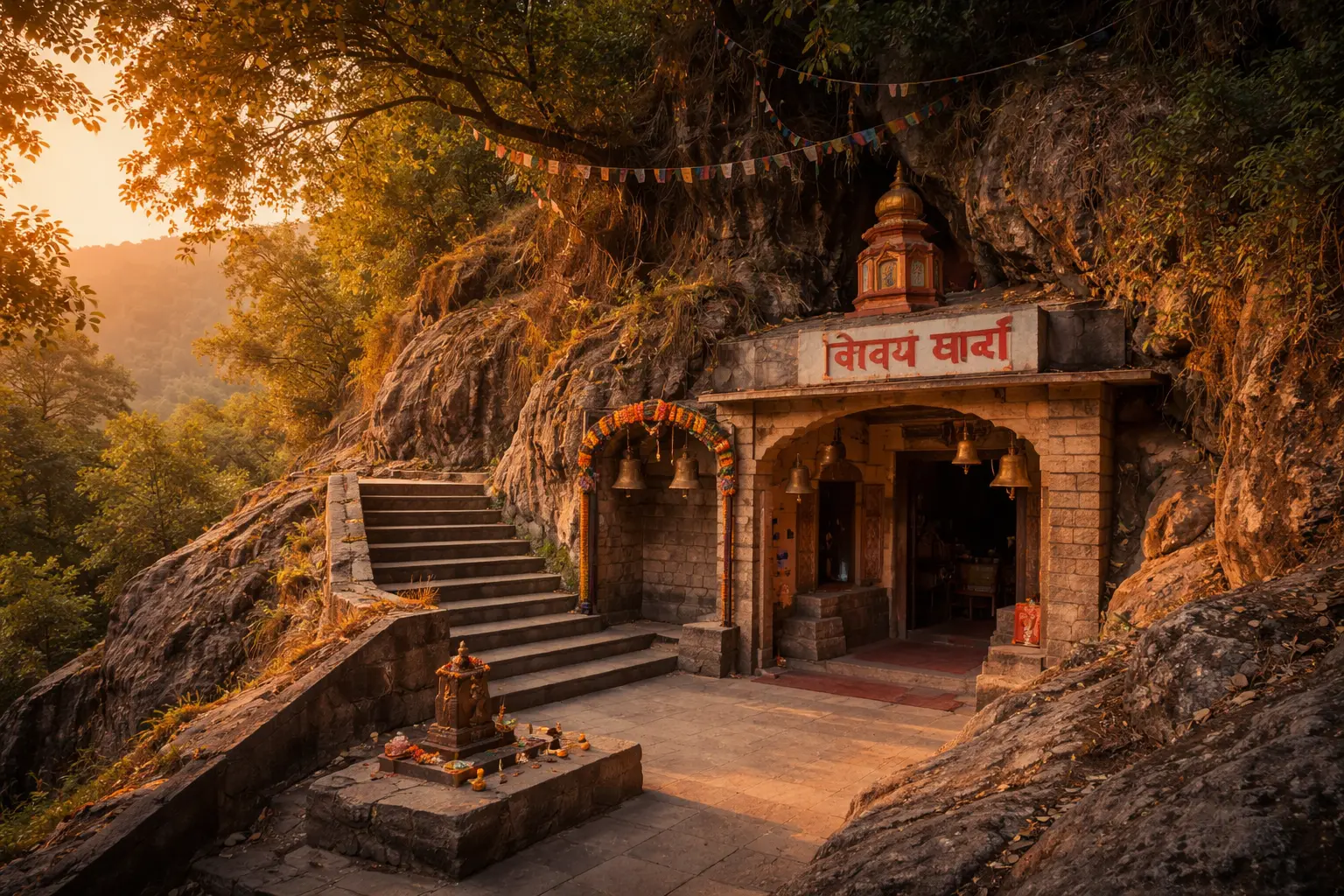
🕉️ Vyas Gufa, Bilaspur: The Ancient Cave of Sage Vyasa
Hidden along the tranquil banks of the Sutlej River in Bilaspur, Himachal Pradesh, lies one of India’s oldest and most revered spiritual landmarks — Vyas Gufa, or the Cave of Sage Vyasa. This sacred site connects mythology, history, and devotion, believed to be the very place where the great sage Ved Vyasa composed the Mahabharata, one of the world’s longest and most profound epics.
🌄 A Cave Steeped in Legend
According to Hindu scriptures, Sage Vyasa meditated here thousands of years ago. The cave’s location, overlooking the Sutlej River, provided the ideal solitude for deep reflection and divine inspiration. It is said that Lord Ganesha himself acted as Vyasa’s scribe, writing down the verses as the sage dictated them — a timeless collaboration that gave birth to the Mahabharata.
Locals believe that the vibrations of Vyasa’s meditation still resonate within the cave walls, creating an atmosphere of peace and spiritual energy that continues to attract pilgrims, sadhus, and curious travellers.
🛕 The Sacred Architecture
Vyas Gufa stands as a natural rock formation that has been preserved and enshrined within a temple structure. The entrance is adorned with intricate carvings and images of deities, leading into a dimly lit cave interior. Inside, a small sanctum houses ancient idols of Sage Vyasa and other Hindu deities.
The cave’s stone walls, damp with time and devotion, seem to whisper stories from millennia past. The air inside is cool and still, carrying the faint fragrance of incense and the sound of soft chants from devotees.
📜 Historical and Cultural Significance
Historians trace the site’s origins to the Vedic period, with references found in Puranic texts. Over centuries, Vyas Gufa became a center for learning and spiritual discourse, visited by scholars, saints, and travellers from across the subcontinent. The cave also forms a symbolic link between mythology and the physical world — a tangible reminder of India’s oral storytelling traditions.
The nearby town of Bilaspur, which now lies partly submerged beneath the Gobind Sagar Lake, was once the heart of the princely state of Kahlur. Vyas Gufa stands resilient above these waters, serving as a bridge between the past and the present.
📍 Visiting Vyas Gufa
Vyas Gufa is easily accessible from Bilaspur town, located just a few kilometres from the main bus stand. Visitors can also explore nearby spiritual and historical landmarks such as:
- Markandeya Temple — another ancient site linked to Sage Markandeya.
- Gobind Sagar Lake — offering serene views and boat rides.
- Naina Devi Temple — one of the 51 Shakti Peethas, just a short drive away.
Best time to visit: October to March, when the weather is pleasant and the surroundings are lush and calm.
🌅 The Eternal Spirit of Sage Vyasa
For devotees and seekers alike, Vyas Gufa is more than just a historical site — it’s a living embodiment of India’s spiritual heritage. The silence of the cave, broken only by the sound of the Sutlej River flowing nearby, feels like a direct connection to the divine mind that once resided here.
To stand before the cave’s entrance is to stand before a chapter of timeless wisdom — one that continues to echo through the ages.
💬 Have you visited Vyas Gufa? Share your experiences, stories, and photos in the comments below — let’s keep the legacy of Bilaspur’s sacred heritage alive.
Explore the lesser-known history of Bilaspur, Himachal Pradesh, through our ongoing blog series: