
Series: History of Chamba, Himachal Pradesh, India
Phase 1: Ancient Roots — Part 1 of 30
This article is part of a broader historical series exploring the earliest layers of human presence in the western Himalayas. Beginning with landscape, belief, and early patterns of movement and settlement, the series traces how communities adapted to mountainous environments long before formal states or written records emerged. These foundational centuries shaped cultural memory, local traditions, and relationships with the land that would endure through later periods of change.
Twilight in the Valley: A Shepherd’s Return
The sun dipped behind the snow-streaked peaks as a lone shepherd guided his flock along a riverbank. The air was tinged with pine and the faint aroma of woodsmoke. This scene—mundane, yet monumental—has unfolded in the valley of Uchamba for thousands of years. Long before Uchamba became a point on a colonial surveyor’s map, its story was written in the footsteps of migrating tribes, whispered across forests, and etched into the stones of forgotten shrines.
The Land Before Names
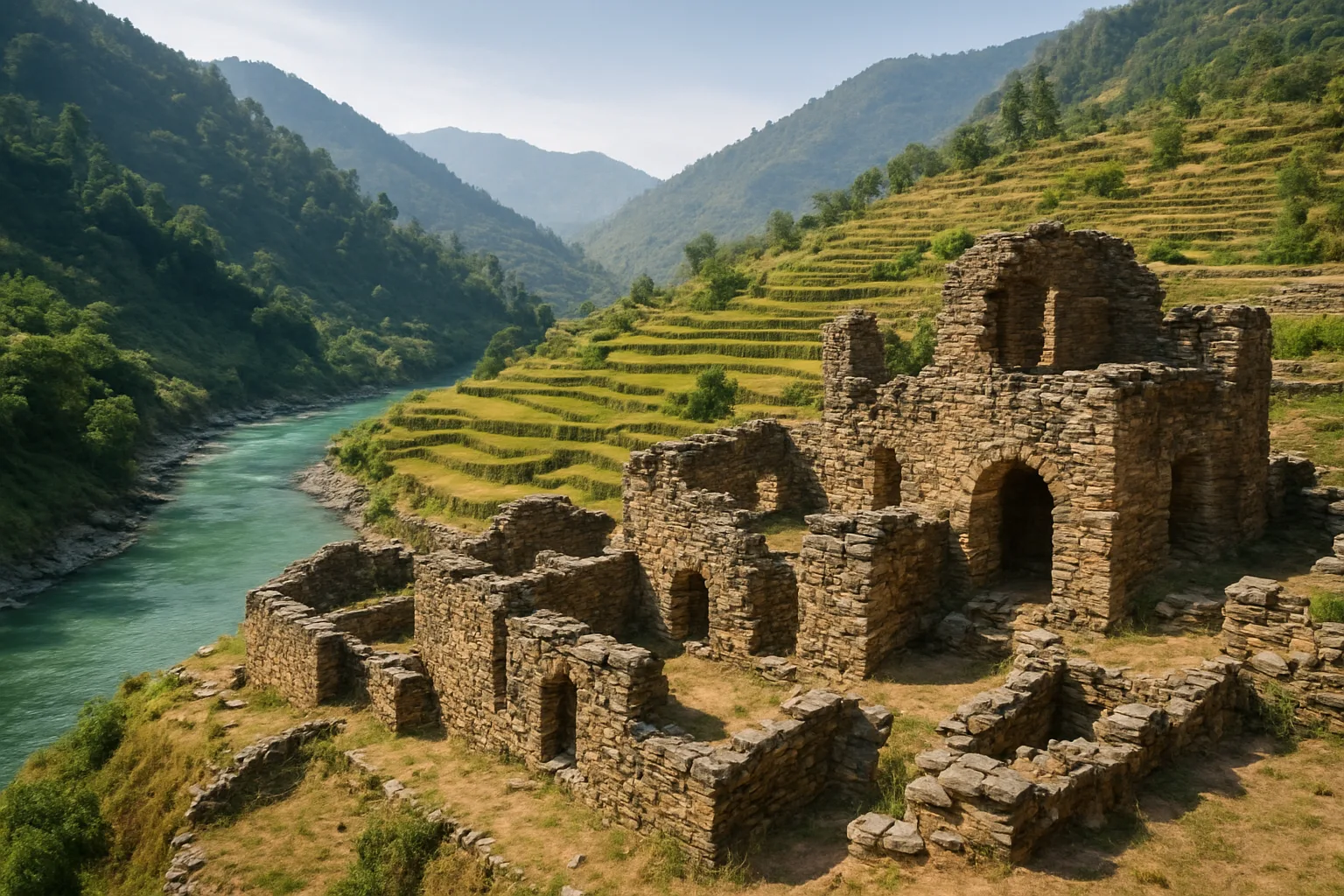
Uchamba lies nestled between the Ravi and Chenab rivers, at the northern edge of what we now call Himachal Pradesh. Its earliest days are shrouded in the deep mists of prehistory, when the Himalayas themselves were still young. Archaeological traces—broken microliths, pottery shards, and petroglyphs on river rocks—suggest that semi-nomadic peoples wandered these valleys as early as 2000 BCE. The region’s rich soils and accessible passes made it a natural gathering place, a crossroads for trade, worship, and seasonal migration.
Ancient legends, preserved in local Pahari oral traditions, speak of the “first people”—the Kuluta and the Kirata—hunter-gatherers who learned to coax barley and millet from the earth. They revered the rivers as goddesses and the mountains as silent guardians. Even as the wider world changed, Uchamba’s earliest inhabitants maintained a rhythmic life, marked by the turning of seasons and the timeless procession of stars above the Dhauladhar range.
The Arrival of Sages and Settlers
As Vedic culture began to shape the subcontinent around 1500 BCE, Uchamba’s valleys became sanctuaries for wandering sages seeking isolation and inspiration. The sage Vyasa is said to have meditated by the riverbanks, his words echoing through the forests in hymns and stories. Here, the land’s isolation provided fertile ground for syncretic beliefs—a blending of Vedic deities with ancient animism and local nature cults.
Stone shrines began to rise, dedicated to both the Mahadeva and older, unnamed spirits. The earliest settlements, clustered along river terraces, left behind little more than rings of stones and the faint outlines of terraced fields. Yet the presence of these early communities foreshadowed Uchamba’s enduring role as both a spiritual retreat and a vital stop on the Himalayan trade arteries.
Kingdoms at the Edge: The Rise of Chamba Rule
By the early centuries CE, the wider region fell under the sway of emerging Himalayan polities. The Chamba kingdom, founded by Raja Maru Varman in the 6th century CE and named after his daughter Champavati, gradually extended its influence into Uchamba’s valleys. Royal records from the Chamba rajas—meticulously inscribed in copperplate grants—describe Uchamba as a borderland: a source of timber, pastures, and hardy men for the kingdom’s armies.
Local chiefs, known as thakurs, managed the day-to-day affairs, collecting tribute in grain and livestock and maintaining the delicate balance between royal authority and village autonomy. The Chamba rajas built temples and rest-houses along the mountain paths, their stonework blending seamlessly with older sacred sites. Uchamba became a minor administrative hub, its markets bustling with traders carrying salt, wool, and dried fruit from distant Ladakh and Kashmir.
Encounters and Transformation: Medieval Uchamba
The medieval era brought new challenges and opportunities. The valleys of Uchamba found themselves at the crossroads of shifting powers—the encroachment of Rajput warlords to the south, the growing influence of Tibetan Buddhism to the north, and the distant thunder of the Delhi Sultanate’s ambitions. The region’s remoteness shielded it from direct conquest, but the impact of external cultures was undeniable.
It was during this period that Uchamba’s artisans began to create the distinctive Pahari miniature paintings—delicate works on paper and cloth, filled with scenes of gods, lovers, and the surrounding Himalayan landscape. Temples were adorned with intricate woodcarvings, and fairs honoring both Hindu and indigenous deities drew pilgrims from across the hills. The valley’s oral epics told of local heroes who defended their land from invaders and natural disasters alike, blending history and folklore into a living narrative.
The Colonial Gaze: Uchamba in the British Imagination
When British surveyors arrived in the mid-19th century, Uchamba was a world apart—a land of deep forests, tight-knit villages, and a fierce sense of independence. The colonial administrators, fascinated by the region’s strategic location and picturesque beauty, documented its customs, dialects, and geography. Uchamba’s forests, once sacred groves, became sources of commercial timber; its rivers, mapped for irrigation and transport.
- Captain A. Cunningham, the famed archaeologist, passed through Uchamba in the 1840s, noting its ancient shrines and curious legends.
- British gazetteers described the valley as “a place of uncommon tranquility, where the ancient ways persist and the mountains stand eternal.”
The colonial period brought roads, schools, and new crops, but also deep social changes. The age-old balance between man and mountain began to shift, setting the stage for Uchamba’s entry into the modern world.
Living Memory: Uchamba’s Heritage in the 21st Century
Today, Uchamba is a tapestry woven from its ancient roots and the stories of its people. The echoes of shepherds and sages still linger in the songs sung at local festivals and the quiet rituals performed on riverbanks at dawn. Old temples, their stones worn smooth by centuries of prayer, remain centers of communal life. The legacy of Pahari art endures in the hands of local painters and carvers, who blend traditional motifs with contemporary themes.
Modern Uchamba faces new challenges—migration, climate change, and the pressures of tourism—but its history continues to provide a foundation of identity and resilience. The valley’s past is not a distant relic but a living inheritance, shaping the values, hopes, and imagination of its people. In Uchamba, the ancient story endures, one twilight at a time.
Next: Mythological Legends Associated with Chamba