
Series: Bilaspur Himachal History
Phase 3: Mughal, Sikh & Gorkha Period — Part 12 of 29
Whispers in the Courtyard: A Winter’s Morning in Bilaspur
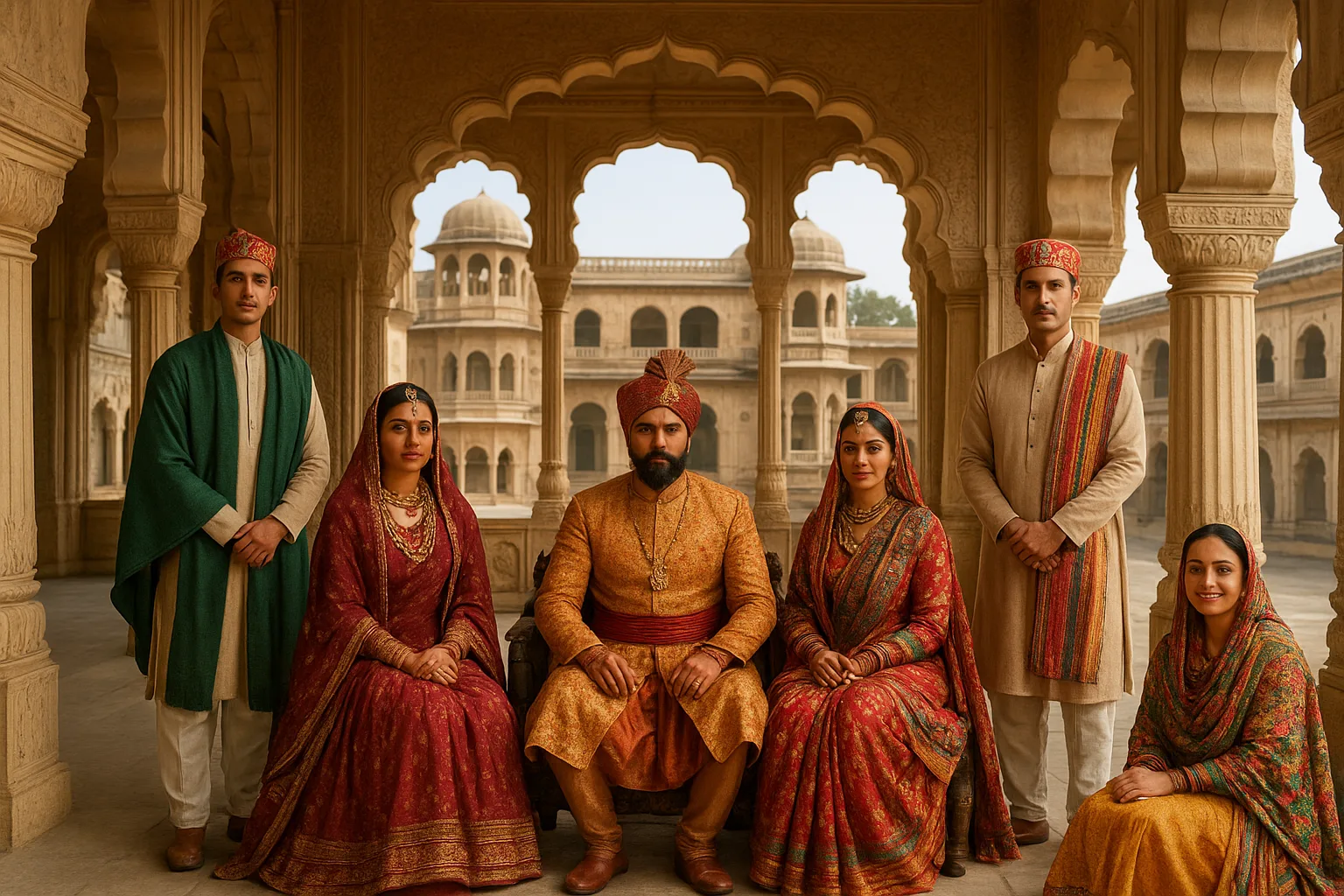
The mist clings to the terraced hills above the Sutlej River, muffling the faint echo of a conch shell. In the marble-floored courtyard of Kahlur Fort, a Rajput prince paces, his sword glinting in the pale sunlight. Servants, barefoot and silent, unfurl silk banners bearing the old family crest. Today, emissaries from the distant Mughal court are expected. The year is 1620, and Bilaspur stands at the crossroads of ambition and tradition, its fate entwined with the pulse of the empire to the south.
The Rajput Legacy: Foundations of Bilaspur’s Royal Court
Long before the Mughal shadow reached Himachal’s lower hills, Bilaspur—then known as Kahlur—flourished as a proud Rajput state. Founded around 697 CE by Bir Chand, Kahlur’s royal house claimed direct descent from the legendary Chandelas of Bundelkhand. For centuries, it was a realm of rugged independence, where the raja’s word was law and loyalty to clan and deity ran deep.
The court was an anchor for local culture: a place where Sanskrit verses were recited in candlelit halls, and folk musicians played the rabab and dhol for festive gatherings. The rajas of Bilaspur patronized temples and artisans, and their palaces—though modest by imperial standards—were alive with color, music, and ritual.
Arrival of the Mughals: Envoys, Tribute, and New Customs
By the late 16th century, the Mughal Empire’s long arm reached the Himalayan foothills, reshaping the balance of power. Akbar’s conquests brought neighboring Kangra and Nurpur under imperial sway, and Bilaspur’s rulers faced an uneasy choice: resist and risk ruin, or submit and survive.
Records from the Akbarnama and later accounts note that Raja Kalyan Chand (r. 1579–1637) navigated this new world with calculated diplomacy. He sent gifts—cashmere shawls, honey, and horses—to Lahore, and in return, received imperial titles and a degree of autonomy. Mughal envoys arrived in Bilaspur bearing gold-threaded robes, Persian scrolls, and the subtle expectation of tribute.
This was not mere subjugation; it was cultural exchange. Bilaspuri courtiers learned Persian etiquette, adopting elements of Mughal dress and cuisine. The royal kitchens experimented with saffron rice and dried fruits. Musicians introduced new ragas, and poets composed couplets that blended Hindi with Persian metaphors.
Pageantry and Protocol: Life Inside the Hill Court
Daily life in the Bilaspur court became a tapestry of old and new. Mornings began with the raja’s darbar, an audience where justice was dispensed beneath painted ceilings. Petitions were heard in Pahari dialect, but the official scribes increasingly recorded verdicts in Persian script—a sign of the times.
The rani’s quarters, shaded by latticed windows, hummed with activity: weavers spinning fine pashmina, maidservants embroidering robes, and children reciting couplets from both Sanskrit epics and Sufi poetry. Festivals—Holi, Diwali, Eid—were celebrated with equal fervor, reflecting a growing syncretism. The springtime festival of Basant Panchami, for instance, saw both Rajput and Mughal officials exchanging garlands and verses.
- Rituals: Ceremonial baths in the Sutlej before major decisions
- Entertainment: Chess matches, kathak performances, and falconry displays
- Education: Young nobles tutored in swordsmanship, statecraft, and Persian literature
Alliances and Intrigue: Marriages, Treaties, and Betrayals
Political life in Mughal-era Bilaspur was marked by shifting alliances and subtle intrigue. The rajas often married into nearby Rajput and even Mughal noble families, cementing their status and broadening their influence. In 1663, Raja Dip Chand’s daughter was wed to a noble from the Mughal court, a union witnessed by chroniclers as a sign of growing integration—and mutual suspicion.
Yet, beneath the surface, anxieties simmered. Mughal governors in Punjab watched the hill rajas closely, wary of rebellion. Bilaspur’s court maintained secret correspondences with Kangra, Chamba, and Mandi, seeking to balance imperial demands with old loyalties. There were moments of open conflict, too, as when Raja Bhim Chand (late 17th century) clashed with Mughal officers over revenue rights and the sacredness of local shrines.
Every negotiation, marriage, and festival became a stage for subtle resistance and adaptation. The court’s chroniclers, writing in both Persian and old Hindi, recorded these moments with a mix of pride and caution—a testament to Bilaspur’s determination to shape its own destiny.
Patronage and the Arts: Painting, Poetry, and Sacred Architecture
Even as Bilaspur navigated the currents of empire, its court became a crucible for artistic innovation. Paintings from this era—delicate miniatures on palm leaf and paper—depict both Rajput heroes and Mughal huntsmen, their colors vivid against the smoky hills. The famed Bilaspuri school of painting, though less celebrated than Kangra’s, flourished in the 17th and 18th centuries, shaped by the crosswinds of Persian and indigenous styles.
Royal patronage extended to poets who composed doha and ghazal, blending local folklore with the mystic imagery of Sufi saints. Temples and mosques rose side by side along the Sutlej, their carvings reflecting both Hindu and Islamic motifs. The Naina Devi temple, in particular, became a focal point of pilgrim life, its annual fairs drawing traders and ascetics from across North India.
The court’s library expanded, housing works in Sanskrit, Persian, and even early Urdu. Tales of valor and love circulated in both oral and written form, creating a shared cultural memory that outlived the rulers themselves.
Turbulence and Transformation: Mughal Decline and Bilaspur’s Resilience
The 18th century brought new turbulence. As Mughal authority waned, Sikh and Gorkha incursions threatened the fragile peace of the hills. Yet the patterns of court life established during the Mughal age endured. The rituals, etiquette, and artistic tastes that had once signaled deference to empire now became markers of local identity.
Rajas like Mahan Chand (r. 1778–1824) invoked the legacy of their Mughal-era ancestors even as they negotiated with new powers. The court remained a center of ceremony and administration, and its blend of Rajput pride and Mughal sophistication—visible in everything from the architecture of forts to the cadence of local folk songs—offered a sense of continuity amid upheaval.
Echoes of Empire: The Mughal Legacy in Modern Bilaspur
Today, Bilaspur’s landscape is transformed; the old fort lies submerged beneath the Govind Sagar reservoir, and traces of the Mughal courts survive only in scattered manuscripts and fading murals. Yet the memory of that era lingers in the rhythms of daily life: in the stories recounted during festivals, the melodies of devotional songs, and the subtle flavors of the region’s cuisine.
Bilaspur’s Mughal-age court was a place of tension and creativity, where old and new mingled in unexpected ways. Its legacy—of resilience, adaptation, and artistic fusion—continues to shape the district’s identity. In a world where borders shift and empires rise and fall, the culture of Bilaspur reminds us how local traditions can absorb, transform, and outlast the grand designs of history.
Previous: Why Kahlur Never Fully Fell to Mughal Rule
Next: Bilaspur and Guru Gobind Singh: A Turbulent Hill Alliance