
Series: Bilaspur Himachal History
Phase 3: Mughal, Sikh & Gorkha Period — Part 10 of 29
Twilight in the Hills: A Day of Reckoning
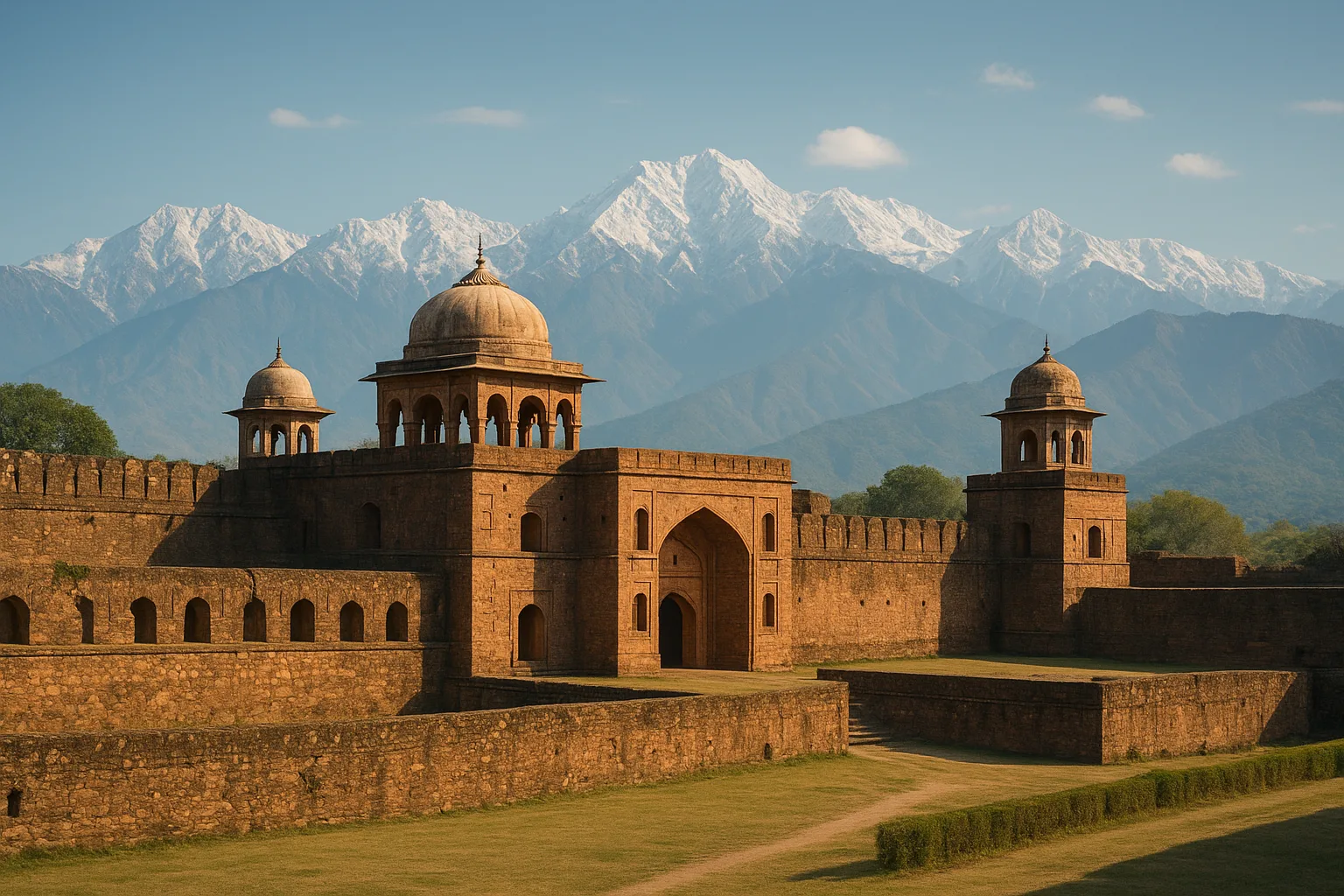
The air hung heavy over Bilaspur’s old fort, its stone walls golden in the late afternoon sun. Inside the audience hall, Raja Kalyan Chand stood before a delegation sent by Emperor Akbar. Tension crackled between the regal calm of the Raja and the silk-robed imperial envoys, their words as sharp as the swords at their sides. This was no mere diplomatic courtesy—this was a moment that would decide if Bilaspur remained its own master or bent the knee to the greatest empire India had ever seen.
Centuries later, echoes of that day linger in Bilaspur’s hills. The story of how this Himalayan principality navigated the Mughal tide is one of cautious diplomacy, resilient identity, and the subtle art of survival.
Between Mountain and Empire
Bilaspur, nestled along the banks of the Satluj, was no stranger to upheaval long before the Mughals. Its ruling Chandel dynasty, claiming descent from the legendary Chandela kings of Bundelkhand, had weathered invasions, natural disasters, and shifting alliances since its founding in the late 7th century. By the 16th century, however, the world beyond Bilaspur’s valleys was changing faster than ever.
The rise of the Mughal Empire under Babur and Humayun sent tremors up the Himalayan foothills. When Akbar ascended the throne in 1556, he unleashed a wave of expansion and reform that swept across North India. Hill states like Bilaspur, small but fiercely independent, found themselves facing a choice: challenge Delhi’s authority and risk destruction, or acknowledge the empire and preserve a measure of autonomy.
Akbar’s Shadow: The First Contact
Records and oral histories suggest that initial Mughal contact with Bilaspur was indirect. Akbar’s conquest of Punjab and the annexation of the neighboring Kangra and Jammu regions brought imperial armies within a few days’ march of Bilaspur. Akbar’s court historian, Abu’l-Fazl, described the hill rajas as “wild folk, proud of their liberty”—yet Akbar was shrewd. He knew when to send soldiers and when to send gifts.
For Bilaspur’s rajas, the Mughal overtures were both a threat and an opportunity. The empire promised protection against rivals and internal rebellions, but also demanded tribute and symbolic submission. The Chandel rulers—first Raja Hari Chand, then his son Kalyan Chand—chose negotiation over resistance. They sent embassies to Lahore, offered precious stones and rare mountain honey, and received fine silks and imperial titles in return. Yet, within their own court, they maintained the rituals and ceremonies that rooted their legitimacy in the hills, not the plains.
Rituals of Tribute, Acts of Defiance
Bilaspur’s relationship with the Mughals was a careful dance. Every year or two, a token tribute—sandalwood, musk, or a hunting leopard—would travel down to the Mughal governor in Sirhind or Lahore. In return, the rajas received khilats (robes of honor), jeweled daggers, and the title of ‘Raja Bahadur’—a mark of imperial favor but also a subtle reminder of their subordinate status.
But Bilaspur’s submission was never wholehearted. The rajas avoided hosting Mughal garrisons in their forts, and they maintained their own coinage and judicial authority. When Mughal tax collectors overstepped, Bilaspur’s soldiers would quietly block the mountain passes, forcing the imperial agents to retreat. The hills, with their steep trails and loyal clans, were a natural fortress. Many a Mughal officer learned the hard way that Bilaspur could be both gracious and implacable.
The Legend of the Satluj Pact
Local legend tells of a secret pact between Raja Kalyan Chand and Akbar’s viceroy: as long as the Satluj ran free and the hills remained peaceful, Bilaspur’s independence would be tolerated. Whether fact or embellishment, the story captures the spirit of the times—a tacit understanding between power and pride.
Dynastic Intrigues and the Mughal Court
The Mughal strategy in the hills relied on playing local rivals against one another. When Raja Kalyan Chand died, his sons quarreled over succession. The Mughal governor at Lahore, sensing opportunity, offered support to the younger prince in exchange for a promise of greater tribute. For a brief period, Bilaspur teetered on the edge of civil war, with rival factions seeking Delhi’s blessing.
Yet, the Chandel house proved resilient. By the early 17th century, Raja Dip Chand had consolidated his rule, sending his own envoys to Jahangir’s court. Unlike some of his neighbors, Dip Chand was never called to serve as a Mughal officer or to send hostages to Agra. Instead, he cultivated a reputation as a loyal but distant vassal—always respectful, never servile.
The Mughal emperors, preoccupied with Deccan campaigns and internal rebellions, had little appetite for direct rule in the mountains. As long as tribute was paid and the peace kept, Bilaspur’s rulers were left to govern as they wished.
Faith, Festivals, and the Mughal Gaze
Bilaspur’s autonomy was reinforced by its distinct religious and cultural identity. The Naina Devi temple, perched high above the Satluj, drew pilgrims from across the region—including, on rare occasions, Mughal nobles intrigued by tales of the goddess. The annual fairs at Naina Devi and Markandeya became opportunities for Bilaspur to assert its status as a spiritual center, beyond Mughal reach.
Yet, Mughal influence seeped in subtle ways. Persian words crept into court records and poetry. Architectural flourishes—delicate arches, floral motifs—appeared in the newer parts of Bilaspur’s palaces. Some local families converted to Islam and found favor as intermediaries with Mughal officials. But at its core, Bilaspur’s society and rituals remained solidly rooted in the hill traditions that predated the empire by centuries.
Storms from the East: The Mughal Decline
By the late 17th century, the Mughal grip across North India was loosening. Aurangzeb’s endless wars drained the imperial treasury and frayed the bonds of loyalty. Hill states like Bilaspur seized the moment to reassert their independence. Raja Bhim Chand, one of Bilaspur’s most dynamic rulers, openly defied Mughal orders and began to expand his influence over neighboring principalities. He even clashed with Guru Gobind Singh, founder of the Sikh Khalsa, over control of Anandpur Sahib—a sign of Bilaspur’s growing confidence.
Imperial envoys still arrived, but now their demands were met with polite delays or outright refusals. The Satluj, once a symbol of the pact with Delhi, became a frontier once again—this time between Mughal decline and the rise of new powers in the hills.
Legacy of Pragmatism and Resolve
Bilaspur’s story during the Mughal era is a testament to the power of pragmatism. While some hill states were crushed or absorbed by the empire, Bilaspur’s rulers navigated a careful path between submission and resistance. They paid tribute when necessary, but never allowed outsiders to dictate their laws or erode their identity. Their legacy is not that of grand conquests or dramatic rebellions, but of quiet endurance.
Today, as Bilaspur’s old town lies submerged beneath the waters of the Bhakra Dam and its people build new lives on the hills above, the lessons of the Mughal era endure. The art of balancing tradition and change, of standing firm without blind defiance, remains central to Bilaspur’s sense of self. The stories of kings and envoys, of tributes sent and pacts made, still resonate—in the festivals that light up the hills each year, and in the pride with which Bilaspuris speak of their past.
Previous: Wars and Alliances: How Bilaspur Survived Rival Hill States
Next: Why Kahlur Never Fully Fell to Mughal Rule