
Series: Bilaspur Himachal History
Phase 2: Medieval Period — Part 8 of 29
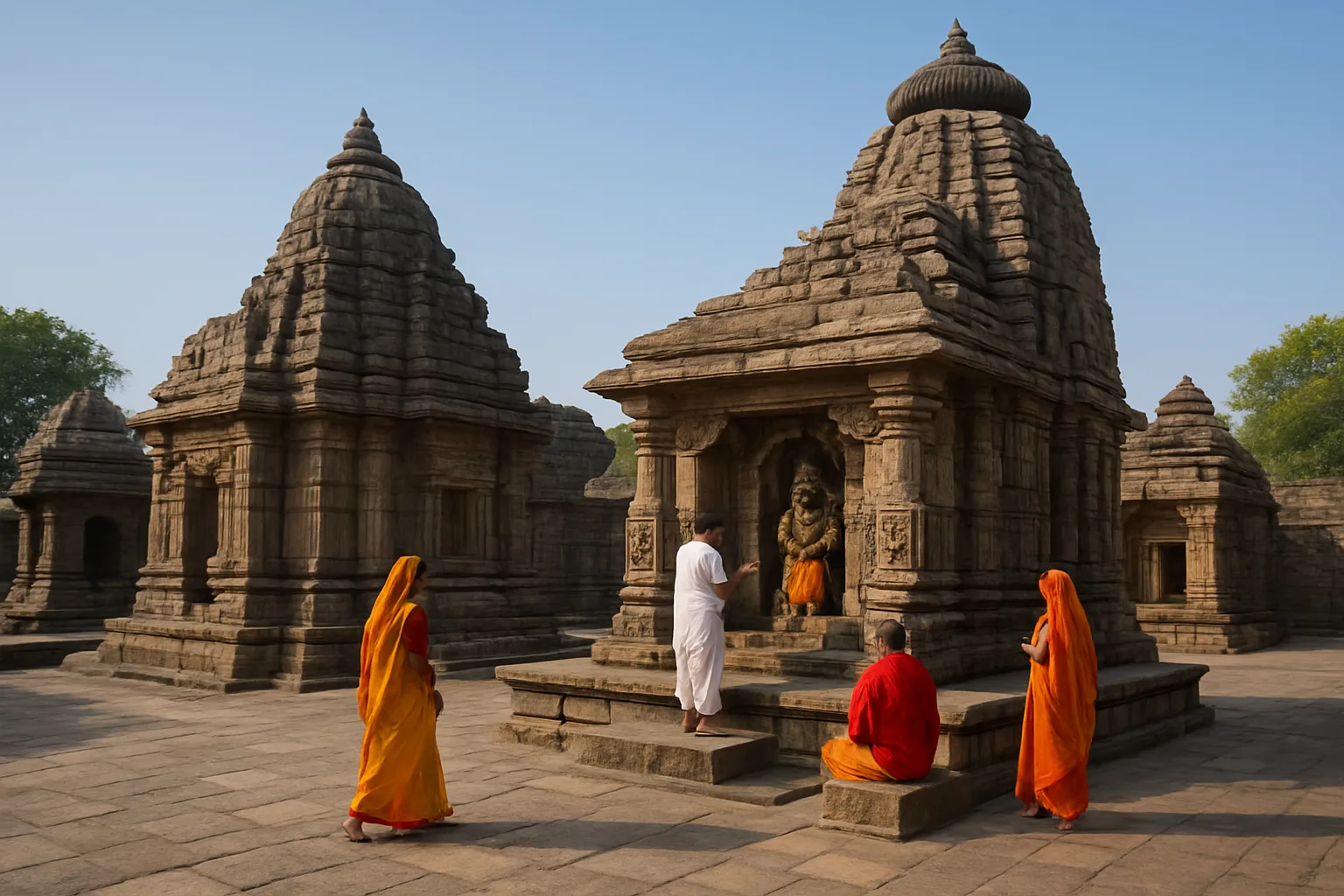
Dawn breaks over the Satluj River, mist veiling the dense pine forests that cloak the hills of medieval Bilaspur. In a clearing above the water, the bell of a stone temple rings out—an ancient signal calling villagers and travelers alike. Around the shrine, priests in ochre robes prepare for morning rituals, while local chieftains and farmers gather, yearning for divine favor in a world both beautiful and perilous. Temples are more than buildings here: they are the heart of life, the axis of community, and the link between earthly rulers and mysterious gods.
The Landscape of Faith: Bilaspur’s Sacred Geography
Medieval Bilaspur—nestled in the foothills of the western Himalayas—was a land shaped as much by its rivers and forests as by its beliefs. The Satluj, cutting through rugged valleys, was seen as a lifeline and a sacred boundary. Villages clustered around ancient trees and springs, each believed to house local deities or spirits. Temples dotted the landscape: some modest, others grand, all standing as tangible proof of the region’s spiritual energy.
The most revered shrines, such as the Markandeya Temple and the Rukmani Mandir, predate written memory. Oral traditions tell of sages and rajas who established these sanctuaries, often after visions or miraculous events. It was not uncommon for a king riding through the misty forests to halt beneath a peepal tree, convinced by a dream or omen that the gods demanded a new temple. Thus, the sacred topography of Bilaspur grew, year by year, stone by stone.
Dynasties and Divine Patronage
The ruling Chandel dynasty, who governed Bilaspur from the 7th century onward, understood the profound connection between temporal power and religious authority. Rajas like Kahlur Chand and Bir Chand, whose names echo in folk songs and temple inscriptions, were not just political leaders—they were patrons of the sacred. Their court records describe land grants to priests, elaborate donations of gold and silver, and the construction of new shrines at the behest of astrologers and holy men.
In times of drought or war, it was the king who led processions to the temples, offering sacrifices and prayers for rain or victory. In turn, the priests blessed the ruler, reinforcing his legitimacy in the eyes of the people. The relationship was mutual: a web of faith and power woven into the very stones of Bilaspur’s temples.
Everyday Rituals and Festivals
For ordinary villagers, religious life was a daily rhythm. At sunrise, families gathered at roadside shrines to light lamps and offer rice to their household gods. The air was thick with the smell of incense and flowers, mingling with the sounds of conch shells and chanting. Each season brought its own festivals—Baisakhi, Navratri, and the monsoon rites—when entire communities danced, sang, and feasted in honor of the deities.
Some rituals were deeply local. In the hill villages, the worship of deotas—ancestral spirits and guardian gods—took precedence. Priests known as gur or malis acted as mediators, entering trances to receive the guidance of the gods. These ecstatic ceremonies, often held at night by torchlight, bound communities together in faith and wonder.
Temples as Centers of Learning and Art
Bilaspur’s temples were more than places of prayer—they were living centers of knowledge and creativity. Sanskrit scholars debated philosophy under the shade of temple courtyards, while artisans carved intricate scenes of gods and animals into weathered stone. Some temples maintained libraries, preserving palm-leaf manuscripts on ritual, astronomy, and law. The Markandeya Temple reputedly sheltered wandering poets and musicians, whose hymns still echo in today’s folk traditions.
Artisans from distant valleys traveled to Bilaspur, drawn by royal commissions. Their work adorned temple pillars and ceilings with swirling motifs: lotus flowers, celestial dancers, and the all-seeing eyes of Shiva. These carvings, battered by time and monsoon rains, remain silent witnesses to a vibrant medieval culture.
Encounters and Transformation: Pilgrims, Sufis, and Saints
The medieval period was an era of movement and exchange. Pilgrims from Kangra, Kullu, and even the plains of Punjab trekked to Bilaspur’s holy sites, bringing new stories and traditions. The arrival of wandering sadhus and Sufi saints introduced fresh ideas about devotion, compassion, and the unity of all faiths. While Hinduism remained dominant, these encounters left subtle marks on local rituals and beliefs.
Historical chronicles mention the visits of Sufi mystics—among them, the enigmatic Syed Jalaluddin—whose presence at Bilaspur’s temples sparked dialogue between traditions. Some villagers, struck by the teachings of these travelers, blended Sufi poetry with their own devotional songs. Thus, the spiritual landscape of Bilaspur became layered, complex, and ever-evolving.
Religious Conflict and Syncretism
Not all encounters were peaceful. The medieval era saw episodes of contestation, as rival sects vied for influence and royal favor. Shaivites and Vaishnavites debated fiercely, sometimes resulting in the closing or rededication of temples. Yet, more often than not, syncretism prevailed. Many shrines in Bilaspur display a curious blending of symbols—tridents beside conch shells, goddess icons flanked by folk deities—testimony to a culture more interested in integration than division.
The rulers often played a mediating role, supporting multiple sects to maintain harmony and secure their own legitimacy. Folk memory recalls the reign of Raja Dip Chand, who famously rebuilt a destroyed temple and invited both Brahmin priests and local shamans to officiate at its consecration.
Legacy of Faith: Echoes in Modern Bilaspur
The temples of medieval Bilaspur, their bells still ringing at dawn, remain the heart of the region. Many ancient rituals survive, woven into the fabric of daily life. Pilgrims continue to visit the hilltop shrines, seeking blessings for harvests, marriages, and journeys. Old festivals—once the stage for royal processions—now unite communities in celebration of a shared past.
“Faith is the bridge between the seen and the unseen, and in Bilaspur, every stone tells its story.”
Local oral tradition
To walk the winding temple roads of Bilaspur is to sense the enduring presence of centuries. The gods of medieval Bilaspur, once honored by kings and villagers alike, still watch over their land—reminding all who visit that history lives not only in monuments, but in the faith and resilience of its people.
Previous: Rajput Kings of Bilaspur: Power, Warfare, and Hill Politics
Next: Wars and Alliances: How Bilaspur Survived Rival Hill States