
Series: Learning Finance Basics
Phase 1: Foundations — Part 4 of 16
In our last post, we explored what money is and why it matters in everyday life. Now, let’s zoom out to see how all the pieces fit together. Understanding financial systems is a bit like learning how a city’s transport system works—you’ll see how money moves, who helps it flow, and why these systems matter to everyone, even if you don’t work in finance.
What You’ll Learn
- What a financial system is and why it exists
- How banks, markets, and people interact
- Simple examples of how money moves in the system
- Common mistakes people make about finance
- Steps to build your own financial awareness
The Big Picture: What Is a Financial System?
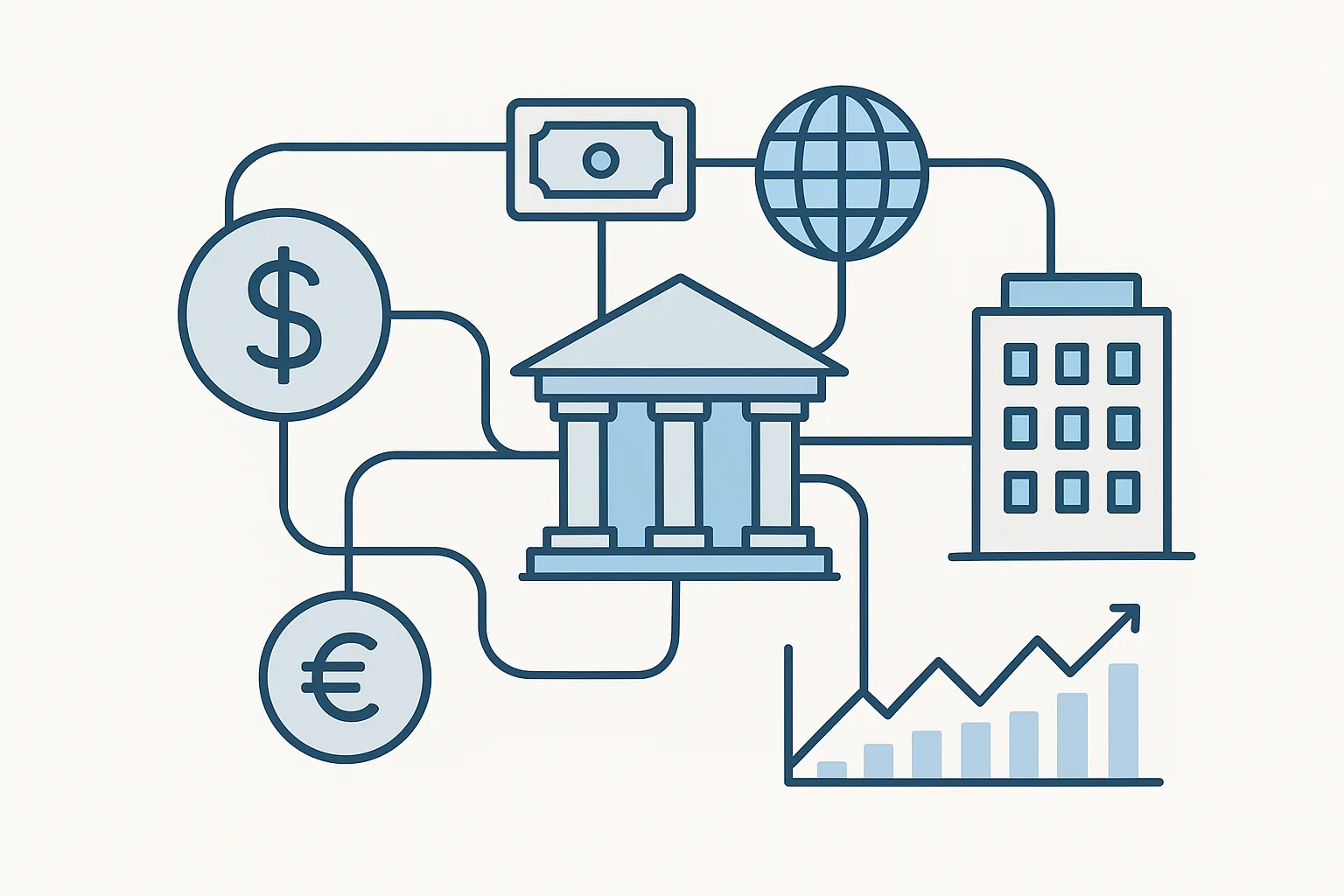
A financial system is the network that helps money move between people, businesses, and governments. Think of it as a set of pipes and roads that carry money instead of water or cars. The main parts are:
- Banks – where people and businesses store money, borrow, and save
- Financial markets – places where people buy and sell investments like shares (stocks) or bonds
- Central banks – institutions that help manage money for a whole country (like the Bank of England in the UK)
- Other financial companies – insurance firms, pension funds, and more
At its core, the financial system is about getting money from where it is (savers) to where it’s needed (borrowers or investors). This helps people buy homes, businesses grow, and governments fund services.
How Money Moves: Simple Examples
Example 1: Saving and Borrowing
Imagine Sam puts £500 into a savings account at the bank. The bank doesn’t just keep Sam’s money in a vault—it lends some of it to other customers, like Alex, who wants a £500 loan to buy a new laptop for starting a business. Sam earns a little interest (extra money for saving), and Alex pays interest for borrowing.
- Sam’s benefit: Safe place to keep money and earns interest (e.g., 1% per year, so £5 after a year)
- Alex’s benefit: Can buy the laptop now and pay back over time, but pays more interest (e.g., 5% per year, so £25 after a year)
The bank earns the difference (the “spread”) and handles the risk.
Example 2: Investing in Companies
Suppose you buy a share (stock) in a company for £100 on the stock market. You’re giving the company money, and in return, you own a small piece of the business. If the company does well, the share might rise in value. If it pays a dividend (a share of profits), you might get, say, £3 per year. If you later sell the share for £110, you’ve made a profit.
Financial markets let people invest in companies, governments, and other projects, helping those groups raise money for growth or public works.
Why Does the Financial System Matter?
Financial systems help people:
- Buy homes with mortgages
- Save for retirement or emergencies
- Start or grow businesses
- Protect against unexpected events (using insurance)
- Support government services (through bonds and taxes)
“Finance is the circulatory system of the economy, just as vital as the veins and arteries in your body.”
—Common saying among economists
When the system works well, money flows smoothly, helping everyone. If it breaks down, as during a financial crisis, it can cause problems for jobs, savings, and businesses.
Common Mistakes
- Thinking only experts or the very rich need to understand finance
- Assuming banks just keep your money in a vault, rather than lending it out
- Believing investing is just gambling—there are risks, but also ways to manage them
- Ignoring how changes in the financial system (like rising interest rates) affect everyday life
Action Steps
- ☐ Notice how you use banks, payments, or savings in your daily life
- ☐ Watch for news stories about interest rates or financial markets—note which parts of the system are mentioned
- ☐ Ask yourself: Where does your money “sit” most often (bank account, cash, investments)?
- ☐ Try explaining to a friend or family member how banks use savings to make loans
Recap
Financial systems connect people, businesses, and governments to help money flow where it’s needed. Banks, markets, and other institutions all play roles in this network. By understanding how the system works, you can make smarter choices with your own money and be prepared for the next parts of this series—where we’ll look closer at saving, investing, and financial decision-making.
Glossary
- Bank: A business that keeps money safe, lends money, and offers financial services.
- Interest: The cost of borrowing money or the reward for saving, usually shown as a percentage.
- Investment: Putting money into something (like shares or bonds) hoping it will grow or pay income.
- Stock: A share of ownership in a company.
- Bond: A loan to a company or government, usually with a fixed interest payment.
This article is for education only and does not provide financial advice. Always do your own research or consult a qualified professional before making financial decisions. Financial systems and rules can vary by country and over time.
Previous: Time Value of Money (Without the Math Headache)
Next: Budgeting That Actually Works: A Practical Guide for Beginners