
Series: The UK Allotment Year
Phase 1: The Allotment Year — Month by Month — Part 6 of 50
This phase walks through the UK allotment year month by month — from planning in January to reflecting in December. Perfect for beginners or seasoned growers who want a month-by-month checklist for thriving plots.
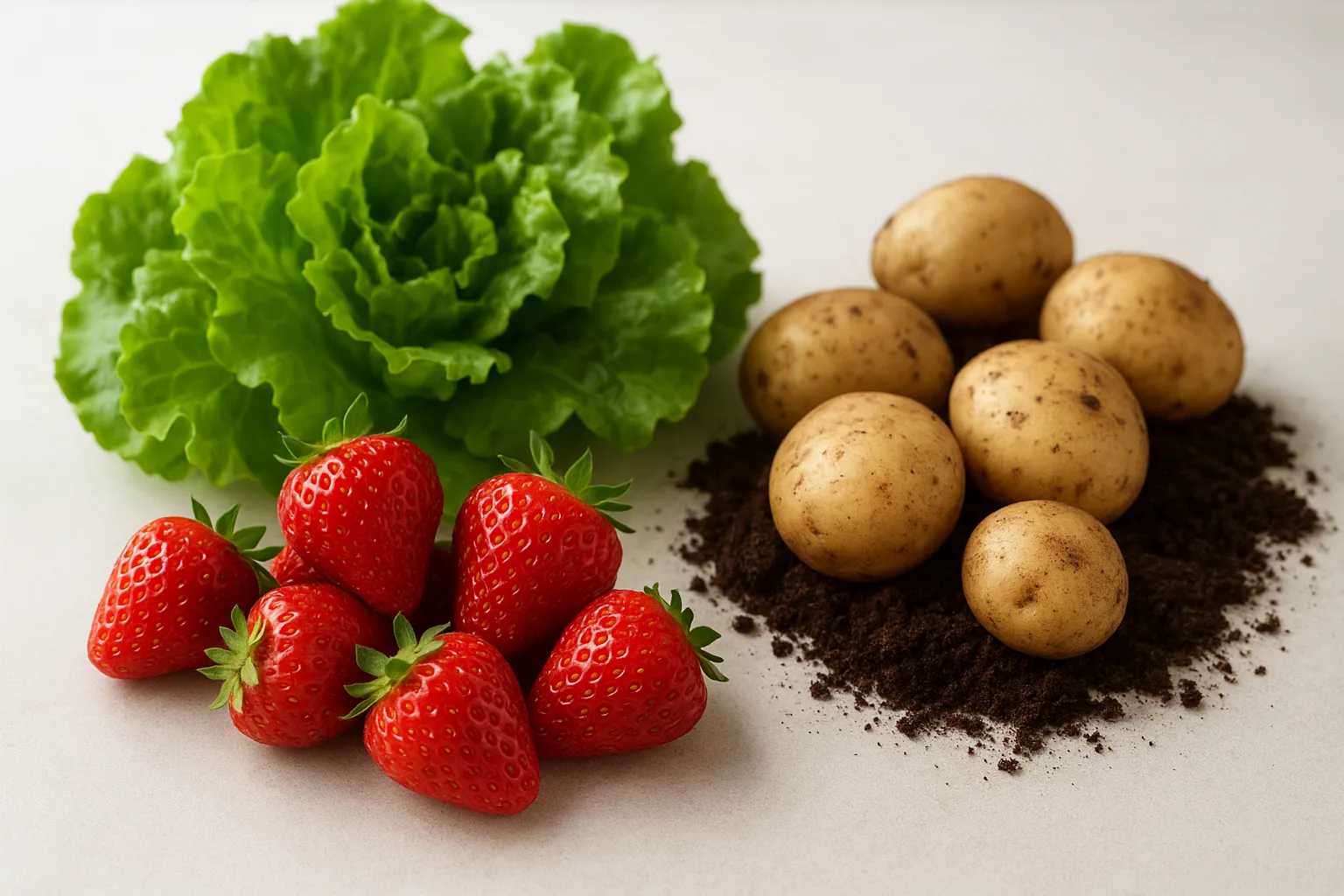
June Harvests: Strawberries, Lettuce, and Early Potatoes
June is an exciting month for the UK allotment holder. After months of preparation and tending, the first real rewards appear on your plot. Strawberries reach their juicy peak, lettuces offer fresh, crisp leaves, and early potatoes are ready to lift. This is the time to enjoy the fruits of your labour, while continuing to care for these crops to extend their productivity. With a bit of know-how, June can be one of the most satisfying months on the allotment.
Harvesting Strawberries
Strawberries planted last year or early this spring will be ripening in June. They’re best picked early in the day when cool, to keep them fresh and firm.
- How to pick: Gently hold the berry and snip or pinch the stem just above the berry to avoid damaging the fruit or the plant.
- Frequency: Check your strawberry plants every 2–3 days during peak season to harvest ripe berries promptly.
- Storage: Use shallow containers to avoid crushing the fruit. Keep them in a cool place and consume within 1–2 days for best taste.
- Encourage further fruiting: Remove any runners that drain energy from the main plants, and feed with a balanced organic fertiliser.
Caring for Lettuce
Lettuce sown in early spring or under cover in late winter will now be ready to pick. Lettuce is quick-growing but delicate, so gentle harvesting and ongoing care are key.
- Harvesting: Pick outer leaves first, allowing the centre to keep growing for a longer harvest (cut-and-come-again method).
- Watering: Lettuce prefers consistent moisture but avoid waterlogging. Water early morning or evening to reduce evaporation.
- Shade and protection: If the weather gets hot, provide light shade with horticultural fleece or shade netting to prevent bitter leaves.
- Pest watch: Keep an eye out for slugs and snails, especially in damp conditions. Handpick or use organic slug pellets sparingly.
Harvesting Early Potatoes
Early potato varieties planted in March or April will be ready to lift in June when their foliage begins to yellow and die back.
- How to check readiness: Carefully dig around the plant with a fork to check tuber size. If they’re the size you want, it’s time to harvest.
- Harvest method: Use a garden fork to lift the whole plant and tubers gently, taking care not to bruise or cut the potatoes.
- Storage: Leave the potatoes to dry in a shaded, well-ventilated spot for a day or two, then store in a cool, dark, frost-free place.
- Succession planting: After lifting early potatoes, consider planting a second batch for a later summer harvest, or follow with a green manure to improve soil.
Tools and Materials for June Harvesting
- Sharp scissors or garden snips for harvesting strawberries and lettuce.
- Garden fork for lifting potatoes without damage.
- Watering can or hose with fine rose to water tender crops gently.
- Horticultural fleece or shade netting for protecting lettuce from sun and pests.
- Organic fertiliser, such as seaweed or comfrey feed, to boost strawberry plants post-harvest.
- Slug traps or organic slug pellets if needed, used responsibly.
- Shallow containers or baskets to avoid bruising harvested fruit and leaves.
Common Mistakes to Avoid
- Picking berries too early or too late: Unripe strawberries lack flavour; overripe ones spoil quickly. Aim for fully coloured, firm berries.
- Overwatering lettuce: Waterlogged soil causes root rot and bitter leaves. Keep soil moist but well-drained.
- Ignoring slug damage: Slugs can devastate young lettuce and strawberries. Check regularly, especially after rain.
- Harvesting all lettuce leaves at once: This wastes potential future harvests. Use cut-and-come-again to extend cropping.
- Lifting potatoes too late: Leaving tubers in wet soil too long risks rot and disease.
Quick June Harvest Checklist
- Check strawberry plants every 2–3 days and harvest ripe fruit.
- Pick outer lettuce leaves regularly; water early or late to retain moisture.
- Inspect for slugs/snails and deal promptly using eco-friendly methods.
- Check early potato tubers; lift when ready and cure in shade.
- Feed strawberry plants after harvest with organic fertiliser.
- Provide shade to lettuce during hot spells.
Next Steps for June and Beyond
After enjoying these early crops, June is also a good time to sow summer vegetables like beans and courgettes to keep the plot productive. Maintain watering and pest vigilance, and prepare soil for autumn sowings. Keep an eye on your strawberries for late runners to plant out for next year, and consider mulching potatoes to conserve moisture and reduce weeds. With steady care, your allotment will continue to reward you well into the summer.
Happy harvesting!
Previous: May on the Plot: Protecting Seedlings from Frost and Pests
Next: July Allotment Tasks: Watering, Weeding, and Succession Planting