
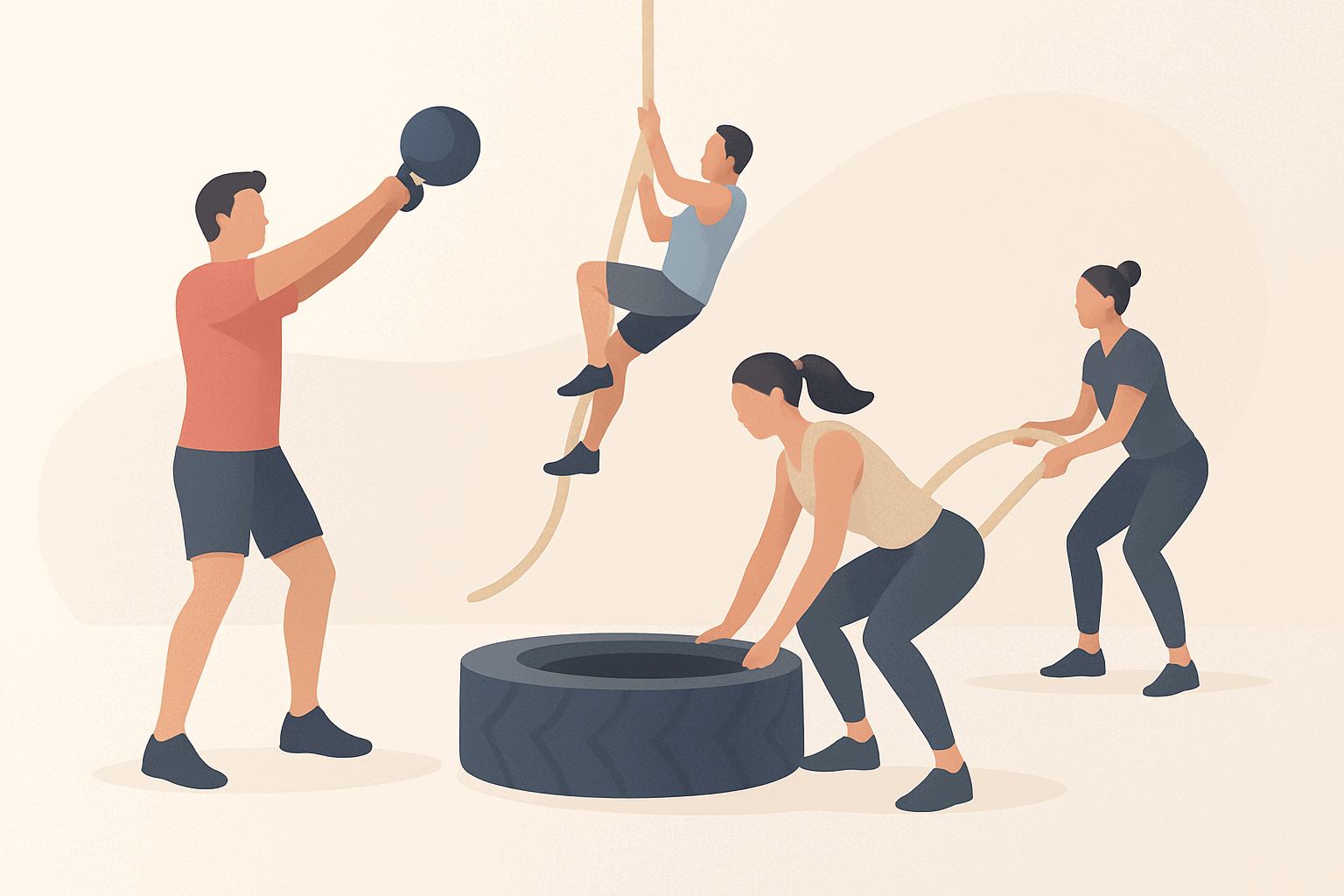
Functional fitness is changing the way people think about exercise. Instead of training just to look good in the mirror, more people are training to move better, feel stronger in daily life, and stay active for years to come. This approach is practical, joint-friendly, and accessible even if you’re not a “gym person.”
What Is Functional Fitness?
Functional fitness is a style of training that focuses on movements you use in everyday life: lifting, carrying, bending, pushing, pulling, twisting, and walking. The goal is to help your body work as a coordinated system, not just to build individual muscles in isolation.
Instead of asking, “How big are my biceps?” functional training asks, “Can I pick up my kids without pain? Can I carry groceries up the stairs? Can I get off the floor easily? Can I stay active as I age?”
Why Functional Fitness Is Growing in Popularity
Functional fitness has exploded in gyms, physical therapy clinics, and home workouts for several reasons. It fits modern life and helps solve real problems people face with their bodies.
1. People Want More Than Just Aesthetics
Many people are tired of chasing a “perfect body” and want to feel better instead of just look better. Functional training focuses on:
- Moving without pain
- Having energy for work, family, and hobbies
- Staying independent as you age
- Being able to do activities you enjoy (hiking, playing with kids, sports, travel)
2. It Reduces Everyday Aches and Pains
Modern life is full of sitting: at desks, in cars, on the couch. This often leads to tight hips, weak glutes, stiff backs, and cranky shoulders. Functional fitness works to restore the body’s natural movement patterns, which can help:
- Ease lower back discomfort
- Reduce neck and shoulder tension
- Improve posture
- Make joints feel more stable and supported
3. It Prepares You for Real-World Demands
Life rarely asks you to sit and curl a dumbbell, but it often asks you to:
- Lift a heavy box from the floor
- Carry a suitcase or a child on one side
- Climb stairs with groceries
- Reach overhead to put something on a shelf
- Get up and down from the ground
Functional training mimics these tasks so your body is ready for them.
4. It Fits All Ages and Fitness Levels
Because functional movements can be scaled up or down, they work for:
- Beginners who just want to feel better day to day
- Busy parents who need efficient workouts
- Older adults who want to stay independent and prevent falls
- Athletes who want better performance and fewer injuries
Key Principles of Functional Fitness
You don’t need to memorize exercise science to benefit from functional training. But understanding a few core principles will help you design smarter, safer workouts.
1. Train Movement Patterns, Not Just Muscles
Traditional gym workouts often focus on body parts: chest day, arm day, leg day. Functional fitness focuses on patterns you use in daily life:
- Squat – sitting down and standing up (chair, toilet, car seat)
- Hinge – bending at the hips (picking something up from the floor)
- Lunge – stepping forward, backward, or sideways (walking, climbing stairs)
- Push – pushing away from you (doors, strollers, getting off the floor)
- Pull – pulling toward you (opening doors, rowing, pulling objects closer)
- Rotate / Anti-rotate – twisting or resisting twist (turning, carrying bags)
- Gait – walking, jogging, running
When you train these patterns, your whole body learns to work together.
2. Focus on Core Stability
In functional fitness, the “core” is more than just visible abs. It includes deep muscles around your spine, hips, and pelvis that help you stay stable while you move.
A strong, stable core helps you:
- Protect your lower back when lifting or bending
- Maintain good posture at a desk
- Transfer power to your arms and legs (for sports, lifting, carrying)
- Balance better and reduce fall risk
3. Use Multiple Joints and Muscles Together
Functional exercises usually involve more than one joint at a time. For example, a squat uses your hips, knees, and ankles, plus your core and upper body for balance.
This type of training:
- Burns more calories in less time
- Feels more “natural” than machines that isolate one muscle
- Teaches your body to coordinate movements like it does in real life
4. Emphasize Quality Over Quantity
In functional fitness, how you move matters more than how much you lift or how many reps you do. Good technique protects your joints and builds lasting strength.
It’s better to do fewer repetitions with great form than many repetitions with poor form. When in doubt, slow down and focus on control.
Examples of Functional Exercises for Everyday Life
You don’t need fancy equipment to start functional training. Many effective exercises use just your body weight or simple tools like dumbbells or resistance bands.
Squat Pattern: Sitting and Standing
Real-life use: Getting off the couch, using the toilet, getting out of a car, sitting at a table.
- Beginner: Sit-to-stand from a chair (use hands on the chair if needed)
- Intermediate: Bodyweight squats without a chair
- Advanced: Goblet squats holding a dumbbell or heavy object at your chest
Hinge Pattern: Bending to Pick Things Up
Real-life use: Lifting laundry baskets, picking up kids or pets, moving boxes.
- Beginner: Hip hinge with hands sliding down thighs (no weight)
- Intermediate: Romanian deadlift with light dumbbells or a backpack
- Advanced: Deadlifts with heavier weights (with proper coaching)
Lunge Pattern: Stepping and Climbing
Real-life use: Going up stairs, stepping over obstacles, getting up from the floor.
- Beginner: Split-stance holds (one foot forward, one back, small bend in knees)
- Intermediate: Static lunges (stepping into a lunge and staying there for reps)
- Advanced: Walking lunges or step-ups onto a bench or sturdy step
Push Pattern: Pushing Away from the Body
Real-life use: Pushing doors, strollers, shopping carts, or yourself off the floor.
- Beginner: Wall push-ups (hands on wall, body at an angle)
- Intermediate: Incline push-ups (hands on a bench, table, or counter)
- Advanced: Floor push-ups on knees or toes
Pull Pattern: Pulling Toward the Body
Real-life use: Opening doors, pulling heavy objects, rowing a boat, maintaining posture.
- Beginner: Band pull-aparts (using a resistance band across the chest)
- Intermediate: Bent-over rows with dumbbells or a backpack
- Advanced: Inverted rows using a sturdy bar or TRX-style straps
Core Stability: Protecting the Spine
Real-life use: Carrying bags, lifting objects, standing or sitting for long periods.
- Beginner: Dead bug (lying on back, moving opposite arm and leg)
- Intermediate: Forearm plank (holding a straight body position)
- Advanced: Side plank, or plank with shoulder taps
Carrying: Real-World Strength
Real-life use: Groceries, suitcases, kids, water bottles, work tools.
- Beginner: Carrying a light bag in both hands for short distances
- Intermediate: Farmer’s carry with dumbbells or heavy bags
- Advanced: Suitcase carry (weight in one hand only to train side stability)
How to Build a Simple Functional Fitness Routine
You can create an effective functional workout using just a few movements, done 2–3 times per week. Here’s a simple structure you can follow, even as a beginner.
Step 1: Warm Up (5–10 Minutes)
Start by getting your body ready to move. Focus on gentle movement and mobility, not intensity.
- 1–2 minutes of easy marching in place or walking
- Arm circles and shoulder rolls
- Gentle hip circles
- Bodyweight squats to a chair
- Cat-cow stretches on hands and knees (if comfortable)
Step 2: Choose 5–6 Functional Exercises
Pick one exercise from each category below:
- Squat: Sit-to-stand, bodyweight squat, or goblet squat
- Hinge: Hip hinge or Romanian deadlift
- Push: Wall push-up, incline push-up, or floor push-up
- Pull: Band pull-aparts or dumbbell row
- Core: Dead bug, plank, or side plank
- Carry / Balance (optional): Farmer’s carry, suitcase carry, or single-leg balance
Step 3: Use a Simple Set and Rep Scheme
For most non-experts, this structure works well:
- Do 2–3 sets of each exercise
- Do 8–12 repetitions per set (or 20–30 seconds for holds like planks)
- Rest 30–60 seconds between sets as needed
Example beginner session:
- Chair sit-to-stand – 2 sets of 8–10 reps
- Hip hinge with no weight – 2 sets of 8–10 reps
- Wall push-ups – 2 sets of 8–10 reps
- Band pull-aparts – 2 sets of 10–12 reps
- Dead bug – 2 sets of 6–8 reps per side
- Farmer’s carry with light bags – 2 rounds of 20–30 seconds
Step 4: Cool Down (3–5 Minutes)
Finish with easy breathing and stretching to help your body relax.
- Slow walking or marching in place
- Gentle hamstring stretch (back of thighs)
- Chest stretch (hands on doorframe, step forward slightly)
- Deep belly breathing for 5–10 breaths
Safety Tips for Beginners
Functional fitness is generally safe, but like any exercise, it should be approached with care, especially if you’re new or have health concerns.
- Get medical clearance if you have heart issues, uncontrolled blood pressure, recent surgery, or ongoing pain.
- Start small – 10–20 minute sessions a few times a week are enough to begin.
- Prioritize form – move slowly, use mirrors if possible, and stop if something feels sharp or wrong.
- Use pain as a guide – mild muscle effort or “burn” is normal, sharp or stabbing joint pain is not.
- Progress gradually – add a few reps, a little weight, or an extra set over weeks, not overnight.
- Consider guidance – a session with a certified trainer or physical therapist can be very helpful.
Functional Fitness vs. Traditional Gym Training
You don’t have to choose one or the other. But understanding the differences can help you decide what to prioritize.
- Traditional focus: Individual muscles, appearance, and often machines (leg press, chest press).
- Functional focus: Movement patterns, daily performance, and free movement (bodyweight, dumbbells, bands).
- Traditional benefits: Targeted muscle growth, clear structure, can be useful for rehab or bodybuilding.
- Functional benefits: Better coordination, balance, and strength that directly translates to life and sports.
Many people benefit from combining both: some machine or isolation work for specific muscles, plus functional movements for overall ability and resilience.
How Functional Fitness Supports Healthy Aging
One of the biggest reasons functional fitness is on the rise is its impact on healthy aging. As we get older, we naturally lose muscle mass, balance, and mobility if we don’t train them.
- Strength training helps maintain muscle, making everyday tasks easier.
- Balance and core work reduces the risk of falls, a major cause of injury in older adults.
- Mobility and flexibility keep joints moving well, reducing stiffness.
- Cardio elements (walking, light circuits) support heart health and energy levels.
Functional training doesn’t have to be intense to be effective. Even gentle, consistent practice can make a huge difference in how you feel and move.
Bringing Functional Fitness Into Your Daily Life
You don’t need a full workout to practice functional movement. You can build it into your normal day.
- Stand up and sit down from your chair 5–10 times every few hours.
- Carry groceries in two hands instead of using a cart for short distances.
- Take the stairs when possible, focusing on controlled steps.
- Practice balancing on one leg while brushing your teeth (hold the counter if needed).
- Do a few wall push-ups during breaks from your computer.
Think of every day as a chance to move better, not just your scheduled workout days.
Conclusion: Train for the Life You Want to Live
The rise of functional fitness reflects a bigger shift in how we view health and exercise. It’s not just about chasing a certain look; it’s about building a body that supports your life—now and in the future.
By focusing on real-world movements, core stability, and overall coordination, you can:
- Reduce everyday pain and stiffness
- Feel more confident doing daily tasks
- Stay active and independent as you age
- Enjoy exercise as something that helps you live better, not just look different
You don’t need to be an athlete to start. Begin with simple movements, listen to your body, and build gradually. Over time, you’ll notice that it’s not just your workouts that feel easier—it’s your everyday life.