
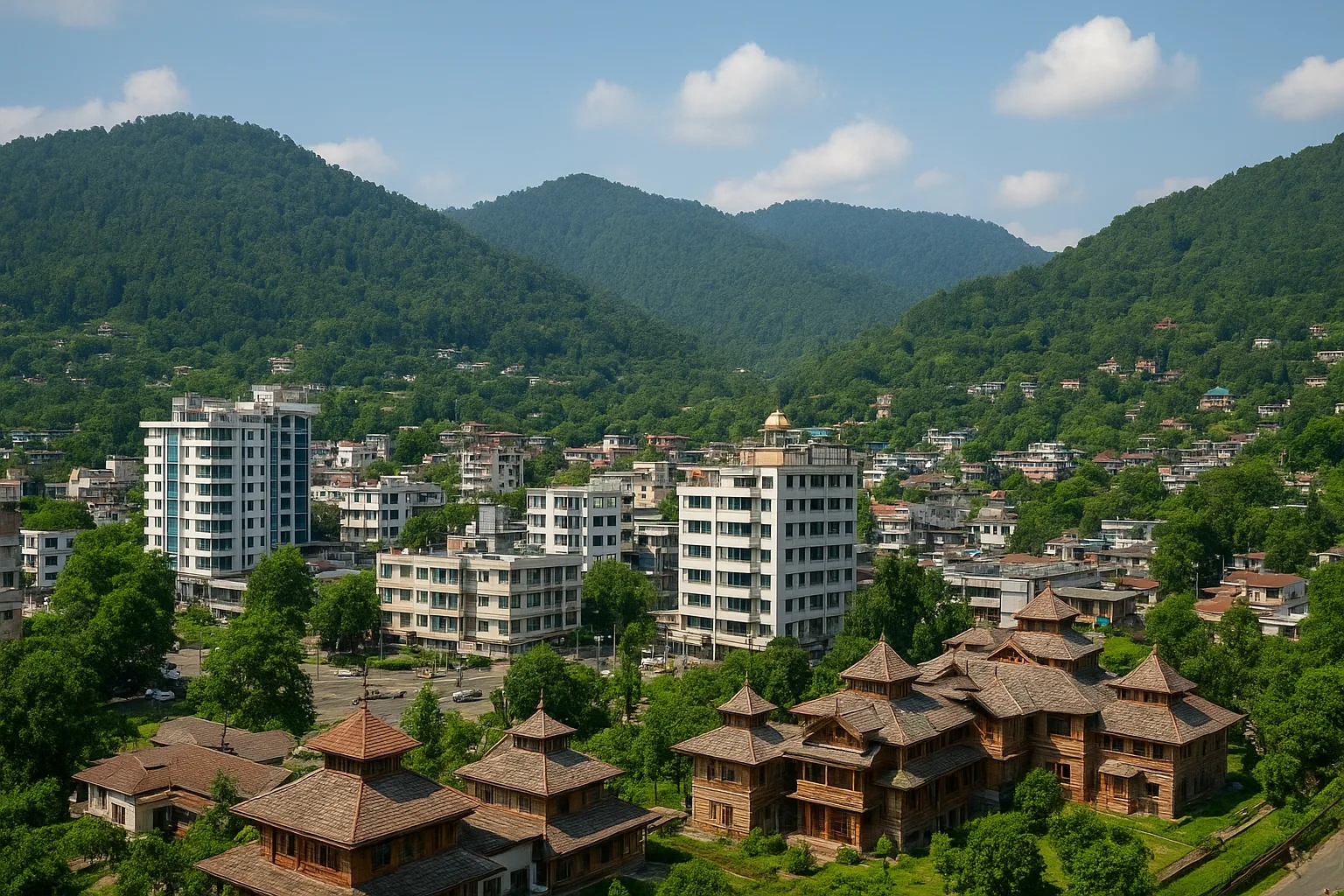
Series: Bilaspur Himachal History
Phase 5: Modern Era — Part 27 of 29
A Sleepless Night in 1977
The monsoon clouds hung low over Bilaspur’s new market square, their rumble echoing off the recently constructed bus stand. It was the summer of 1977—a year that would etch itself in the memory of Bilaspur’s residents. As the town’s power flickered with uncertainty, scores of people gathered in the narrow lanes, debating the outcome of India’s national Emergency and its aftermath. The air buzzed with stories: of ration lines, political meetings, and the shifting boundaries of a once-princely town now finding its place in modern India.
By midnight, the rain began to fall, tracing rivulets down the walls of concrete buildings that had replaced the old wooden shops. In the glow of a single lantern, a retired schoolteacher, Ratan Lal, recounted to his neighbors how, just a few decades earlier, Bilaspur had been submerged—literally and figuratively—by the construction of the Bhakra Dam. Now, as the town climbed back to life on higher ground, a new era was unfolding: one shaped by national politics, rising migration, and the promise of urban prosperity.
Resettlement and Resilience
The story of modern Bilaspur is rooted in loss, adaptation, and resilience. After the Bhakra Dam’s completion in the early 1960s, the old town of Bilaspur was swallowed by the waters of the Gobind Sagar reservoir. Families, businesses, and entire neighborhoods were forced to relocate uphill, building a new Bilaspur brick by brick. The echoes of that displacement lingered for years, shaping the psyche of a population that had lost not just homes but a centuries-old identity.
Resettlement, though painful, brought with it a unique sense of unity. Neighbors became partners in reconstruction. Government officers, many of whom had no roots in the region, worked alongside local artisans and traders. The new town was meticulously planned, with wider roads and public spaces—an unusual luxury for a Himachali settlement of its era. The scars of the past ran deep, but they also forged a determination to thrive in a world that seemed to change overnight.
Political Awakening and Local Voices
The decades following independence saw Himachal Pradesh transition from a collection of princely states to a full-fledged Indian state in 1971. Bilaspur, once ruled by the Chandela dynasty and later a chief commissioner’s province, became a district headquarters in this new political order. This transformation was not just administrative—it was deeply personal for Bilaspur’s citizens.
In the late 1960s and 1970s, political meetings became fixtures of public life. Leaders like Thakur Karam Singh, a freedom fighter turned MLA, and the charismatic Dr. Yashwant Singh Parmar, Himachal’s first Chief Minister, drew crowds to Bilaspur’s bazaars. Ordinary shopkeepers and farmers began to see themselves not just as subjects, but as stakeholders in a democracy. Panchayat elections brought new faces into the limelight; women, for the first time, began to organize for representation in local bodies. The once-sleepy riverside town became a crucible for the democratic experiment in Himachal Pradesh.
Bhakra Dam: Catalyst of Change
The Bhakra Dam, towering above the Satluj River just upstream from Bilaspur, became both a symbol of progress and a perpetual reminder of sacrifice. Its hydroelectric power fueled the factories of Punjab and Haryana, while its waters irrigated fields across northern India. For Bilaspur, however, the dam’s benefits were bittersweet.
On one hand, the influx of dam workers and engineers brought new skills and cultural influences. Cafés and guesthouses sprang up to serve the transient population. The town’s economy diversified: from traditional handicrafts and agriculture to hospitality and retail. On the other hand, the submerged temples, palaces, and bazaars of old Bilaspur haunted the memories of those who had watched them disappear beneath the rising waters.
Yet, as the years passed, a new generation began to see the dam not as the end of their heritage, but as the beginning of Bilaspur’s urban story. School textbooks lauded Bhakra as the “temple of modern India.” Local youth, inspired by stories of national development, saw themselves as heirs to both the town’s royal past and its industrial future.
Urban Growth and Cultural Revival
The 1980s ushered in an era of unprecedented growth for Bilaspur. Improved roads connected the town to Shimla, Chandigarh, and beyond. As migration from rural villages increased, new neighborhoods—Swarghat, Namhol, Ghumarwin—began to sprawl across the hills. Bilaspur’s position as a commercial hub was cemented, with modern banks, schools, and a bustling market square drawing traders from across Himachal and Punjab.
But rapid urbanization brought challenges. Strains on water supply, traffic congestion, and the erosion of green spaces became pressing issues. Amidst this transformation, a grassroots cultural revival took root. Local historians, artists, and teachers began documenting Bilaspur’s lost temples and palaces, organizing exhibitions of photographs and oral histories. The annual Naina Devi fair—once a modest village gathering—grew into a major pilgrimage, drawing thousands to the district and rekindling pride in Bilaspur’s religious heritage.
Education, Migration, and New Horizons
Education became the bridge between Bilaspur’s tradition and its aspirations. The establishment of new government schools and a degree college in the town center attracted students from surrounding villages. For many families, education was more than a stepping stone; it was a ticket to the wider world. In the 1990s, an increasing number of Bilaspur’s youth left for Chandigarh, Delhi, or even abroad, seeking opportunities in technology, medicine, and government service.
This migration changed the fabric of the town. Remittances sent home helped build new houses and businesses. Festivals and weddings grew more lavish, blending local customs with influences from across India. Yet, the ties to Bilaspur remained strong—every summer, as the mango trees ripened and the monsoon returned, entire families would reunite, sharing stories of success and struggle both at home and afar.
Modern Bilaspur: Memory and Identity
By the dawn of the 21st century, Bilaspur had become a town at the crossroads of memory and modernity. The once mighty Satluj now flowed quietly beneath the bridge, its banks lined with tea stalls and the laughter of children. New challenges—ecological pressures, job creation, and the preservation of heritage—continue to shape the town’s trajectory.
Yet, for all its changes, Bilaspur’s spirit endures. The stories of displacement and resilience, political awakening and cultural pride, bind its people together. The lessons of the late 20th century—of rebuilding after loss, of forging unity out of upheaval, and of embracing change while honoring the past—continue to guide the town as it faces the future.
Today, the echoes of that sleepless night in 1977 can still be heard in Bilaspur’s bustling marketplaces and quiet temples. The town’s journey through resettlement, growth, and renewal offers a living example of how history is not just remembered, but lived—every day, in the choices and dreams of its people.
Previous: How the Bhakra Dam Changed Bilaspur’s Society Forever
Next: Saving Bilaspur’s History in a Rapidly Changing District