
Series: Bilaspur Himachal History
Phase 4: British & Post-Independence — Part 20 of 29
Midnight in the Hills: The Last Night of the Old Order
The monsoon rain fell in sheets across the hills, drumming against the stone walls of Bilaspur’s palace. Inside, Raja Anand Chand sat in his private chamber, the glow of a hurricane lamp playing over anxious faces. Courtiers whispered in the corridors, their silks rustling with unease. It was August 14, 1947. The world outside was erupting in celebration and violence. Independence loomed, but for Bilaspur, a princely state perched above the Sutlej, the future was a blank map painted with dread and possibility.
For centuries, the Chandel rulers had reigned over these hills, their authority unquestioned by the undulating forests and white-water rivers. Now, as midnight approached, the partition of British India threatened to redraw boundaries, erase old sovereignties, and test the mettle of men like Anand Chand. In the flickering darkness, the Raja’s pen hesitated above a sheet of paper—a letter that would determine whether Bilaspur joined the Indian Union or tried, somehow, to stand alone.
From Empire to Upheaval: The Fall of British Rule
Bilaspur’s story at the dawn of independence cannot be separated from its entanglements with the British Raj. Since the early 19th century, the state had walked a tightrope between autonomy and subservience. The 1815 Treaty of Sugauli, which ended the Anglo-Nepalese War, had reaffirmed Bilaspur’s borders, but the presence of British political agents in nearby Shimla cast a long shadow. By the 1930s, the British Crown had formalized indirect rule over the princely states, granting them internal autonomy but reserving control over foreign affairs.
Raja Anand Chand, ascending the throne in 1931, was no stranger to these shifting allegiances. Educated at Mayo College and familiar with the corridors of power in Delhi, he maintained a delicate balance: loyal to the Raj, yet quietly supportive of social reforms. As the Quit India Movement spread in 1942, Bilaspur watched with a mixture of caution and sympathy. The hills echoed with tales of sacrifice, but the Raja, like many princes, hesitated. The British departure, when it came in 1947, left a vacuum that would not be easily filled.
The Partition’s Storm: Refugees and Anxiety
News of partition swept through Bilaspur like a mountain storm—sudden, loud, and dangerous. Unlike Punjab’s plains, the violence here was less intense but no less traumatic. Columns of refugees trudged into the state, their faces etched by exhaustion and grief. Many came from Rawalpindi and Lahore, seeking shelter from the carnage that had consumed their own homes. For the first time in living memory, the bazaars of Bilaspur swelled with unfamiliar accents and urgent needs.
The Raja and his council were forced to act quickly. Temporary camps sprung up on the outskirts of town. Local landlords donated grain, and the state’s modest treasury was stretched thin providing blankets and medicines. The Sutlej, once a placid presence in the valley, now bore silent witness to a tide of human suffering. Even as the violence of partition mostly bypassed the hills, the trauma of displacement would linger in Bilaspur’s memory for generations.
Deciding the Future: Accession and Identity
Amid the chaos, a fateful decision loomed. The princely states, more than 500 in all, were given a stark choice by Lord Mountbatten and Sardar Vallabhbhai Patel: accede to India, join Pakistan, or attempt independence. For a small state like Bilaspur, the last option was unthinkable. The Raja, after much deliberation, signed the Instrument of Accession on October 12, 1948, formally integrating Bilaspur with the Indian Union.
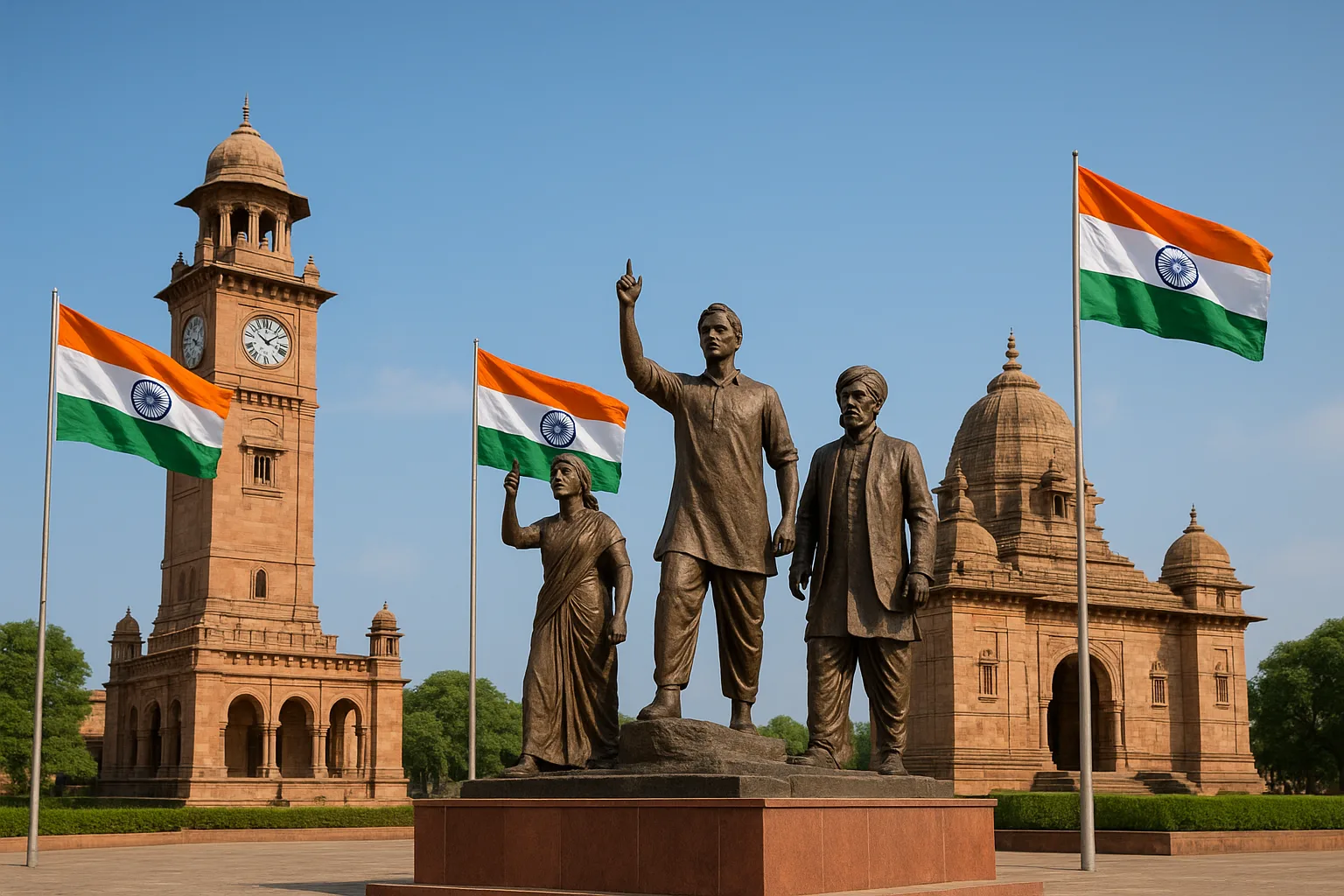
The decision was pragmatic but painful. The old order—centuries of Chandel rule—was declared finished by a stroke of the pen. Yet, Anand Chand was determined that Bilaspur would not be swallowed up without a trace. He negotiated to retain certain privileges and a privy purse, and he worked to preserve the state’s unique identity within the new federal structure. In the weeks that followed, the tricolor was hoisted above the palace, and the Raja’s ancestral banners were respectfully lowered. For many, the sight was both hopeful and haunting.
Transformation: From Princely State to Indian District
Accession did not mean instant assimilation. For two years, Bilaspur existed as a separate state within the Indian Union, administered by its own council under central supervision. The transition was awkward. Old feudal customs clashed with the democratic ideals of Nehru’s government. Land reforms were initiated, and the first tentative steps toward elected representation were taken. The Raja, now styled as “Rajpramukh,” became a ceremonial head, his real authority diminishing with each passing month.
In 1954, a final transformation arrived. Bilaspur was merged into the larger state of Himachal Pradesh, becoming a district rather than a kingdom. The old fortresses were repurposed as government offices; the palace library became a public reading room. For many in Bilaspur, the adjustment was bittersweet—a proud lineage consigned to the archives, but new opportunities opening for their children.
Modern Echoes: Legacy and Resilience
The shadow of partition and the princely past still falls across Bilaspur’s streets and valleys. The descendants of refugees, once strangers, are now indistinguishable from the local population. The palace, battered by time and the rising waters of the Bhakra Dam, remains a symbol—part monument, part memory. Traditions once tied to royal patronage have found new life in local festivals and community gatherings.
Yet, the questions that haunted Raja Anand Chand on that stormy night in 1947 are not entirely resolved. What does it mean to belong? How does a community carry forward centuries of history while embracing change? For Bilaspur, these are living questions, inscribed not just in archives but in the daily choices of its people.
Bilaspur Today: History Shaping the Present
Walking through the market on a monsoon morning, the legacy of those turbulent years is everywhere. The names of roads, the blend of languages in conversation, the resilience of communities forged in crisis—all are testament to Bilaspur’s journey from a princely enclave to an integral part of Himachal Pradesh. The memory of partition and accession is not just a story of loss or adaptation; it is a reminder that identity is always in motion, shaped by the storms and dawns of history.
Previous: How Ordinary People Lived in British-Era Bilaspur
Next: 1948: The Year Bilaspur Joined Independent India