
Series: History of Kinnaur, Himachal Pradesh, India
Phase 5: Modern Era — Part 23 of 30
This article appears within a continuing historical series that follows the western Himalayas into the modern era. With the end of princely rule and the integration into independent India, long-standing social and political patterns were reconfigured. This phase examines how development, state formation, and memory interact with inherited landscapes, shaping contemporary life while carrying forward echoes of the past.
The Dawn in the Valleys: Kinnaur’s Living Frontier
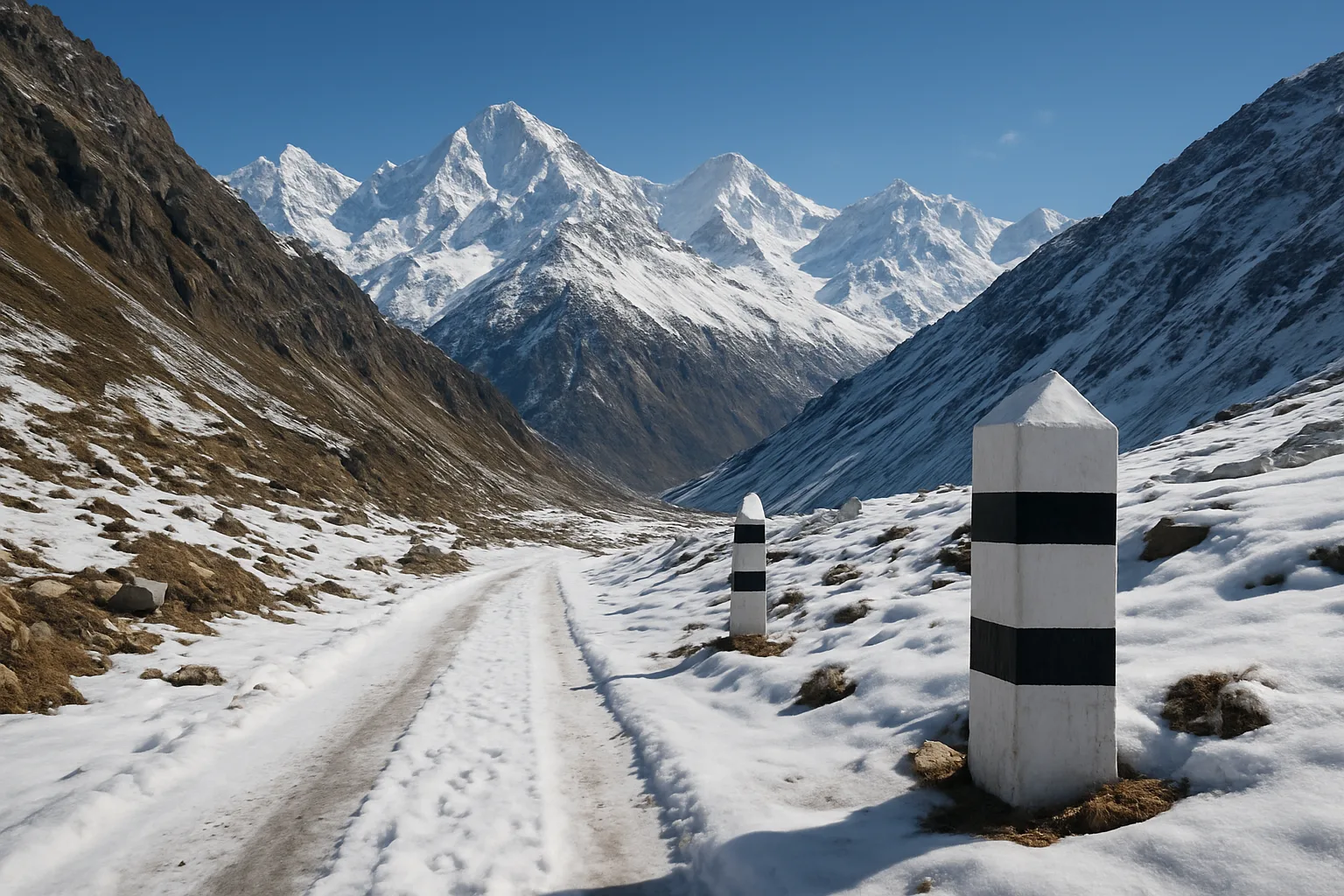
Dawn rises over the Sutlej River, painting the rugged peaks of Kinnaur in pale gold. The air carries a hush, broken only by the distant chime of temple bells and the steady rush of glacial water. At this borderland, where India’s terrain merges with the threshold of Tibet, geography is more than backdrop—it is destiny. For centuries, the very edges of Kinnaur have defined its people’s lives, beliefs, and the ambitions of empires beyond the mountains.
Where Myth and Memory Intertwine
According to Kinnauri oral tradition, these mountains are not merely stone and ice—they are animate, sacred. Local legends speak of Kinnaur-Kailash, the revered peak, as the abode of deities. Stories echo of Pandavas seeking refuge here during their exile, and of the mystical land of Shambhala lying beyond the passes. These myths, preserved in song and ritual, form the bedrock of Kinnauri identity, yet they also hint at an ancient consciousness of place: Kinnaur as both refuge and threshold.
While such tales reside in the realm of memory, their persistence underscores the enduring perception of Kinnaur as a liminal zone—where India meets the “other side,” and where the known world dissolves into the unknown. This borderland consciousness predates written history, shaping the region’s self-understanding long before it entered official chronicles.
Documented Beginnings: Kinnaur in Early Political History
References to Kinnaur surface in the records of neighboring polities and travelers. The ancient Hindu texts refer to the people of Kinnaur as the Kinners, semi-divine beings dwelling at the world’s edge. By the early medieval period, Kinnaur’s valleys were threaded into the larger political and cultural fabric of the western Himalayas, though often as semi-autonomous tributaries or buffer zones between greater powers.
Accounts from the Rajatarangini, as well as later Mughal and British-era gazetteers, describe the region as both remote and significant—a place where local chieftains paid tribute to larger hill states, yet maintained distinct customs and authority. Kinnaur’s isolation, enforced by geography, also made it a zone of negotiation, where rulers from Bushahr and Spiti, or Tibetan authorities from the north, vied for influence through diplomacy and trade rather than outright conquest.
Trade Routes, Pilgrimage, and the Emergence of Hill States
Long before modern maps drew hard lines, ancient trade routes laced Kinnaur to Tibet and the plains of northern India. The Sutlej Valley, in particular, served as a vital corridor for salt, wool, borax, and grains. Caravans crossed high passes, braving snow and landslides, guided by local knowledge and protected by sacred rites. These routes were arteries not only of commerce but of culture—Buddhist monks, Hindu pilgrims, and itinerant traders wove together a tapestry of beliefs and practices, evident today in Kinnaur’s syncretic rituals and festivals.
As these routes flourished, so did local power centers. The rise of the Bushahr state, with its seat at Rampur, marked a turning point. Kinnaur’s villages, once loosely organized, became integrated into a system of tribute and defense. Yet even as Bushahr asserted nominal control, the borderland character of Kinnaur persisted—its local councils and clan leaders retaining real sway over daily life, especially in the upper valleys where the influence of Lhasa and Leh was felt alongside Rampur’s.
Geopolitical Pressures and the British Encounter
The nineteenth century ushered in a new era of scrutiny. The British, anxious about the shadow of Russian expansion and the shifting allegiances of Tibet, came to view Kinnaur as a buffer of strategic consequence. Surveyors and officers traversed its valleys, mapping passes, cataloguing customs, and establishing administrative posts. The borders, once fluid and porous, began to harden under colonial gaze.
Yet, as the gazetteers of the time reveal, the British found Kinnaur’s society remarkably resilient. Communities maintained their autonomy, negotiating taxes and trade permissions rather than succumbing to direct rule. Local beliefs about land and sacred geography continued to influence border enforcement—certain pastures remained inviolate, and cross-border kinship ties blurred official demarcations.
From Independence to Modern Border Sensitivity
With India’s independence and the subsequent reorganization of states, Kinnaur’s borderland status grew even more pronounced. The emergence of the People’s Republic of China and the closure of the Indo-Tibetan border in the 1950s transformed centuries-old connections. The region, once a crossroads, became a frontier of heightened vigilance. Military roads and outposts sprang up where traders once camped, and the rhythms of local life adjusted to the realities of national security.
Despite these changes, the Kinnauri sense of place has not faded. The memory of open borders, of shared festivals with Tibetan neighbors, and of a world less divided by politics, lingers in local consciousness. Today, Kinnaur stands as both sentinel and symbol—a region shaped by the ebb and flow of borders, but never fully defined by them.
The Enduring Significance of the Borderland
The story of Kinnaur’s border sensitivity is ultimately a story of adaptation. Here, ancient myth and modern geopolitics collide, producing a society attuned to the uncertainties and opportunities of life at the edge. The rituals, languages, and alliances forged across these mountains continue to inform Kinnaur’s resilience and its cautious engagement with the wider world.
As we move forward in this series, we will turn to the lived experiences of Kinnauris in the decades following independence: how memory, migration, and adaptation have shaped their identity amid changing national and international realities.
Previous: Designation of Kinnaur as a Tribal District
Next: Roads, Connectivity, and Modern Infrastructure in Kinnaur