
Series: History of Una, Himachal Pradesh, India
Phase 5: Modern Era — Part 23 of 30
This article appears within a continuing historical series that follows the western Himalayas into the modern era. With the end of princely rule and the integration into independent India, long-standing social and political patterns were reconfigured. This phase examines how development, state formation, and memory interact with inherited landscapes, shaping contemporary life while carrying forward echoes of the past.
First Light: A Market Awakens in the Foothills
It is dawn in Una in the spring of 1971. A thin mist curls above the Sutlej River, shrouding the distant hills in a silver haze. The town is stirring, not just from sleep, but from decades of quiet isolation. Along the main bazaar, shopkeepers sweep thresholds, and the aroma of chai drifts through the air. For centuries, Una’s rhythms have been dictated by the land—wheat fields, mango orchards, and the steady flow of traders between Punjab and the hills. But this morning, there is a new energy. News has spread: Himachal Pradesh is now a full-fledged state, and Una, on the border with Punjab, is poised for change.
From Agrarian Roots to Administrative Hub
For much of its early modern history, Una remained a predominantly agrarian society. Its fertile soil, watered by the Sutlej and the Swan rivers, sustained generations of farmers. The landscape was dotted with small villages, each with its own temple and weekly market. Yet, Una’s position—nestled at the crossroads of Punjab’s urban sprawl and Himachal’s mountain cultures—meant it was never cut off from outside influences. During British colonial rule, Una served as a minor administrative outpost, its strategic location recognized but not fully exploited.
The first real shift came after Partition in 1947. As refugees poured across the new border, Una’s population swelled. Makeshift camps soon gave way to new settlements. The town’s demographic fabric changed almost overnight, bringing Punjabi-speaking traders, artisans, and entrepreneurs into closer contact with the local Himachali communities. It was a moment of stress and opportunity—one that set the stage for Una’s economic transformation.
The Road to Industrialization
By the late 1960s, as India’s Green Revolution transformed food production in the plains, policymakers in Himachal Pradesh began to look beyond agriculture. The formation of Himachal Pradesh as a state in 1971 provided new administrative momentum. Chief Minister Dr. Yashwant Singh Parmar, often called the architect of modern Himachal, envisioned industrial growth as a path to self-sufficiency and employment. Una, with its flat terrain and proximity to Punjab’s rail and road networks, became a natural candidate.
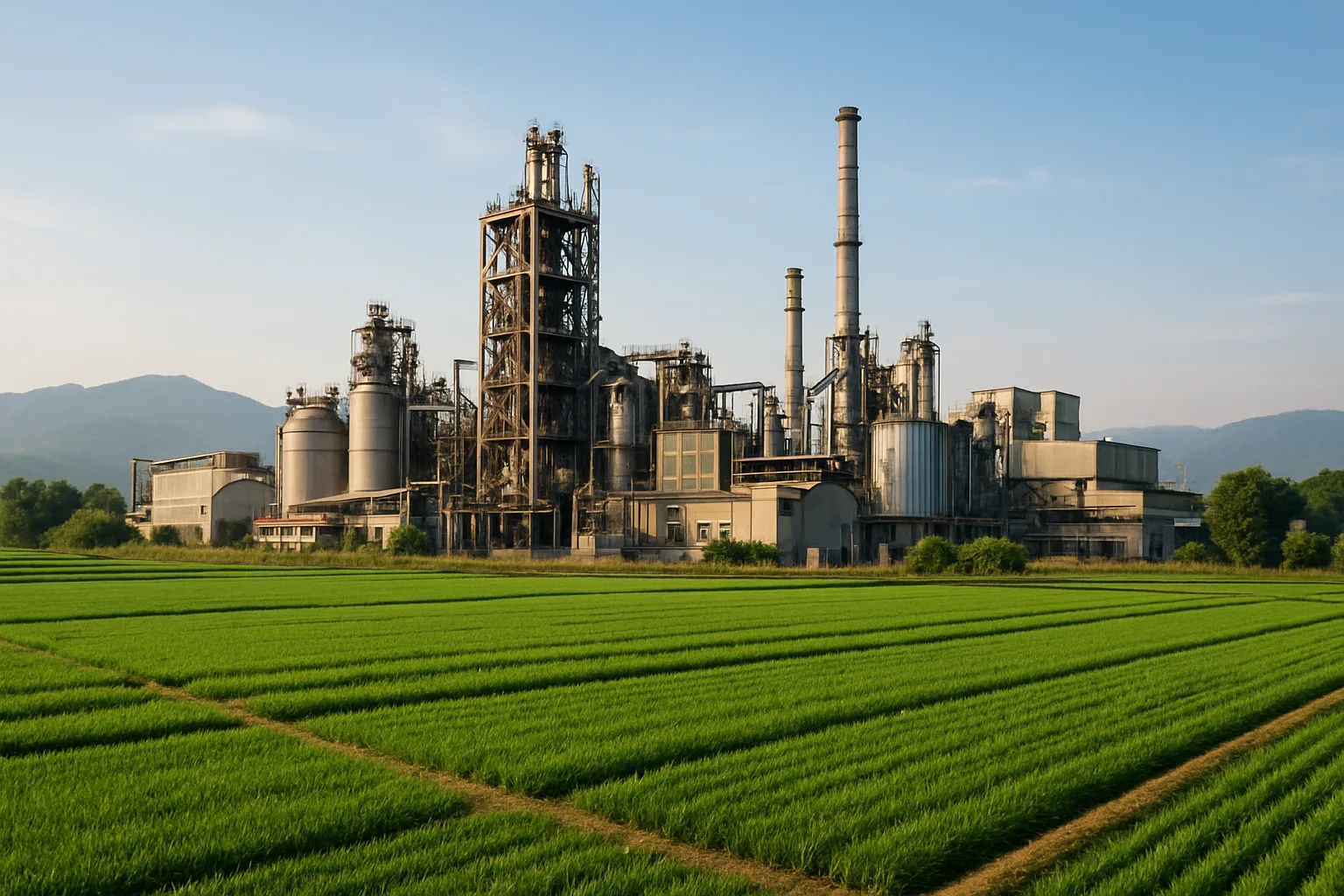
In 1973, the foundation stone for Una’s first industrial estate was laid in Mehatpur, a nondescript village just outside the main town. It was a modest beginning—an experiment in planned industrialization. Early factories focused on agro-processing, textiles, and small-scale engineering. The Himachal Pradesh State Industrial Development Corporation (HPSIDC) offered incentives: cheap land, tax breaks, infrastructure support. Slowly, investors from neighboring Punjab and Haryana began to take notice.
Growth, Challenges, and the Human Side
The 1980s and 1990s saw a steady influx of industries into Una’s Mehatpur and Gagret belts. Textile mills hummed through the night, biscuit factories filled the air with the scent of baking, and small chemical plants dotted the landscape. The boom was not without its challenges. Labor disputes, environmental concerns, and the ever-present stress of water management forced the community to adapt.
Among the notable figures of this era was Baldev Raj, a Punjabi entrepreneur who set up one of Una’s first large-scale textile units. His vision—and willingness to train a local workforce—set a standard for the region. Simultaneously, local leaders like Smt. Shakuntala Devi, the town’s first female municipal chairman, championed skill development and advocated for better roads and public health services to support the growing labor force.
For many, the changes were deeply personal. Farmers found their children leaving the fields for assembly lines. Women, once confined to home and hearth, began taking up jobs in packaging and quality control. The town’s social fabric stretched, sometimes strained, but gradually wove a new pattern—one that accommodated both tradition and modernity.
The New Millennium: Diversification and Connectivity
Entering the 21st century, Una’s industrial landscape diversified further. Electronics, pharmaceuticals, and food processing joined the older textile and engineering units. The state government’s push to attract information technology companies saw the creation of small IT parks, though these remained limited compared to the larger hubs in Chandigarh and Mohali.
Connectivity became Una’s lifeline. The broad-gauge railway line from Nangal Dam to Amb Andaura (completed in the early 2000s) linked Una directly to major markets and supply chains. The Una-Nangal road, improved and expanded, made daily commutes to factories feasible for thousands. Students from Una’s government colleges began finding employment in local industries—a marked shift from the earlier tide of out-migration.
Yet, this growth also brought its own dilemmas. Environmentalists voiced concerns about unchecked industrial expansion. The Swan River, once a pristine stream, grew choked with effluents during the dry season. Local NGOs, supported by figures like Dr. Rajender Prasad, a respected physician and environmental activist, pushed for stricter pollution controls and sustainable development practices.
Resilience Through Economic Shocks
Economic growth in Una has never been a straight line. The global recession of 2008 hit the town’s export-oriented units hard. Many factories scaled back operations or closed entirely. The COVID-19 pandemic decades later exposed fresh vulnerabilities—migrant labor shortages, supply chain disruptions, and the urgent need for digital infrastructure.
But the spirit of adaptation persisted. Local businesses pivoted to essential goods manufacturing; textile units produced masks and protective gear. Digital literacy programs, spearheaded by educators like Prof. Sunil Kashyap at the local government college, enabled small entrepreneurs to move sales online. These collective responses forged a sense of resilience and community not easily shaken by global tides.
Modern Una: A Hub Reimagined
Today, the industrial estates of Mehatpur, Gagret, and Tahliwal bustle with activity. Major companies, including international brands in food processing and consumer goods, operate alongside family-run enterprises. The town’s economy is a tapestry—woven from agriculture, industry, retail, and a growing service sector.
Urbanization has brought new challenges: traffic congestion, the need for affordable housing, and pressure on public services. The state government’s initiatives under the “Smart City” program aim to modernize infrastructure and support sustainable growth. At the same time, Una’s educational institutions—many founded by local industrialists—are investing in technical training that anticipates the needs of tomorrow’s economy.
Community life remains vibrant. Markets bustle with shoppers, festivals blend Punjabi exuberance with Himachali tradition, and the town’s historic temples and gurdwaras continue to draw pilgrims and tourists alike. The echoes of Una’s transformation are visible in the aspirations of its youth—who see in their hometown both a link to the past and a springboard to the future.
Legacy and the Road Ahead
As we look back on Una’s journey from a quiet agrarian outpost to an industrial and economic hub, the story is one of vision, struggle, and resilience. Key figures—administrators, entrepreneurs, workers, and activists—have each shaped the town’s destiny in profound ways. The impact of their efforts is reflected not only in rising incomes and new infrastructure, but in the confidence with which Una faces the future.
Today, the lessons of Una’s industrial growth—adaptability, community engagement, and respect for the land—continue to guide its evolution. The successes and setbacks of the past fifty years provide a blueprint for sustainable progress. In every factory, classroom, and market square, traces of this remarkable transformation endure—reminding Una’s people that their story is far from finished, and the promise of tomorrow is built on the foundations of yesterday.
Previous: Formation of Una as a Separate District
Next: Agriculture, Irrigation, and Rural Economy Today