
Series: History of Solan, Himachal Pradesh, India
Phase 5: Modern Era — Part 23 of 30
This article appears within a continuing historical series that follows the western Himalayas into the modern era. With the end of princely rule and the integration into independent India, long-standing social and political patterns were reconfigured. This phase examines how development, state formation, and memory interact with inherited landscapes, shaping contemporary life while carrying forward echoes of the past.
Before the Name: A Quiet Hill Town Awakens
It’s an early morning in the 1960s, and the mist still clings to the slopes of Solan. The town, nestled between the green folds of the lower Himalayas, is waking up slowly. Farmers in faded woolen shawls prepare their fields for the day. At the time, Solan is known for its gentle climate and for being a stopover on the Kalka-Shimla railway, but it is not yet a name whispered with wonder in the world of agriculture. Few could have guessed that these hills would soon become the mushroom capital of India.
The Arrival of Science: Dr. S. S. Sohi’s Vision
Every transformation has its catalyst. For Solan, it was the arrival of Dr. S. S. Sohi in 1961. A visionary mycologist, Dr. Sohi was appointed as the founding director of the newly established Mushroom Research Laboratory under the then Indian Agricultural Research Institute (IARI) outpost in Solan. His mission? To unlock the secrets of edible fungi and harness their potential for Indian agriculture.
Working with a small but fiercely dedicated team, Dr. Sohi began by experimenting with white button mushrooms (Agaricus bisporus), carefully adapting European cultivation methods for Solan’s unique climate. The region’s cool summers and crisp winters, once seen as a limitation, became an asset. Under Dr. Sohi’s guidance, Solan’s first experimental mushroom beds yielded promising results, and word spread quickly among local farmers.
From Experiment to Enterprise: The 1970s Boom
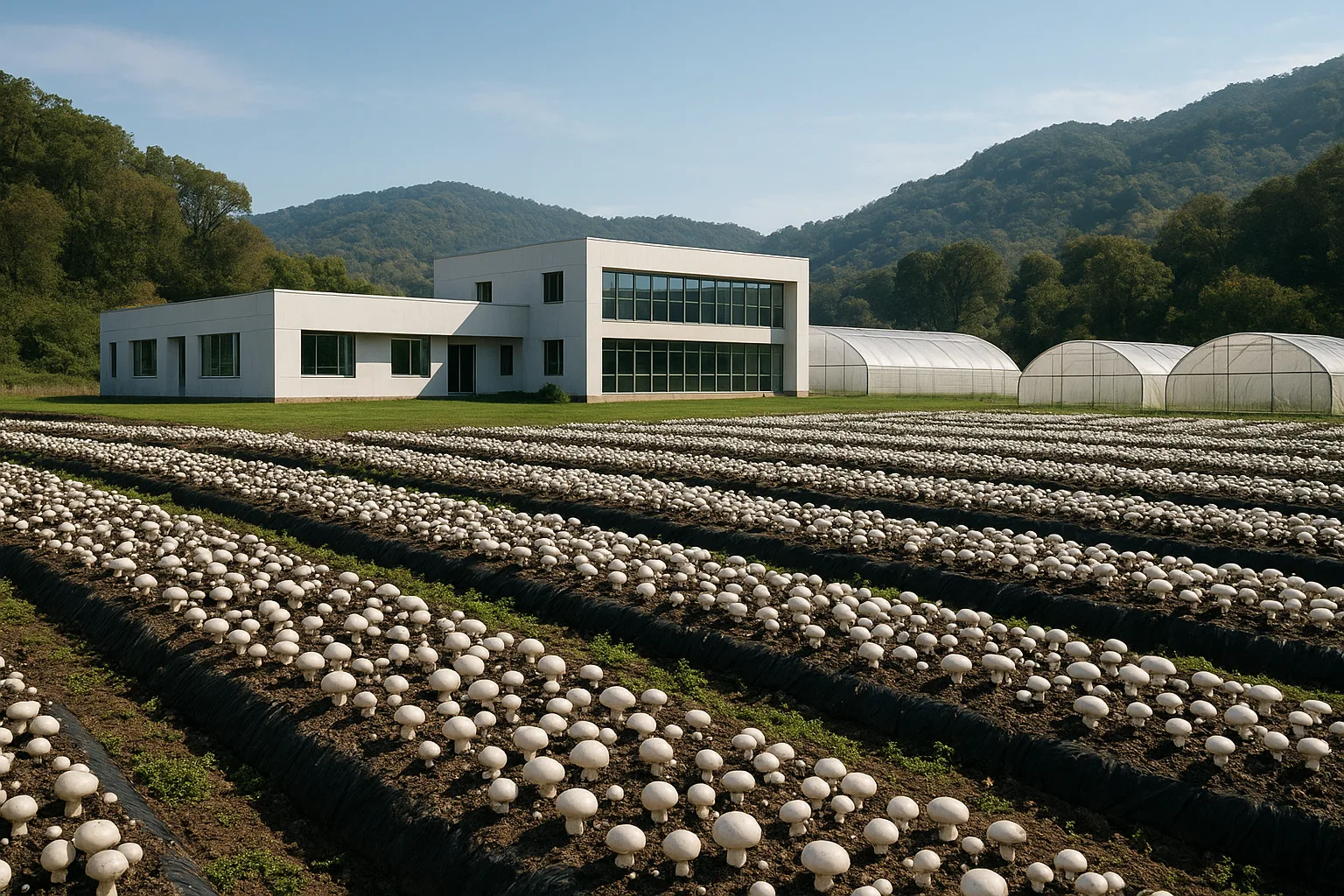
The 1970s marked a turning point. The success of the research laboratory encouraged the Indian Council of Agricultural Research (ICAR) to establish the National Research Centre for Mushroom (NRCM) in Solan in 1983, though the groundwork had been laid a decade earlier. This move put Solan at the heart of India’s emerging mushroom sector, attracting scientists and students from across the country. The town’s landscape began to change: traditional terraced fields now coexisted with clusters of mushroom sheds, their interiors a world of controlled humidity and filtered sunlight.
Local farmers, some skeptical at first, found that mushrooms offered something unique. Unlike wheat or maize, mushrooms could be grown vertically, required less water, and fit perfectly into the limited landholdings common in the hills. Cooperative societies formed, and families who once relied solely on subsistence crops began to see new income streams. The economic impact was profound—Solan became a case study in rural diversification, cited in agricultural journals and government reports alike.
Faces Behind the Fungi: The Community Embraces Change
Behind every statistic lies a story. Take Meena Devi, one of the first women in her village to attend a mushroom cultivation workshop at the research center in the early 1980s. Armed with new knowledge and a modest government grant, she converted a corner of her cowshed into a mushroom house. The results were immediate: fresh mushrooms fetched good prices at Solan’s bustling Sabzi Mandi (vegetable market) and even reached as far as Delhi by train.
Meena’s story echoes through many households. The accessibility of mushroom farming empowered women and small landholders, disrupting traditional hierarchies. For some, it meant their children could stay in school longer, or that they could afford better healthcare. The town’s population, once dependent on seasonal migration for work, began to stabilize as the local economy found new roots.
Innovation on the Hills: The Science of Mushrooms Takes Center Stage
With Solan’s reputation growing, the research center evolved into the Directorate of Mushroom Research (DMR) in 1997, further cementing the town’s status. Under directors like Dr. R. C. Upadhyay and Dr. B. C. Suman, Solan became a hub not just for production, but for scientific advance. Researchers developed disease-resistant strains, improved composting techniques, and introduced new species—oyster and milky mushrooms, for example—tailored to different regions of India.
Conferences and workshops brought together scientists, policymakers, and farmers. The streets of Solan, once quiet, now buzzed with visitors from across Asia. The town’s hotels and guesthouses found themselves hosting everyone from agricultural ministers to Japanese mycologists, all eager to witness Solan’s success.
Mushrooms in the Market: Solan’s Changing Economy
By the 2000s, Solan’s identity was inseparable from its mushrooms. Trucks adorned with “Mushroom City” signs became a common sight on the winding roads, ferrying produce to Chandigarh, Delhi, and beyond. The annual Mushroom Festival, held every September, drew crowds with cooking competitions, educational tours, and folk performances celebrating the humble fungus.
The economic ripple was visible everywhere. New businesses opened: equipment suppliers, packaging companies, and cold storage units. Young graduates, once destined for jobs in distant cities, began to see a future at home. Even the town’s cuisine adapted—mushroom pulao and masala became local favorites, and stalls selling fresh and pickled mushrooms dotted the market lanes.
Challenges and Resilience: Weathering the Storms
No success story is without its trials. Solan’s mushroom industry faced its share of challenges: disease outbreaks in the 1990s threatened entire crops, and fluctuating market prices tested farmers’ resolve. Climate change brought unpredictable weather, making the delicate process of cultivation even more precarious.
Yet, the community responded with characteristic resilience. The DMR ramped up training programs, teaching farmers how to adapt. Organic cultivation gained popularity, and Solan began exporting to new markets in the Middle East and Southeast Asia. The town’s spirit—an alchemy of science, enterprise, and tradition—carried it through setbacks, each crisis forging a deeper sense of identity.
Solan Today: A City Shaped by Mushrooms
Walk through Solan today, and the legacy is unmistakable. The air in the central market is thick with the earthy scent of fresh produce. Billboards tout the latest mushroom varieties, and schoolchildren learn the basics of cultivation as part of their curriculum. The DMR’s campus, with its glasshouses and laboratories, stands as a living monument to decades of innovation.
Yet, Solan’s story is more than a tale of agricultural triumph. It’s a testament to how a small town, given the right blend of vision and community spirit, can transform its destiny. The journey from sleepy hills to “Mushroom City” has changed local lives and set a national example for rural development. The town’s embrace of science, adaptation, and inclusive growth continues to inspire, anchoring Solan’s place not just on the map of Himachal Pradesh, but in the agricultural imagination of India.
Previous: Emergence of Solan as an Industrial Hub of Himachal
Next: Education and Research Institutions in Modern Solan