
Series: History of Hamirpur, Himachal Pradesh, India
Phase 5: Modern Era — Part 22 of 30
This article appears within a continuing historical series that follows the western Himalayas into the modern era. With the end of princely rule and the integration into independent India, long-standing social and political patterns were reconfigured. This phase examines how development, state formation, and memory interact with inherited landscapes, shaping contemporary life while carrying forward echoes of the past.
In the Shadow of Shivaliks: Dawn in 1972
The air in Hamirpur carried a peculiar energy on that cool March morning in 1972. Villagers clutched bundles of newspapers with headlines declaring the birth of a new district. For generations, this region had been defined by its rivers, its undulating hills, and the slow, persistent pulse of local life. Now, for the first time, its people awoke to the realization that the land beneath their feet—an expanse carved by the Beas and bordered by age-old trade paths—had been officially recognized in the administrative tapestry of Himachal Pradesh. Hamirpur, long overshadowed by its more storied neighbors, had entered a new era.
Ancient Roots and Early Footprints
Hamirpur’s story is not just one of lines drawn on a map. Its soul is ancient, etched by centuries of settlement and movement. Oral traditions in the region speak of shepherds and farmers who first made their homes along the river terraces, drawn by the promise of fertile soil and abundant water. While the myths recount tales of sages meditating in dense forests and heroic kings carving paths through the hills, archaeological inference points to continuous habitation since the late Iron Age, with ceramics and tools unearthed from the banks of the Kunah and Maan rivers.
The local Pahari dialects and enduring crafts traditions hint at a blending of influences—Aryan migrations, indigenous Gaddi and Gujjar communities, and, later, Rajput clans seeking sanctuary from the plains. The fabric of Hamirpur’s society was never homogenous; it was a mosaic, woven from threads of migration, adaptation, and resilience.
Hill States and the Age of Forts
By the medieval period, the region that would become Hamirpur found itself at the crossroads of competing hill states. The Katoch dynasty, whose capital at Kangra commanded respect across the western Himalayas, extended its sway here. Oral records and early chronicles, such as those referenced in the Punjab Hill States Gazetteer, describe the construction of mud forts and the rise of local chieftains. Fort Hamir, from which the district takes its name, is said to have been both a bulwark and a symbol—a reminder of the tenuous autonomy enjoyed by these small kingdoms, forever negotiating their survival between the ambitions of larger neighboring powers.
These centuries saw the rise of distinctive belief systems. Small Shaivite shrines, ancient Devi temples, and the occasional Buddhist relic bore witness to trade and cultural exchange that reached far beyond the Himalayas. Pilgrims and traders traversed narrow passes, linking Hamirpur’s villages to the larger world—carrying salt, wool, and stories as precious as any coin.
Colonial Encounters and Administrative Flux
The 19th century brought seismic changes. The coming of the British, following the collapse of the Sikh Empire, redrew the map of the western Himalayas. Hamirpur’s lands, previously under the Kangra kingdom, were absorbed into the British-controlled Kangra district of Punjab. The new administrators, with their love for survey and system, catalogued the region’s resources, its people, and its boundaries. British gazetteers described Hamirpur as a “picturesque yet inaccessible” tract, noteworthy for its disciplined peasantry and the martial tradition of its men, who would soon be recruited in large numbers into the Indian Army’s famous regiments.
Yet, for all its loyalty, Hamirpur remained a periphery—its fate decided in distant offices. Local governance was mediated through tehsils and sub-tehsils, with little say given to the communities themselves. The memory of these decades, preserved in folk songs and family histories, is tinged with both frustration and a dogged sense of self-reliance.
Freedom, Statehood, and a Rising Voice
India’s independence in 1947 and the subsequent formation of Himachal Pradesh as a province marked new beginnings. The princely states were integrated, and administrative reforms began reshaping the region. Hamirpur, initially a tehsil under Kangra District, saw its fortunes shift as the state’s boundaries and priorities evolved. The region’s contribution during the wars of 1962, 1965, and 1971—when many sons of Hamirpur served and sacrificed—fostered a new sense of unity and pride.
By the late 1960s, the demand for more representative administration grew louder. Community leaders, often drawing on the region’s martial ethos and educational progress, pressed for separate recognition. Petitions, rallies, and tireless advocacy set the stage for change. It was a movement rooted in the conviction that Hamirpur’s distinct identity—geographical, cultural, and historical—deserved formal acknowledgment.
Districthood Realized: 1972 and Beyond
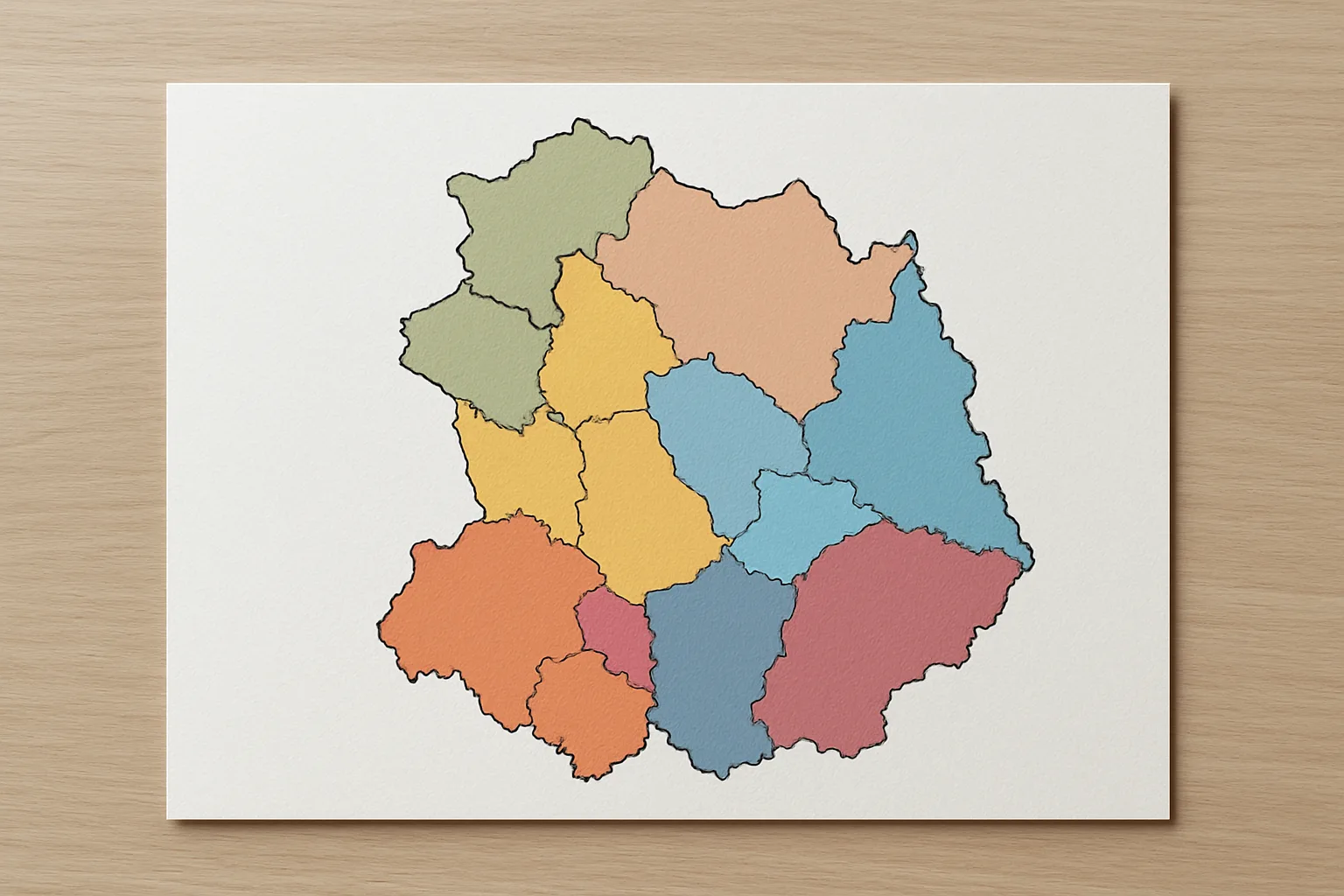
On 1st September 1972, the government of Himachal Pradesh announced the formation of Hamirpur as a separate district, carved from the larger Kangra. The new district included four subdivisions: Hamirpur, Barsar, Bhoranj, and Nadaun. The news was met with jubilation and relief. For the first time, local governance could be shaped by those who understood the land’s rhythms and needs. Schools, hospitals, and roads soon followed, spurred by a sense of ownership and possibility.
This administrative milestone did not erase old ties or challenges. Hamirpur’s people continued to balance tradition and progress, drawing strength from the memory of their ancestors—warriors, farmers, teachers, and reformers. The district’s educational achievements and high rate of army enlistment became points of pride, as did its festivals, dialects, and the enduring pulse of its markets.
Legacy of Identity: Hamirpur’s Roots in the Present
Today, the formation of Hamirpur district is remembered not just as a bureaucratic act, but as the flowering of centuries-old aspirations. The landscape remains dotted with ancient shrines and the ruins of forts, each a testament to the region’s layered past. Oral traditions and local chronicles continue to inform communal identity, shaping how villagers tell their own history to the next generation.
The journey from ancient settlements to modern districthood has left an indelible mark on Hamirpur. Its people, shaped by centuries of negotiation and resilience, continue to adapt—drawing from old wells even as they build new roads. In the next part of our series, we will explore how Hamirpur’s distinct administrative identity fostered social, economic, and educational transformations in the decades that followed, setting the stage for the challenges and opportunities of the late 20th century.
Previous: Hamirpur After Independence: Administrative Changes
Next: Rise of Hamirpur as an Education Hub of Himachal