
Series: Finance for Kids
Phase 13: Resources, Environment & Society — Part 146 of 166
Why Money Choices Matter for the Environment
Teaching children about money is important, but it can be even more powerful when we connect it to caring for our planet. Money choices can impact the environment in many ways. When kids learn how their spending affects the world, they can make better choices that benefit both their wallets and the earth.
Step-by-Step Tips to Teach Kids
1. Discuss the Importance of the Environment
Start by explaining what the environment is and why it’s important. Use simple language and examples, such as trees providing oxygen and clean air, or how animals and plants live in harmony. Help them understand that taking care of the earth is a shared responsibility.
2. Introduce Eco-Friendly Products
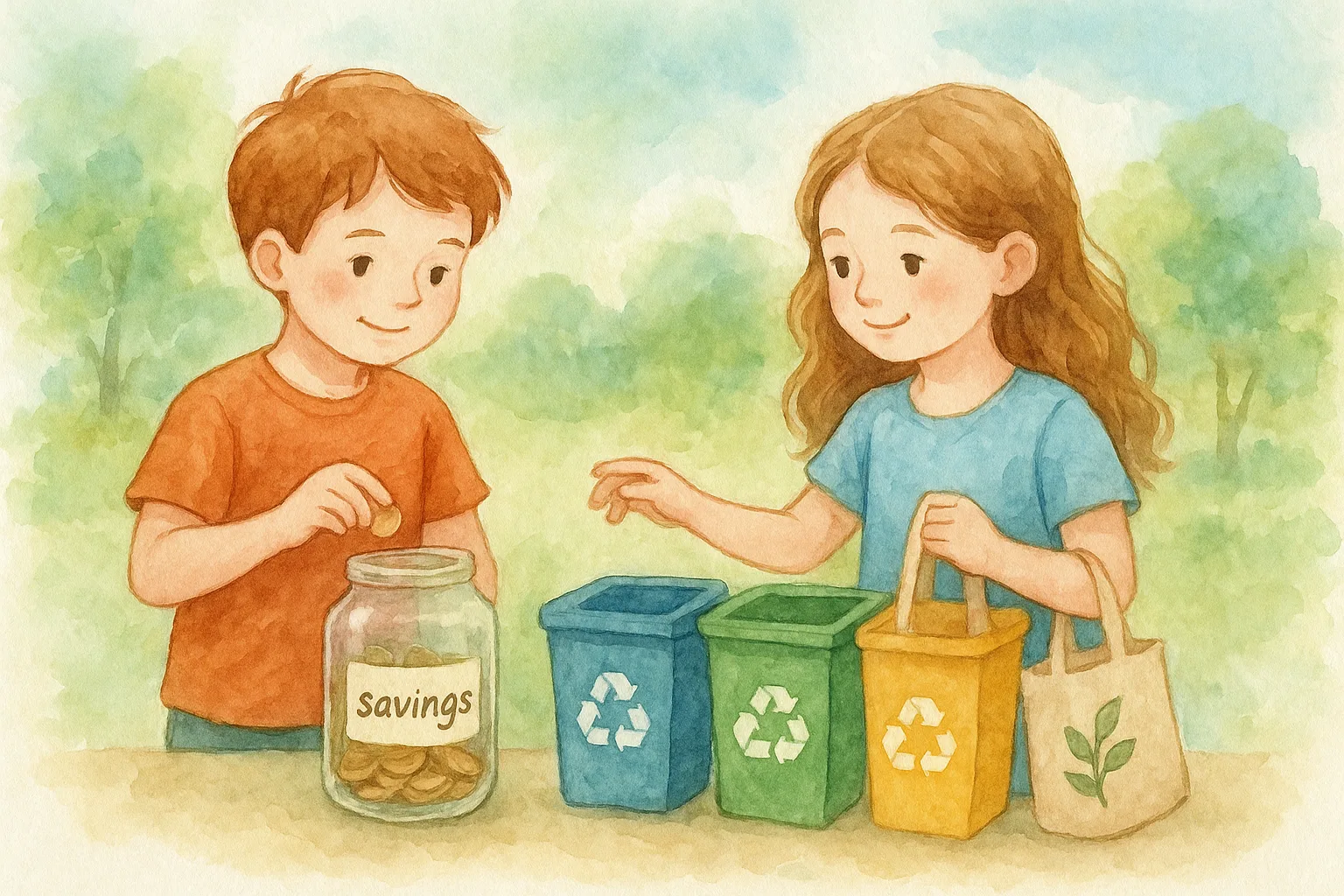
When shopping, talk about eco-friendly products. For instance, explain how reusable bags help reduce plastic waste. You can say, “If we use these bags, we can keep our parks clean and save animals from getting hurt by plastic.” Let them help choose eco-friendly items when shopping.
3. Compare Costs of Eco-Friendly Choices
Show how some eco-friendly products might cost more upfront but save money in the long run. For example, explain how a reusable water bottle might cost £10 but saves money compared to buying bottled water every day. Help them see that spending a little more can lead to savings and a cleaner planet.
4. Set Saving Goals for Eco-Projects
Encourage kids to save money for projects that help the environment, like planting trees or starting a garden. Create a savings jar for these projects. Talk about how they can earn money through chores or small jobs and how every little bit adds up. Celebrate when they reach their goal!
5. Involve Them in Household Decisions
Include children in discussions about household spending. For example, when buying groceries, talk about choosing local produce over imported items to support local farmers and reduce carbon footprints. Ask for their opinions and let them weigh the benefits of their choices.
6. Explore Nature Together
Spending time in nature can help children appreciate the environment. Go for walks in parks, visit nature reserves, or enjoy a day at the beach. Use these experiences to discuss how money choices can impact these beautiful places. Ask them how they think littering affects wildlife.
7. Share Stories and Examples
Find stories, books, or videos that illustrate the connection between money and the environment. Share examples of companies that practice sustainability. Discuss what kids can learn from these examples and how they can apply them in their own lives.
8. Encourage Responsible Consumption
Teach kids about the importance of only buying what they need. Explain how overconsumption can harm the environment. You can play a game where they decide whether they really need an item before buying it. This can help them think critically about their purchases.
Myths About Money and the Environment
Myth 1: Saving Money is More Important Than Saving the Planet
Some people think saving money is all that matters. In reality, the two go hand in hand. Making eco-friendly choices can save money in the long run and protect the environment.
Myth 2: Eco-Friendly Products Are Always More Expensive
While some eco-friendly products might cost more upfront, many options can save money over time. For instance, energy-efficient light bulbs last longer and use less electricity, helping to reduce bills.
Myth 3: Kids Can’t Make a Difference
Every little action counts! Children can influence their families and friends with their choices. Teaching them the importance of their decisions can inspire others to join in.
Conclusion
Teaching kids about money choices and the environment doesn’t have to be complicated. By discussing eco-friendly products, involving them in decisions, and encouraging responsible consumption, you can help them make informed choices. Together, you can create a brighter, greener future!
This article provides general educational information only and is not financial advice. Always seek guidance from a qualified professional for personal financial decisions.
Previous: Helping Kids Learn About Saving Time and Money
Next: Why Buying Less Can Help the Planet