
Series: History of Una, Himachal Pradesh, India
Phase 4: British Period — Part 17 of 30
This article is part of a wider series tracing the transformation of the western Himalayas under colonial influence. As British authority extended into the hills, existing political systems were restructured through treaties, administration, and new forms of governance. This phase considers how colonial rule reshaped society, economy, and space while leaving lasting imprints on local identity.
The Arrival of the British: Dawn at the Sutlej
It is the early morning of April 1846. Mist hovers low over the Sutlej, blurring the green hills that frame Una’s valleys. At the riverbank, a small crowd gathers—local chieftains, curious villagers, and a handful of British officers in crisp uniforms. News has spread quickly: the Treaty of Lahore has ended the First Anglo-Sikh War, and the British are about to take charge of this region for the first time. Their arrival marks the start of an era that will redefine lives, lands, and loyalties in Una for generations to come.
For centuries, Una had been a borderland—sometimes under Kangra’s sway, at other times under Sikh rulers or local rajas. Now, the Union Jack was fluttering above the district headquarters. The British East India Company, and soon the British Crown, would bring new systems of control, introducing unfamiliar codes of administration and taxation. What did this mean for the people of Una? The answer unfolded in ways both subtle and seismic over the decades that followed.
British Boundaries: Drawing Lines on Old Lands
When the British assumed direct control of the Punjab hill regions in the mid-19th century, their first task was administrative clarity. Una, which had long defied neat categorization, was divided and redrawn. The district found itself under the jurisdiction of Hoshiarpur, and later Kangra District, within the Lahore Division. British surveyors, led by officers like Major George Lawrence and later Sir John Lawrence, pored over maps and dispatched teams to mark new borders, often ignoring local customs and traditional boundaries.
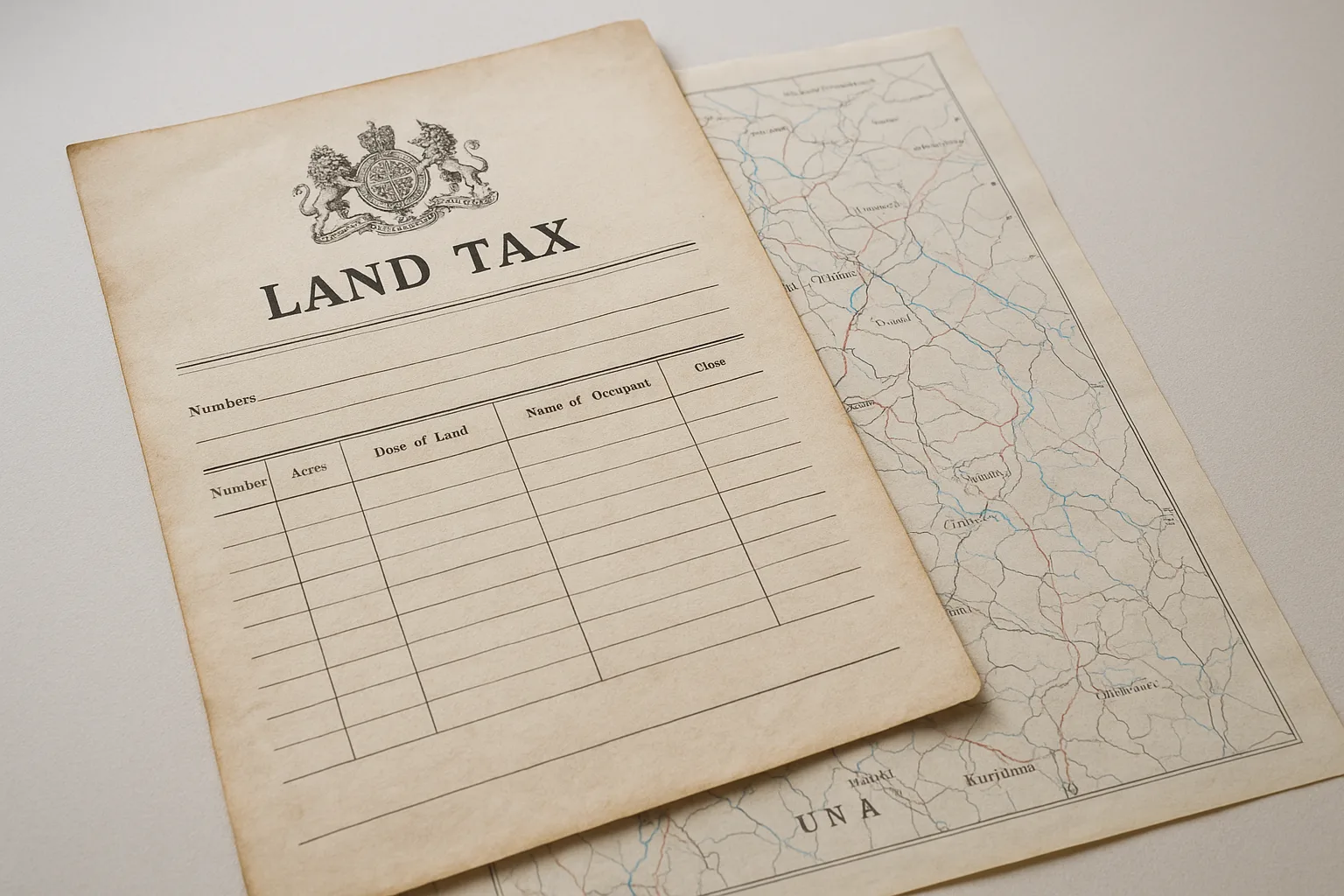
This redrawing was not just bureaucratic—it was deeply personal for those whose lands were suddenly counted, measured, and taxed by strangers. The revenue surveyors, with their theodolites and ledgers, became a common sight in Una’s villages. The land, once held under customary rights or as jagirs, was now subject to detailed classification and assessment. The British wanted order; Una’s people had to adapt.
Revenue Reforms: From Custom to Calculation
The backbone of British administration in Una was the revenue system. Inspired by the Mughal land revenue models but refined for imperial efficiency, the British introduced the ‘settlement’ system. Officers like James Abbott and Henry Lawrence implemented detailed land surveys and classified holdings into categories: zamindari (landowner), pattidari (shared), and mahalwari (village collective).
Each parcel of land was measured, mapped, and assessed for productivity. Taxes were fixed based on anticipated output, rather than actual harvests, and were to be paid punctually—regardless of drought, flood, or famine. The system was alien to Una’s farmers, who had long relied on more flexible, community-based arrangements. Now, the failure to pay could mean auctioning of land or imprisonment.
- Zamindari: Land held by a single owner, responsible for the tax.
- Pattidari: Land divided among several co-sharers, each responsible for a portion.
- Mahalwari: Entire villages collectively responsible for revenue, often leading to internal disputes.
This system, while efficient for the colonial state, placed enormous pressure on smallholders. Many lost ancestral lands during bad harvests, their fates shifting with the unpredictable monsoon and the relentless demands of the imperial treasury.
Agents of Change: British Officials and Local Elites
British rule in Una was not a monolith. The district’s administration relied heavily on a web of local intermediaries: lambardars (village headmen), revenue patwaris, and influential landlords. These figures became the face of colonial power in daily life, translating orders, collecting taxes, and reporting dissent.
The British rewarded loyalty with titles—Rai Bahadur, Khan Bahadur, Sardar Sahib—and often granted land or privileges to those who aided their rule. This strategy, perfected by administrators like Henry Lawrence, created a new elite whose fortunes rose with the colonial state. At the same time, it bred resentment among those left out: small farmers, artisans, and tribal communities who found themselves increasingly marginalized.
Yet, not all collaboration was voluntary. There were quiet acts of resistance: villagers who hid harvests, lambardars who underreported yields, and the occasional tax protest that simmered into open defiance. For many in Una, the British were both a source of opportunity and a symbol of loss.
Policing and Justice: Enforcing the New Order
To enforce their revenue demands and maintain order, the British established a formal police and judicial system in Una. Police posts appeared in key locations—such as the Una town, Amb, and Bangana—staffed with sepoys and supervised by British or Indian officers trained in colonial law.
The introduction of the Indian Penal Code, alongside English-style courts, replaced the patchwork of local justice with a uniform system. Disputes over land, inheritance, or taxes now flowed through magistrates and colonial judges, often to the bewilderment of locals used to panchayat arbitration. The new system brought some measure of stability but also alienation, as British law was enforced in a language and manner unfamiliar to many.
This apparatus was not just about justice—it was about control. The fear of prosecution or police action became a powerful tool, ensuring compliance with revenue demands and quelling dissent before it could spread. For the first time, Una’s villagers found themselves living under the ever-watchful eyes of an imperial state.
The Human Cost: Famine, Migration, and Adaptation
The rigidity of the colonial revenue system became painfully clear in times of crisis. The Great Famine of 1876–78, which devastated much of northern India, hit parts of Una hard. With taxes due regardless of harvest, many families were forced to sell land, livestock, or even migrate in search of work. Some moved to the plains, others to newly emerging towns along the railway lines the British had begun to build.
Those who remained adapted as best they could. Cash crops like sugarcane and tobacco began to appear, encouraged by colonial administrators hungry for revenue. New markets, often overseen by British-appointed officials, linked Una to distant cities. The social fabric frayed and reknit itself, blending old customs with the demands of a new age.
Yet, amidst hardship, there was resilience. Community bonds, religious festivals, and local leaders continued to offer support. In rare moments, British policies brought benefits—new schools, roads, and a measure of legal recourse for the vulnerable. For many in Una, the colonial era was a time of testing and transformation: a crucible that forged new identities and ambitions.
Legacy of Empire: Echoes in Modern Una
By the time India gained independence in 1947, Una’s landscape had been irrevocably altered by a century of British rule. The revenue maps drawn in colonial times still influence today’s land records. The administrative boundaries, with their straight lines and unfamiliar names, remain embedded in the region’s geography. The descendants of colonial-era elites continue to play roles in local politics and society.
But perhaps the most profound legacy is less visible: a culture of resilience shaped by the challenges and contradictions of the colonial era. The people of Una learned to navigate bureaucracy, negotiate power, and adapt to shifting circumstances—skills that serve them well in the complexities of modern India.
Today, as Una balances tradition with progress, the echoes of colonial administration and revenue systems linger in its institutions, its land, and its memory. This history is not just a record of what was lost or imposed—it is the foundation from which the district continues to grow, renew, and redefine itself for the future.
Previous: British Annexation of Una and Surrounding Areas
Next: Impact of Railways and Roads on Una’s Economy