
Series: History of Hamirpur, Himachal Pradesh, India
Phase 3: Mughal & Sikh Influence — Part 12 of 30
This article belongs to a historical series examining how expanding empires and regional powers reshaped life in the western Himalayan hills. As external influences pressed into the mountains, local rulers navigated diplomacy, resistance, and accommodation. This phase explores how wider political currents intersected with entrenched hill traditions, altering governance without entirely displacing older structures.
Fog on the Hills: Hamirpur at the Edge of Empire
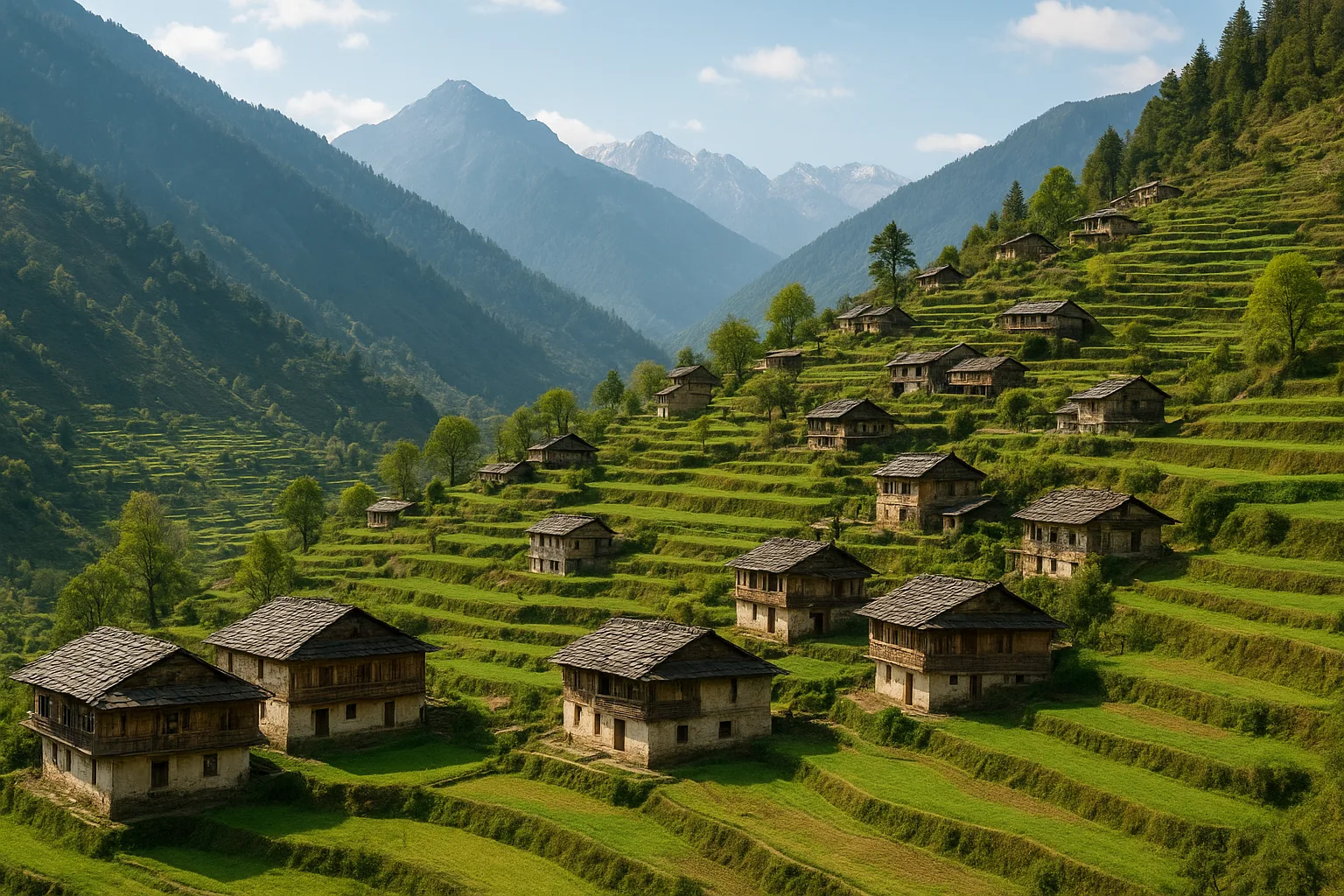
The year is 1595, and the dawn mist clings to the ridgelines above the Beas. From a craggy outcrop, a sentry peers toward the distant plains, mindful of rumors swirling from the south: the Mughal emperor Akbar, it is said, has sent envoys and taxmen into the hills. Yet here, in the undulating valleys of Hamirpur, life goes on with a wary independence. Cattle bells, temple chants, and the calls of traders echo off pine-covered slopes. To outsiders, this might seem an unremarkable backwater, but for its people, autonomy is a hard-won legacy, cherished and fiercely protected.
Anchoring the Region: Hamirpur Before the Mughals
By the time Mughal power reached the Himalayan foothills, Hamirpur’s identity was already shaped by centuries of migration, settlement, and shifting alliances. Early oral traditions, still recounted in village gatherings, speak of heroic clan founders and sacred groves. While mythology celebrates demi-gods and legendary warriors, historical inference points to the migration of Rajput and Katoch families fleeing the turbulence of the plains, finding sanctuary in the forested ridges and ravines.
Gazetteers from the colonial period, echoing older chronicles, describe Hamirpur as a land of scattered hamlets, each loyal to its own chieftain. The chiefdoms—often linked by familial ties but separated by deep valleys—formed a patchwork of small hill states and estates. The Katoch Rajputs, centered in nearby Kangra, exerted some influence, but Hamirpur remained a frontier, governed less by centralized authority than by the customs of land, faith, and kin.
Between Empires: The Mughal Reach and the Hill Response
The 16th and 17th centuries witnessed the expansion of the Mughal Empire into North India. Akbar’s conquests swept through the Punjab, and his successors pressed into the Himalayan foothills. Major states such as Kangra, Chamba, and Bilaspur were drawn into tributary relationships with the imperial court. Mughal chroniclers recount the sieges of Kangra Fort and the complex negotiations that followed. Yet, despite these grand campaigns, Hamirpur itself was seldom mentioned directly in court records—notable by its absence.
The reason lay less in Mughal neglect than in the sheer complexity of the terrain and society. Unlike the fortified cities of the plains, Hamirpur’s settlements were small, scattered, and often hidden by thick forests. Communication was slow, and the region’s political fragmentation meant that no single ruler could deliver the territory to an outside power. Instead, local chieftains—often styled as thakurs or raanas—managed their affairs with a blend of pragmatism and pride. When emissaries from Lahore or Sirhind arrived, they were met with polite hospitality, but little real submission.
Myth and Memory: Local Traditions of Resistance
Hill families in Hamirpur still tell stories of clever rajas who outwitted Mughal collectors or safeguarded their shrines from imperial interference. Some of these tales, embroidered over generations, merge history with legend. The story of a village priest who prophesied the defeat of an invading force, or of a band of shepherds who led Mughal troopers astray in the forests, are part of the region’s living memory.
Yet, behind the folklore lies a kernel of historical truth: the Mughal state, for all its might, was a distant, abstract authority in the hills. Imperial taxation was sporadic and difficult to enforce. Local rulers might send gifts or symbolic tribute to the governor of Lahore, but the rhythms of Hamirpur life—its festivals, justice, and landholding—remained largely untouched.
Geography as Guardian: The Land Shapes Power
Topography played an unyielding role in Hamirpur’s autonomy. The Beas and Sutlej rivers, flanked by rugged hills, served as natural boundaries. Seasonal rains and landslides frequently cut off the region, rendering imperial campaigns costly and uncertain. Trade routes linking the plains to Tibet skirted the edges of Hamirpur, but few armies ventured deep into its heartland.
This isolation was both a blessing and a challenge. While it shielded Hamirpur from conquest, it also limited the reach of external commerce and new technologies. Life remained rooted in agriculture, transhumance, and modest local markets, with barter and kinship forming the backbone of social order. Temples, clan shrines, and local fairs provided spiritual cohesion, while the memory of past resistances fostered a sense of collective pride.
Interwoven Communities: The Fabric of Hamirpur Society
By the late Mughal period, Hamirpur’s society was a tapestry of Rajputs, Brahmins, artisans, shepherds, and smallholder peasants. The influence of the Katoch, Jaswan, and other neighboring dynasties was real but circumscribed. Each village council retained significant autonomy, settling disputes and managing resources according to ancient custom. Belief systems were syncretic, blending folk deities with mainstream Hinduism—an inheritance from centuries of relative isolation.
Oral traditions recall the importance of sacred groves and guardian spirits, and many communities traced their lineage to semi-legendary ancestors who had “settled” the land in defiance of outside rulers. These stories, while colored by myth, reflect the lived experience of a people who saw themselves as custodians of their hills, not mere subjects of an empire.
After the Mughals: Setting the Stage for New Powers
As Mughal power waned in the 18th century, Hamirpur’s leaders watched new forces gather on the horizon. Sikh confederacies, Gorkha adventurers, and, eventually, British agents would all cast their gaze toward the Himalayan foothills. Yet the habits of autonomy and local governance, forged during the Mughal centuries, would shape how Hamirpur responded to each new challenge.
Today, the stubborn independence of Hamirpur’s communities is more than a memory—it’s woven into the rhythms of civic life, from local panchayats to annual festivals. The hills that once kept out imperial armies still foster a distinct identity, proud of its past and attentive to the lessons of history. In the next part of this series, we’ll follow the region as it encounters the rising power of the Sikhs and faces the crosscurrents of the early modern world.
Previous: Mughal Presence in the Hill Regions Around Hamirpur
Next: Cultural Life in Hamirpur During the Mughal Period