
Series: History of Mandi, Himachal Pradesh, India
Phase 1: Ancient & Mythological Roots — Part 5 of 30
This article is part of a broader historical series exploring the earliest layers of human presence in the western Himalayas. Beginning with landscape, belief, and early patterns of movement and settlement, the series traces how communities adapted to mountainous environments long before formal states or written records emerged. These foundational centuries shaped cultural memory, local traditions, and relationships with the land that would endure through later periods of change.
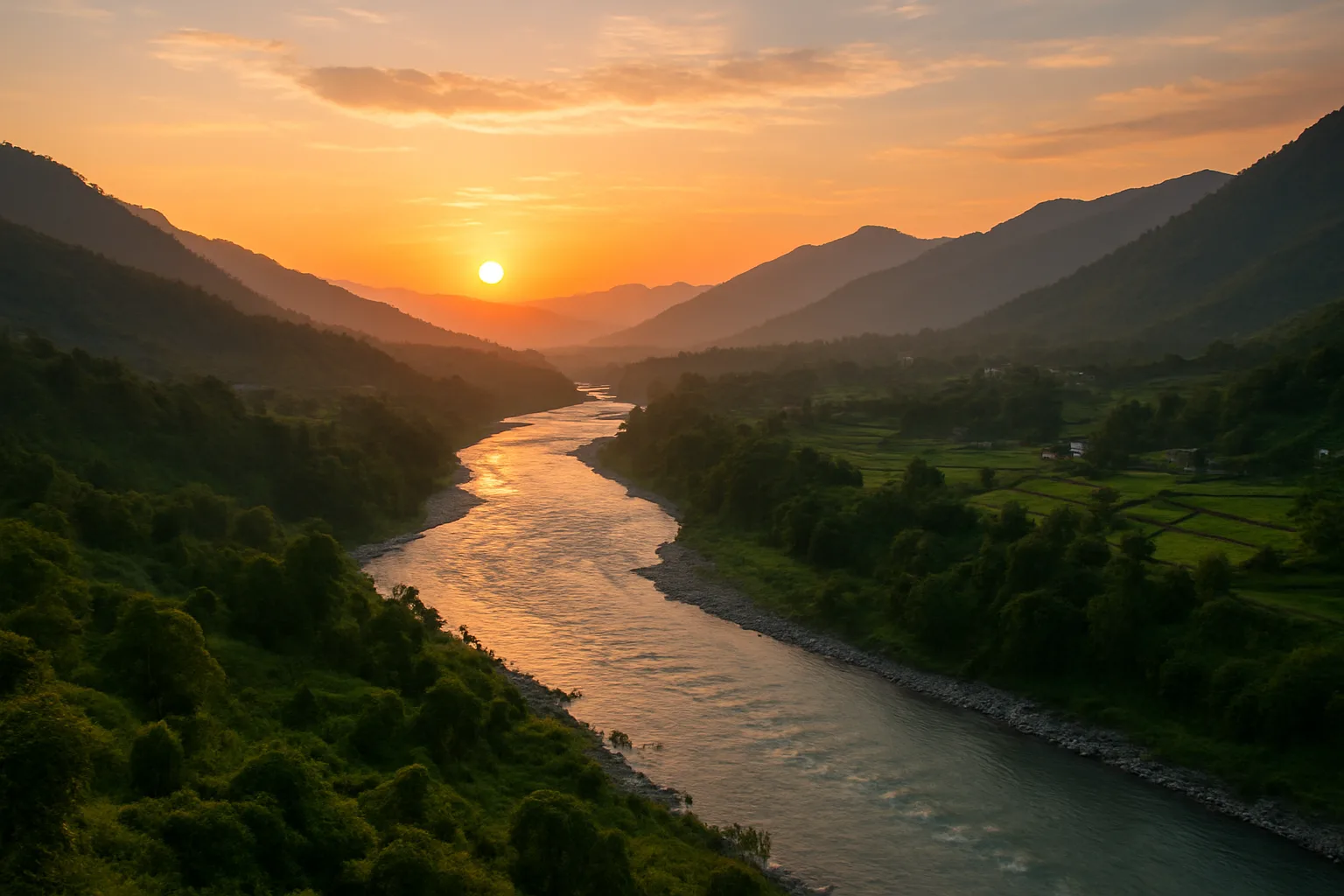
Where Waters Whispered to Stone: Dawn over the Beas
Imagine the predawn hush in the undulating hills of what is now Mandi, Himachal Pradesh. Mist clings to the riverbanks. The Beas, ancient and unhurried, carves its way through the land—its currents carrying rumors of distant mountains and the promise of new beginnings. It is here, cradled by these waters, that the earliest roots of Mandi’s civilisation took hold. The river’s presence is more than geographical; it is the silent force that has shaped the rhythms of life, belief, and power in this region for millennia.
Anchoring Mandi in the Ancient Landscape
The area that would become Mandi occupies a critical juncture in the Western Himalayas, where the Beas River breaks free from the high valleys and gathers tributaries on its southward journey. Archaeological evidence remains sparse, but the river’s course has always invited human settlement. By the early Iron Age (c. 1000 BCE), small communities had begun to cluster along its banks, drawn by fertile alluvial soil, abundant fish, and the relative ease of movement the river offered in a mountainous landscape.
Later accounts—found in regional gazetteers and the oral histories of the region—suggest that these settlements were not isolated. The Beas linked them, facilitating the exchange of goods, ideas, and customs. As the river flowed, so did stories, beliefs, and ambitions, laying the groundwork for the region’s first enduring cultures.
Myth, Memory, and the Beas: Oral Traditions
Oral traditions in Mandi and the broader Himachal hills remain deeply entwined with the Beas. Local legends trace the river’s origins to the sage Vashishta, whose penance and prayers were said to have summoned the river’s waters. Even today, villagers recount tales of the Beas as a living goddess—sometimes nurturing, sometimes unpredictable, always watching.
These stories, passed from one generation to the next, reveal how early inhabitants understood their world. The river’s seasonal cycles became metaphors for life and fate, its floods woven into cautionary tales about humility before nature. Yet, beneath the poetry lies an enduring truth: the people of this land have always looked to the Beas for sustenance and meaning, seeing in its flow both the power of the divine and the pulse of daily survival.
Early Settlements: From Caves to Stone Clusters
While the region’s mythology soars, its archaeological record is more subdued but telling. Scattered along the Beas and its tributaries, traces of early habitation—rock shelters, pottery shards, and the occasional megalith—point to a slow but steady emergence of settled life. The people here were pastoralists and cultivators, adapting to the river’s shifting moods, its bounty, and its perils.
Villages developed on natural terraces, safe from the worst of the monsoon floods, yet close enough to the water for irrigation. Over time, these hamlets evolved into closely-knit communities, bonded by kinship, mutual defense, and shared rituals. The Beas was their highway and their granary, their guardian and—sometimes—their judge.
Belief Systems: River as Axis Mundi
To these early hill communities, the river was more than a source of life—it was the axis around which the world revolved. Animistic beliefs flourished; every boulder, eddy, and confluence might shelter a spirit or ancestral presence. With the gradual arrival of Vedic and later Puranic influences, the Beas assumed an even greater sacredness, woven into the tapestry of Hindu mythology as a purifier and boundary-marker.
Festivals and rituals clustered around the river’s changing seasons. In the oral traditions of Mandi, offerings to the river—flowers, grain, or ghee—were believed to ensure good harvests and avert disaster. The river’s voice, at once gentle and thunderous, became a central motif in local songs and prayers, echoing the community’s hopes and fears.
Trade Routes and the Beas: Pathways Through the Hills
By the first millennium BCE, the region’s strategic position was becoming clear. The Beas formed a natural corridor linking the upper Himalayas to the Punjab plains. Early traders moved salt, wool, medicinal herbs, and even precious metals along these waterborne routes. The river valley also facilitated cultural exchange, bringing influences from distant lands—Bactrian traders, Buddhist pilgrims, and, later, Rajput chieftains.
Overland tracks paralleled the river, skirting dangerous rapids and fording shallows. Local settlements—each a node in this growing network—began to specialize: some in agriculture, others in crafts or animal husbandry. Legends hint at fortified outposts and early marketplaces (mandis), long before the formal rise of the Mandi state.
The Emergence of Hill States: Political Beginnings
By the early medieval period (c. 7th–9th centuries CE), the Beas valley was dotted with nascent hill polities. Early chronicles, such as the Rajatarangini and the regional Gazetteer of the Kangra District, describe a mosaic of clan-based chieftaincies—each vying for control over fertile riverbanks and lucrative trade crossings.
It is within this context that the ancestral rulers of Mandi first appear in the historical record, their authority legitimized by control of the river and its abundant resources. The Beas, once a boundary and a lifeline, now became a symbol of political identity. Forts crowned the hills overlooking the water, and new temples arose, blending local customs with broader Hindu traditions. The river was both witness and participant in these early experiments with kingship, its banks echoing with the clang of arms and the chants of priests.
Echoes in the Present: The Beas Endures
Today, the Beas continues to shape Mandi—not only as a source of water and energy, but as a living thread connecting past and present. The rituals, festivals, and place-names that cluster along its banks are echoes of those ancient days, when survival and meaning alike depended upon its flow. Even in the face of modernity—concrete embankments, hydroelectric dams—the river’s influence endures, reminding the people of Mandi that theirs is a civilisation born of water and shaped by myth.
In the next part of this series, we will journey deeper into the early medieval era, tracing how shifting alliances and dynasties transformed Mandi from a cluster of riverine settlements into a distinct hill state, forever marked by the presence of the Beas.
Previous: Early Human Settlements Along the Beas River in Mandi
Next: Foundation of the Mandi State: Raja Bahadur Sen