
Series: History of Hamirpur, Himachal Pradesh, India
Phase 1: Ancient & Early Roots — Part 3 of 30
This article is part of a broader historical series exploring the earliest layers of human presence in the western Himalayas. Beginning with landscape, belief, and early patterns of movement and settlement, the series traces how communities adapted to mountainous environments long before formal states or written records emerged. These foundational centuries shaped cultural memory, local traditions, and relationships with the land that would endure through later periods of change.
In the Shadows of the Dhauladhar: An Ancient Dawn
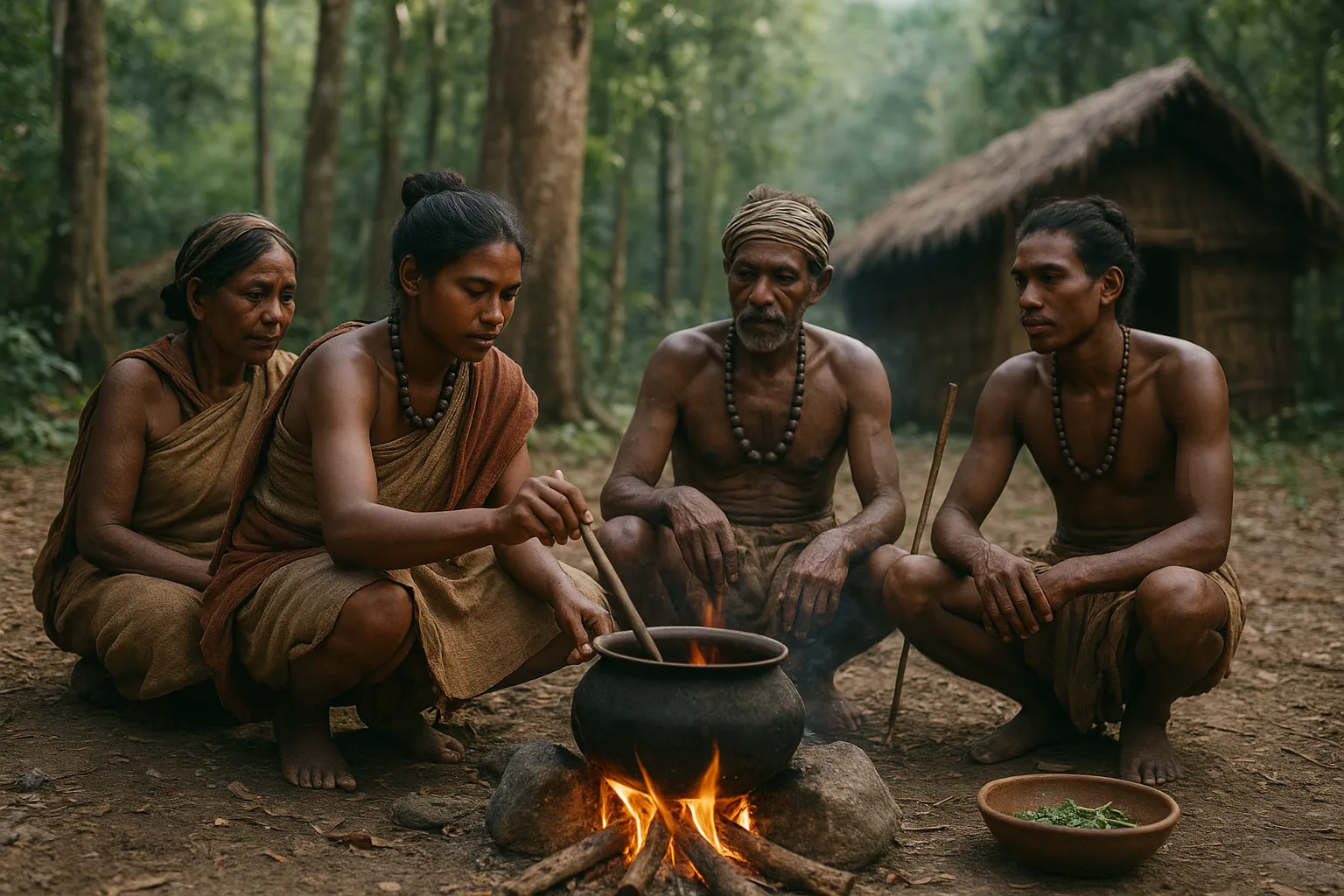
Imagine the forests of Hamirpur, thick with deodar and pine, centuries before any fortresses crowned its hills. The air is sharp and clean, carrying the distant call of birds and the quiet hum of the Beas River winding through the valleys. Here, in the shadow of the lower Himalayas, small bands of people once moved with the seasons—leaving only faint traces of their presence, yet indelibly shaping the land long before the word “kingdom” was ever uttered.
This is the story of Hamirpur’s earliest inhabitants: tribal communities who carved out lives amid rivers, forests, and hills, their legacies woven into the region’s soil and memory. Archaeology offers only glimpses, yet oral traditions and scattered references in regional chronicles point to a vibrant tapestry of early cultures that thrived here before the coming of kings.
From Prehistory to Early Settlements
Historically, the area now called Hamirpur sits at a crossroads—north of the Shivalik foothills, on the periphery of Punjab’s ancient plains but laced with the first serious ridges of the Himalayas. While no major paleolithic sites have been excavated in Hamirpur district itself, the broader region of Himachal Pradesh is rich with prehistoric remains. Stone tools found in neighboring Kangra and Mandi suggest hunter-gatherer groups roamed these hills from the late Stone Age (Mesolithic) onward, possibly as early as 8000 BCE.
Hamirpur’s lush valleys—particularly those near the Beas and its tributaries—would have been natural magnets for early foragers. Over time, these groups developed more settled patterns, moving towards slash-and-burn agriculture and simple animal husbandry. Archaeological evidence is fragmentary, but the patterns match what is known from Himachal’s wider archaeological record: small clearings in the forest, rock shelters, and seasonal camps on high ground, all hinting at a people intimately attuned to the rhythms of nature.
Tribes of the Hills: Names in Memory and Myth
As the echoes of prehistory fade, the first names begin to emerge from the mists: Koli, Gaddi, Dagi, and Chhura. These communities, referenced in both oral traditions and later regional gazetteers, are thought to be among the oldest tribal groups of the area. The Kolis, in particular, are frequently mentioned in local memory as original inhabitants—skilled at shifting agriculture, adept at hunting, and known for their hardy resilience.
It is crucial to distinguish here between mythology and history. Many legends paint these early tribes as descendants of divine or demonic beings who emerged from the earth itself, or as exiles fleeing ancient wars in the plains. While such stories are invaluable for understanding how these communities saw themselves, historians turn to linguistic clues and patterns of settlement to reconstruct actual origins. For example, the Gaddis—now famed as pastoralists further north—may once have ranged through Hamirpur’s higher ridges, their migratory routes later shifted by the arrival of more dominant powers.
Belief Systems and Ritual Landscapes
Long before temples rose or Sanskritic traditions took root, the people of Hamirpur’s hills worshipped the forces that governed their world. Sacred groves, ancient stones, and springs were revered as abodes of spirits—deities known variously as devtas, nag gods, or ancestral protectors. Some of these cults endure, subtly transformed but still vibrant in present-day village rituals.
Oral traditions recall how early shamans, known locally as chela or gur, mediated between humans and the unseen, especially at times of illness or disaster. Seasonal festivals marked the rhythms of sowing and harvest, with offerings of grains or milk to local spirits. These belief systems, though never written down, formed the spiritual bedrock of Hamirpur’s earliest societies—distinct from, yet eventually intertwined with, the Hindu cosmology that would arrive in later centuries.
Paths of Trade and Contact: The Early Routes
Despite their isolation, the early tribes of Hamirpur were never entirely cut off from the wider world. Ancient routes linked the Beas valley with the plains of Punjab and the higher reaches of Chamba and Lahaul. Traders, pilgrims, and wandering ascetics passed along forest paths—bartering salt, grains, and even simple metal tools.
Some historians, drawing from the Kangra Gazetteer and oral accounts, suggest that these early exchanges seeded the region with new ideas and crops. Millet, barley, and lentils, for example, entered local agriculture well before the arrival of organized states. Over centuries, these trails would become arteries of change, carrying not just goods but also stories, songs, and new rituals into the heart of Hamirpur.
Transitions: From Tribal Clusters to Emerging Hill States
By the first millennium BCE, the social landscape began to shift. The political map of north India was changing, with the rise of the Mahajanapadas in the plains and the slow push of Indo-Aryan influence into the Himalayan foothills. In Hamirpur, this meant growing contact with small, clan-based chieftaincies—precursors to the later Rajput principalities that would dominate the hill region.
Yet, the memory of those earlier tribes persisted. Many hill families, even among the later landed gentry, traced their lineage to these “original” inhabitants. Local chronicles and British-era records, such as the Imperial Gazetteer of India, note how village structures, marriage alliances, and customary law in Hamirpur retained tribal features long after the emergence of formal kingdoms.
Thus, the tribal era did not simply vanish; instead, it merged with and subtly shaped the evolving structures of power and identity across the hills.
Enduring Legacies: The Tribal Imprint on Modern Hamirpur
Walk through a village in Hamirpur today, and echoes of this ancient past remain. Place names, clan deities, and agricultural customs often hark back to tribal times. The resilience, adaptability, and deep-rooted sense of place that characterized these early communities continue to shape the region’s identity—even as modernity redefines what it means to belong to the hills.
This intricate tapestry of tribal life, belief, and adaptation is more than a shadowy prelude to kingdoms; it is the living foundation upon which Hamirpur’s later stories rest. As we move forward in this series, the next part will explore how these tribal roots interacted with the rise of early hill chieftaincies, and the first stirrings of political power in the valleys of Hamirpur.
Previous: Geography That Shaped Early Hamirpur Civilisation
Next: Hamirpur in Ancient Trade and Migration Routes