
Series: Learning AI
Phase 5: Large Language Models — Part 31 of 60
Understanding Tokenization: The Foundation of Large Language Models
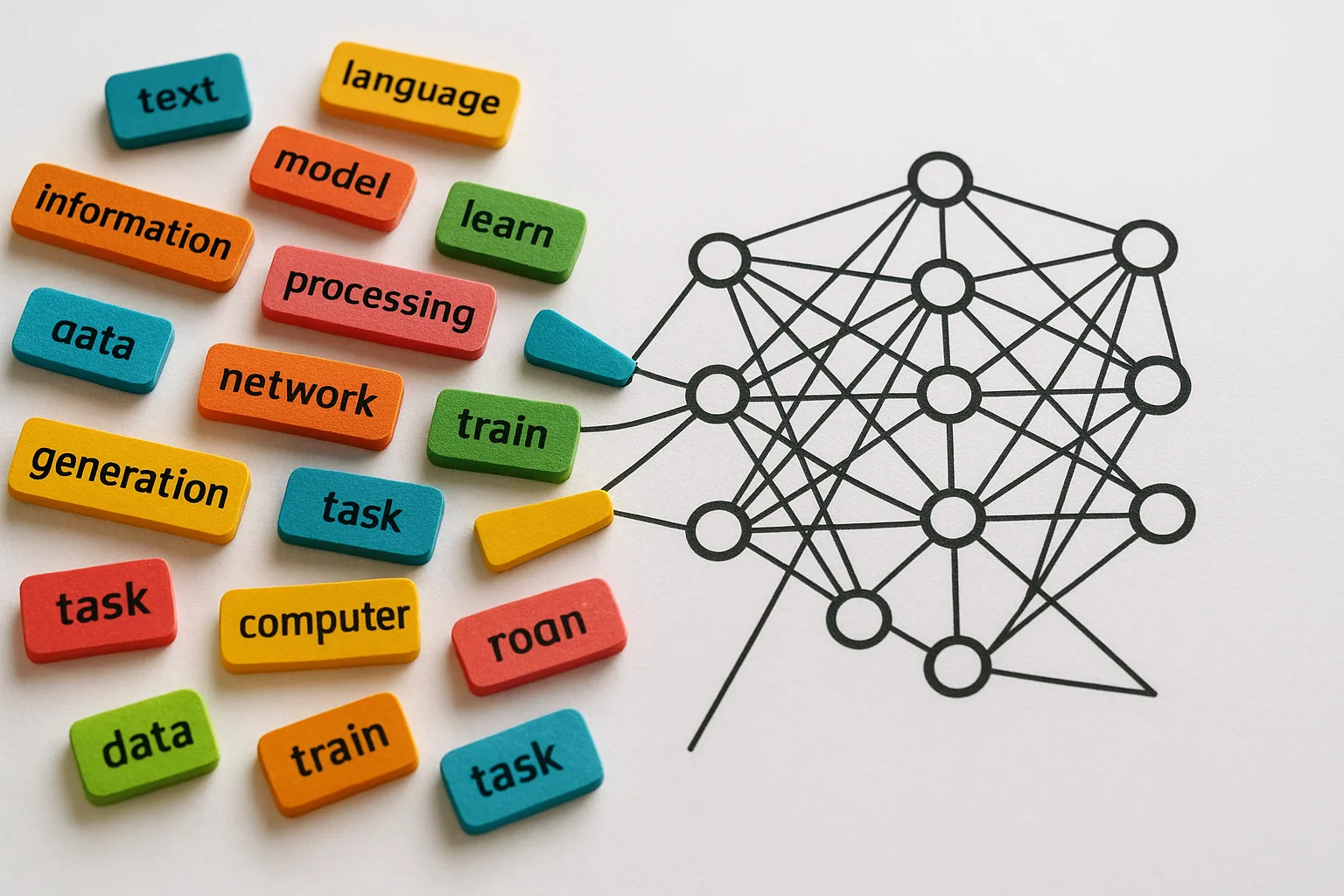
When you talk to a large language model (LLM) like ChatGPT, it may seem like the AI understands your entire sentence all at once. But under the hood, LLMs don’t process words or sentences as you might expect. Instead, they break down text into smaller pieces called tokens. This process is called tokenization, and it’s a crucial step that allows LLMs to make sense of language in a way they can handle computationally.
In this post, part 31 of our Learning AI series, we’ll explore how tokenization works in LLMs, why it matters, and how it impacts the way these models understand and generate text. We’ll also debunk some common myths and provide practical action steps you can take to deepen your understanding.
What Is a Token?
A token is a unit of text that a language model uses as its basic building block. Contrary to what you might think, tokens aren’t always whole words. They can be:
- Whole words, like apple or banana
- Subwords or parts of words, like un- or -ing
- Single characters, such as punctuation marks or individual letters
For example, the sentence “I love reading books!” might be broken down into tokens like I, love, reading, books, and ! or it might split reading into read and ing depending on the model’s tokenizer.
Why Tokenization Is Necessary
LLMs are built on mathematical models that can’t process raw text directly. They need to convert text into numbers (vectors) to perform calculations. But before numbers come into play, the text needs to be standardized into manageable pieces, or tokens. Tokenization helps:
- Standardize inputs: It converts varied text into a consistent format the model can understand.
- Reduce complexity: Breaking text into tokens simplifies how the model reads and predicts the next pieces of text.
- Improve model efficiency: Using subword tokens helps handle rare or new words without needing an enormous vocabulary.
How Tokenization Works Step-by-Step
1. Splitting Text into Units
The tokenizer scans the input text and divides it into basic units. Depending on the tokenizer type, these units can be words, subwords, or characters. Popular tokenization methods include:
- Whitespace tokenization: Splits text at spaces (simple but limited).
- Byte Pair Encoding (BPE): Merges common character pairs iteratively to form subword tokens.
- WordPiece: Similar to BPE but uses a probabilistic approach to build subwords.
- SentencePiece: An unsupervised tokenizer that treats text as a raw byte stream and segments it.
2. Mapping Tokens to IDs
After splitting the text, each token is assigned a unique numerical ID from the model’s vocabulary. This numeric representation is what the model actually processes. For instance, the token apple might be assigned the ID 1234.
3. Handling Unknown or Rare Words
When the tokenizer encounters a word it hasn’t seen before, it breaks it down into smaller tokens it does recognize. For example, the word chatbotting may be split into chat, bot, and ting. This compositional approach helps the model generalize and handle new vocabulary efficiently.
4. Feeding Tokens to the Model
Once tokenized and converted to IDs, the sequence is fed into the LLM. The model processes tokens one at a time (or in batches) to predict the next token or generate responses.
Why Tokenization Matters for You
Understanding tokenization can help you grasp several important aspects of working with LLMs:
- Character limits: When you see that a model has a limit, like 4,096 tokens, it doesn’t mean characters or words. Tokens vary in length, so knowing this helps you manage inputs better.
- Cost and speed: Many AI services charge based on tokens processed. Efficient tokenization means you use your quota wisely.
- Better prompt design: Knowing how text breaks down can help you write prompts that are clear and concise, avoiding unnecessary tokens.
- Debugging and fine-tuning: If you’re training or fine-tuning models, understanding tokens helps you analyze how the model interprets your data.
Myth-Busting Tokenization
- Myth: Tokens are always words. Reality: Tokens can be subwords, whole words, or characters depending on the tokenizer.
- Myth: More tokens mean better understanding. Reality: Efficient tokenization aims to balance token count and information; more tokens may slow processing without improving understanding.
- Myth: Tokenization is a fixed, unchangeable process. Reality: Different models use different tokenizers tailored to their architecture and training data.
Action Steps to Deepen Your Tokenization Knowledge
- Try tokenizing sample texts with different open-source tokenizers like BPE or SentencePiece using Python libraries such as Hugging Face’s
transformers. - Explore token counts for your favorite prompts to better understand input limits and costs.
- Read model documentation to learn which tokenization method they use and how that affects input processing.
- Experiment with writing prompts that use shorter or simpler tokens to optimize model responses.
- Follow up with our next post, where we’ll dive deeper into how LLMs generate text from tokens, linking tokenization to model outputs.
Conclusion
Tokenization is the quiet workhorse behind every interaction you have with large language models. By breaking text into manageable pieces, tokenizers enable LLMs to understand and generate language efficiently and flexibly. Understanding how tokenization works not only helps you use AI tools more effectively but also prepares you for deeper explorations into NLP and machine learning. As you continue your AI learning journey, keep tokenization in mind—it’s a fundamental concept that unlocks many of the mysteries of language models.
Previous: What Is a Large Language Model (LLM)? Beginner Guide
Next: What Are Embeddings? Practical Uses and Examples