
Series: History of Kullu, Himachal Pradesh, India
Phase 1: Ancient & Mythological Roots — Part 1 of 30
This article is part of a broader historical series exploring the earliest layers of human presence in the western Himalayas. Beginning with landscape, belief, and early patterns of movement and settlement, the series traces how communities adapted to mountainous environments long before formal states or written records emerged. These foundational centuries shaped cultural memory, local traditions, and relationships with the land that would endure through later periods of change.
Shadow and Sunrise: An Ancient Himalayan Morning
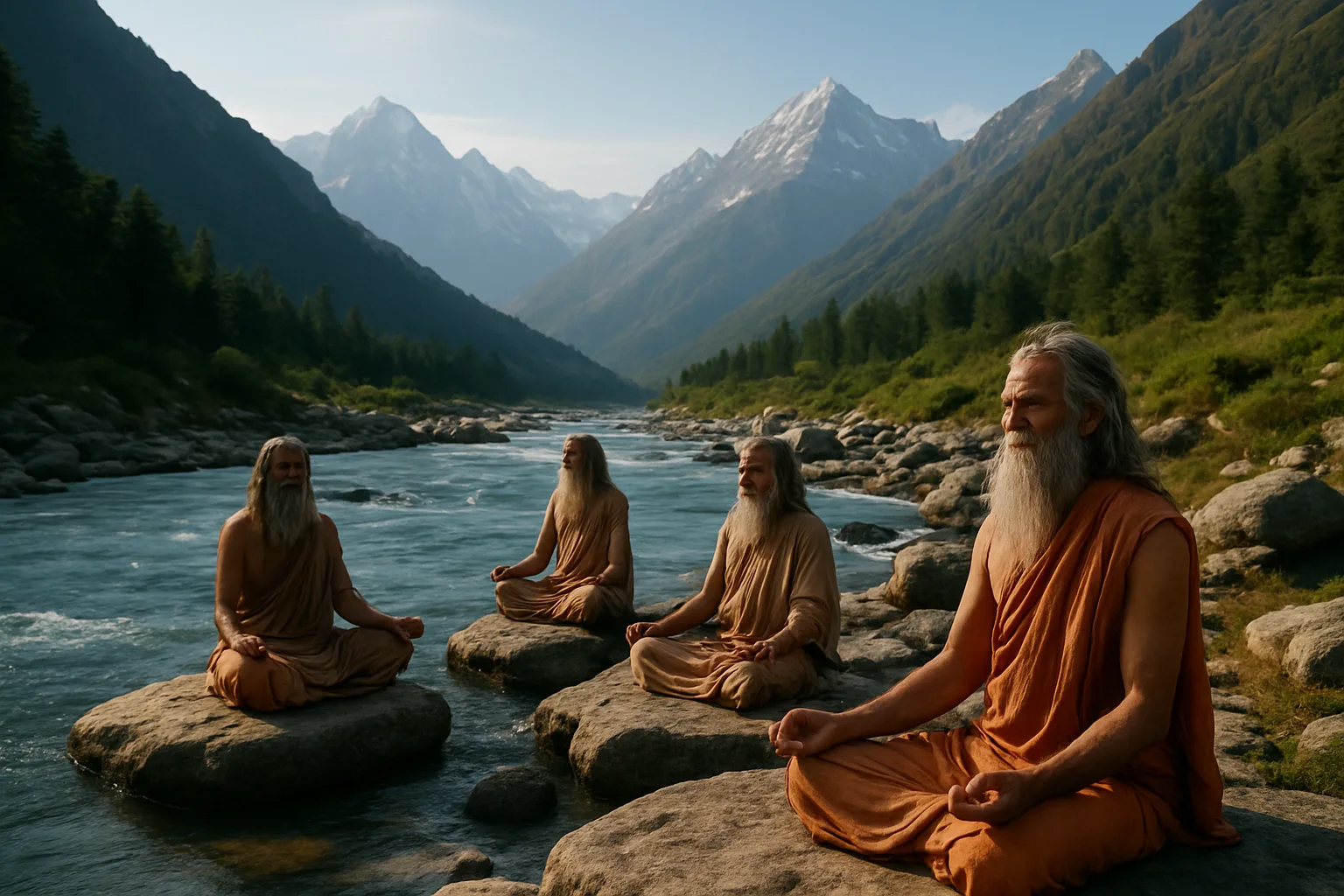
Picture the sharp chill before dawn, when the Parvati and Beas rivers coil through valleys hidden by mist. The sun, not yet risen, casts only hints of gold over the pine-crowned ridges. In this hush, a solitary figure—perhaps a wandering sage, perhaps a shepherd—pauses at the riverbank. He listens for the distant thunder of river stones and remembers the stories whispered by his ancestors: tales of gods, exiles, and heroes who first set foot where Kullu now stands.
Land of Myths: The Pandavas and the Valley of the Gods
The earliest stories of Kullu are tangled with myth. This is Dev Bhumi—Land of the Gods. In the great Sanskrit epic, Mahabharata, the exiled Pandava brothers are said to have wandered through these forests, seeking sanctuary amid the wild cedar and deodar groves. Local traditions still point out boulders and caves as the brothers’ resting places. And it was Sage Vyas, meditating at the confluence of the Beas, who gave the river its name. Every rock and stream in Kullu seems to bear the imprint of a legend, the valleys echoing with the footsteps of mythic figures.
The First Settlers: Early Peoples and the Rise of Kullu
Beneath the stories lie traces of early human settlement. Archaeologists have uncovered pottery shards and stone implements in the valley, evidence of habitation dating back as early as 2000 BCE. These ancient peoples, possibly related to the early Himalayan tribes, hunted in the forests and fished in the rivers, fashioning a life from what the mountains provided. Over centuries, small village communities grew, each with its own deity, its own sacred grove, and its own rhythm of festivals marking the passage of seasons.
Kingdoms in the Mist: The Kuluta Dynasty Emerges
As centuries passed, Kullu transformed from a cluster of villages to a principality with a name—Kuluta, as it appears in early Sanskrit inscriptions. According to local chronicles and copper-plate records, the first recorded king was Vihangamani Pal, who ruled around the 1st century CE. Legends claim he migrated from the South, guided by a vision of the goddess Parvati. The royal seat was established at Jagatsukh before shifting to Naggar, where the Naggar Castle still stands, its stone walls silently watching over the valley. The Pal dynasty’s rule would stretch, with interruptions, for nearly 1,400 years.
Himalayan Crossroads: Trade, Pilgrims, and Invaders
Kullu’s mountains were both barrier and bridge. The valley sat astride ancient trade routes linking Tibet with the plains of India. Traders, carrying salt, wool, and turquoise, crossed high passes like Rohtang, braving avalanches and bandits. Buddhist pilgrims from the north mingled with Hindu ascetics from the south, bringing new stories and customs. The valley’s temples—like the wooden Hadimba Devi shrine—reflect these layered influences, their architecture a fusion of Himalayan and subcontinental styles.
The Valley’s Gods and the Fabric of Daily Life
Even as dynasties rose and fell, life in Kullu was woven around its gods. Every village had its own deity—often represented by a carved wooden idol, carried out on festival days in processions of music and color. The Dussehra festival, unique to Kullu, was born of this tradition: a gathering of village gods and people, a living tapestry of faith and community. Oral histories, passed down in the shadow of snowy peaks, preserved the memory of rulers and raids, famines and floods, but always returned to the central role of the divine in shaping fate.
From Legends to Legacy: Kullu’s Ancient Echoes in the Modern Age
The tales of Kullu’s beginnings—half myth, half memory—continue to shape its present. Walk through the streets of modern Kullu or the tranquil lanes of Naggar, and you’ll see echoes of ancient customs in the faces of elders, in the rhythm of fairs, in the reverence for the mountains themselves. The valley’s temples remain hubs not just of worship but of community decision-making, their origins stretching back to those first settlers who looked to the gods for protection and peace.
Reflections: Ancient Roots, Living Valley
Today, as the first rays of sunlight sweep over the Beas and the high peaks, the valley wakes to a world transformed by time but tethered to its roots. The myths and memories of ancient Kullu are not relics—they are living, breathing parts of daily life. This deep continuity, from the earliest wanderers to the digital age, shapes Ukullu’s identity as a place where history is not just remembered, but lived.
Next: Mythological Legends Associated with Kullu Valley