
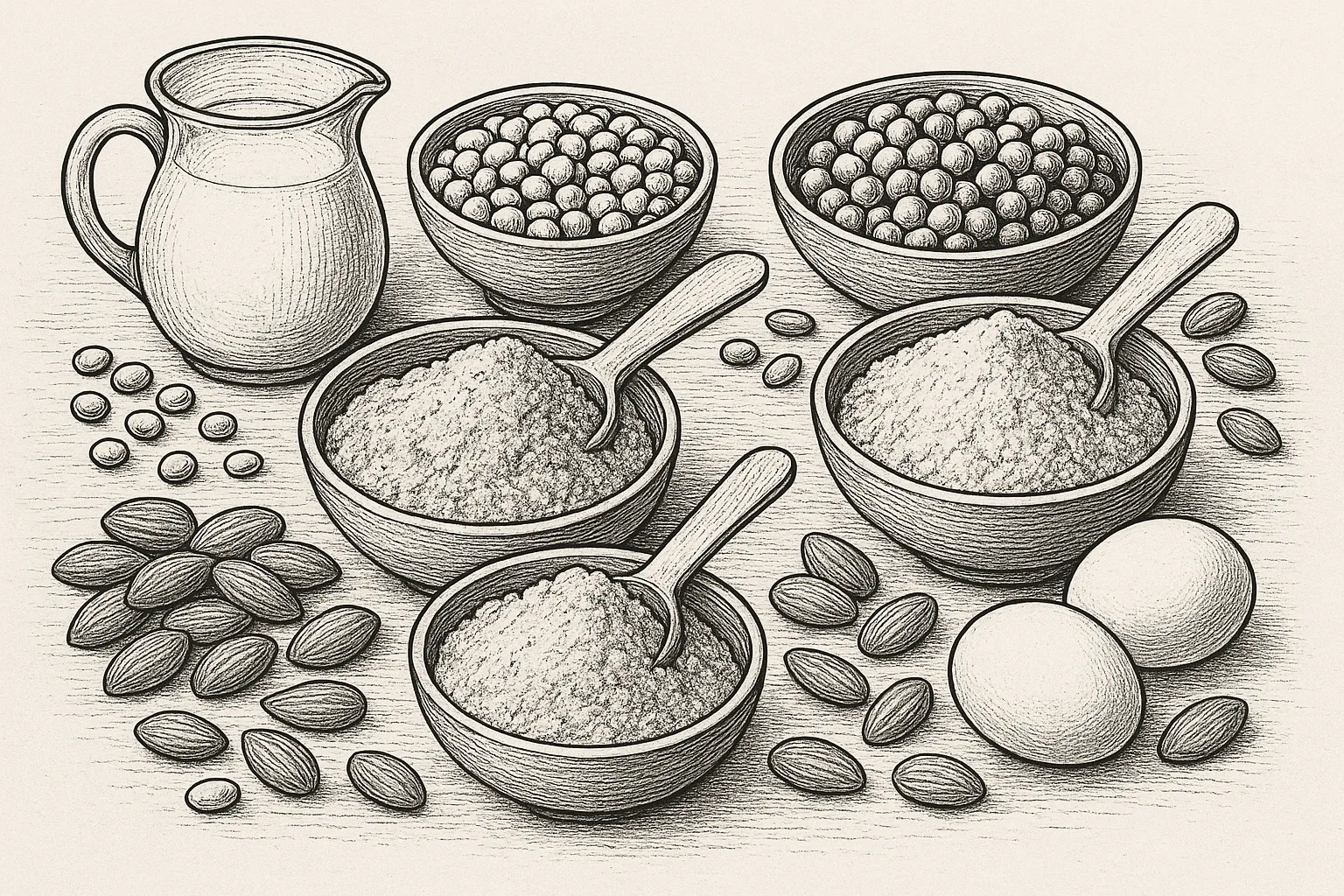
Why Compare Protein Quality?
Protein helps repair muscle, support immunity, and keep you fuller for longer. Different protein sources vary in amino acids, digestion speed, and sustainability, so choosing the right one can improve your results and fit your preferences.
Key Ideas: Amino Acids and Bioavailability
High-quality proteins contain all nine essential amino acids (EAAs) and are easy for your body to digest and use (bioavailability). A common score is PDCAAS or DIAAS; higher scores mean better utilisation.
Complete vs. Complementary
- Complete proteins: Contain all EAAs (e.g., whey, casein, soy, egg, dairy).
- Complementary proteins: Two plant sources that together provide all EAAs (e.g., rice + pea).
Whey Protein
- Profile: Complete, very high bioavailability, rapid digestion.
- Best for: Post-workout recovery or when you need a quick, light shake.
- Watch for: Lactose sensitivity; look for isolate if you’re sensitive.
Casein Protein
- Profile: Complete, slow-digesting, steady amino acid release.
- Best for: Evening or long gaps between meals to curb overnight muscle breakdown.
- Watch for: Similar dairy considerations as whey.
Soy Protein
- Profile: Complete plant protein, moderate-to-high bioavailability.
- Best for: Plant-based diets wanting all EAAs in one source.
- Watch for: Choose minimally processed, reputable brands for consistent quality.
Pea Protein
- Profile: High in EAAs but modest in methionine; combine with grains for balance.
- Best for: Plant-based eaters needing a neutral-tasting option.
- Watch for: Slightly gritty texture; blend well or combine with rice protein.
Other Options (Rice, Hemp, Egg)
- Rice: Low in lysine; pairs well with pea for a complete profile.
- Hemp: Contains omega-3 ALA; lower protein density per scoop.
- Egg white: Complete, highly bioavailable, dairy-free.
How to Choose for Your Goal
- Quick recovery: Whey for speed; soy or pea + rice for plant-based.
- Satiety/overnight: Casein for slow release; a thicker soy or blended shake if dairy-free.
- Budget-friendly: Whey concentrate or blended plant proteins.
- Gentle digestion: Whey isolate or egg white; pea + rice if dairy-free.
- Sustainability focus: Plant-based options (soy, pea, hemp) generally have lower footprints than dairy.
Sample Day Using Protein Wisely
- Breakfast: Oats with whey or soy stirred in after cooking.
- Post-workout: Whey isolate or pea + rice shake.
- Lunch: Chickpea or tofu salad for whole-food protein.
- Snack: Greek yoghurt (casein-rich) or soy yoghurt with berries.
- Evening: Cottage cheese (casein) or a thicker soy/pea blend if dairy-free.
Common Myths (and Reality)
- Myth: “Only whey builds muscle.”
Reality: Any complete or well-paired protein with enough EAAs supports muscle when total protein is adequate. - Myth: “Plant proteins are useless.”
Reality: Combine plant sources (e.g., pea + rice) to match amino profiles of dairy. - Myth: “More scoops are always better.”
Reality: Match intake to your needs (often 20–30g per serving for many adults) and total daily goals. - Myth: “Casein is only for bodybuilders.”
Reality: Slow proteins help with satiety and overnight muscle preservation for anyone training. - Myth: “Soy is harmful in normal amounts.”
Reality: Moderate soy intake is widely considered safe for most people; check with a professional if you have specific concerns.
Practical Buying Checklist
- Label clarity: Look for clear protein type (whey isolate, soy, pea) and third-party testing.
- Protein per serving: Aim for ~20–30g with minimal added sugars.
- Allergens: Check lactose (whey/casein) and soy declarations.
- Texture/taste: If new to plant proteins, try sample sizes first.
- Sourcing: If sustainability matters, compare dairy vs. plant options and certifications.
Putting It Together
Match the protein to your goal, digestion, and values. Dairy options like whey and casein are convenient and complete; plant options work well when combined smartly. Consistency with total daily protein and a balanced diet matters more than any single powder.
This article provides general educational information only and is not a substitute for professional medical advice. Always consult a qualified healthcare professional for personal guidance.