
Series: Learning AI
Phase 3: Data & Evaluation — Part 20 of 60
Introduction: Understanding AI Model Learning
Welcome back to the Learning AI series! In previous posts, we explored the basics of AI and the significance of data in training models. Today, we dive deeper into how AI models actually learn and improve over time. Understanding this process is essential as you progress from a beginner to a mid-level AI enthusiast or practitioner.
AI models may seem like black boxes, but their learning mechanism is based on clear, logical steps. This post will break down these steps, clarify common misconceptions, and provide actionable advice to help you build better AI models.
How AI Models Learn: The Basics
At the core, AI models learn by identifying patterns in data. This is usually done through a process called training, where the model is fed large amounts of labeled or unlabeled data to adjust its internal parameters.
Step 1: Feeding Data
Data is the fuel for AI learning. Whether it’s images, text, or numbers, the model needs examples to understand what to look for. For example, a model learning to recognize cats needs many pictures labeled as “cat” and “not cat”.
Step 2: Making Predictions
The model uses its current state to make predictions about the input data. Initially, these predictions are often inaccurate because the model is just starting out.
Step 3: Calculating Errors
After making a prediction, the model compares it to the correct answer (the label) and calculates an error or loss. This loss is a numerical representation of how far off the prediction was.
Step 4: Adjusting Parameters
The model adjusts its internal parameters to reduce this error. This adjustment is typically done using algorithms like gradient descent, which iteratively update parameters to minimize loss.
Step 5: Repeating the Process
These steps repeat over many iterations (epochs), allowing the model to progressively improve its predictions on the training data.
From Training to Evaluation: Measuring Improvement
Learning doesn’t stop at training. To know if a model is truly improving, we need to evaluate it on new data it hasn’t seen before—called the test set. This helps check if the model generalizes well beyond the training examples.
Key Metrics to Track
- Accuracy: The percentage of correct predictions.
- Precision and Recall: Especially important for imbalanced data.
- Loss: The error value indicating how well the model fits the data.
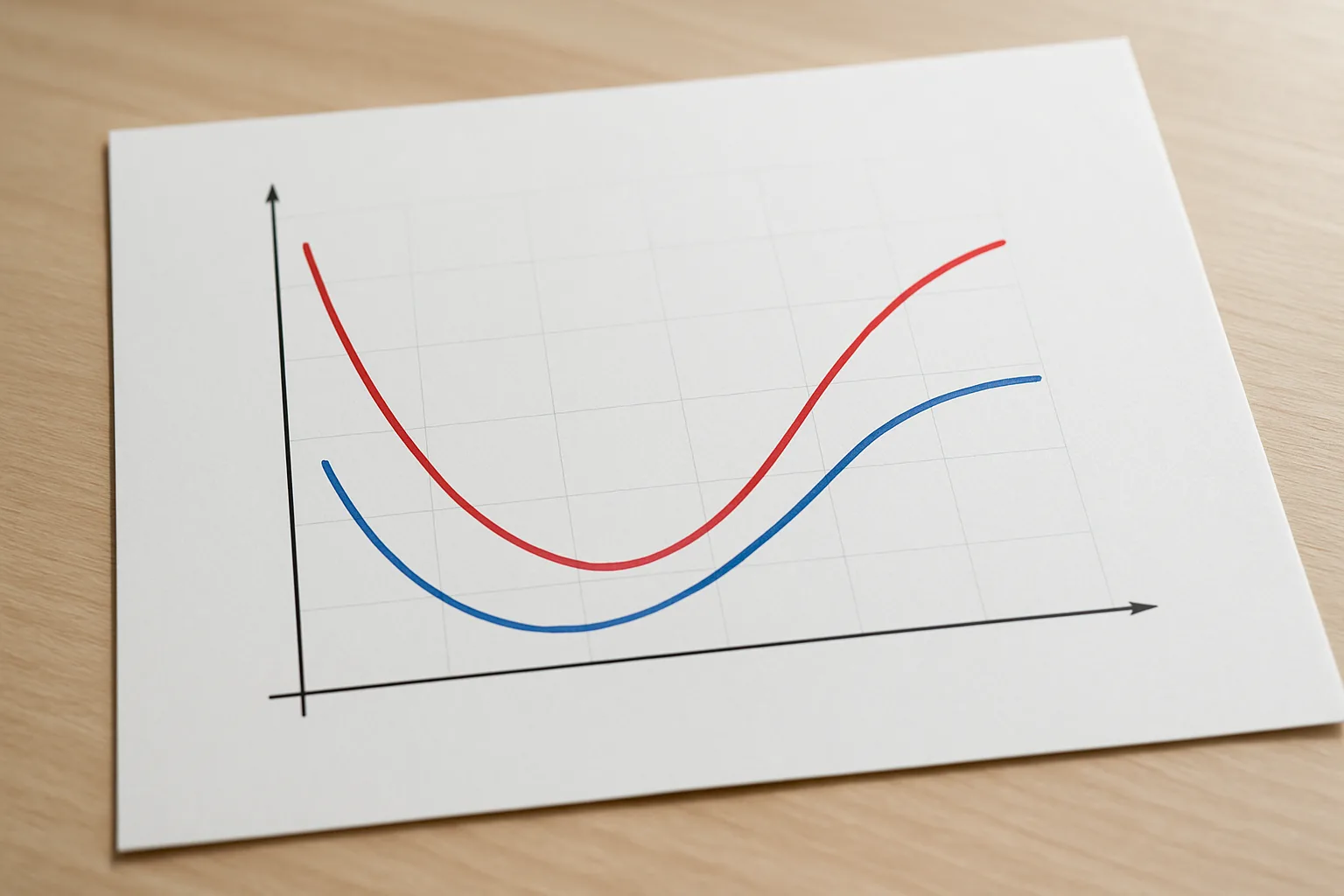
Tracking these metrics allows you to spot problems like overfitting—when the model memorizes training data but fails on new data—and underfitting—when the model is too simple to capture patterns.
Practical Tips for Improving AI Models
1. Use Quality Data
Garbage in, garbage out. The better your data’s quality and diversity, the better your model will learn.
2. Start Simple
Begin with simple models to understand the problem before moving to complex architectures.
3. Monitor Performance Regularly
Use validation sets during training to tune parameters and avoid overfitting.
4. Experiment with Hyperparameters
Tweaking learning rates, batch sizes, and other hyperparameters can significantly impact learning.
5. Use Early Stopping
Stop training when performance on validation data stops improving to prevent overfitting.
Myth Busting: Common Misconceptions About AI Learning
- Myth 1: AI models learn like humans. Reality: AI learns through mathematical optimization, not by understanding or reasoning.
- Myth 2: More data always means better AI. Reality: Data quality and relevance are often more important than sheer quantity.
- Myth 3: Training once is enough. Reality: Models often require retraining and fine-tuning with new data to stay relevant.
Action Steps to Enhance Your AI Learning Journey
- Collect diverse and well-labeled datasets for your project.
- Implement a simple model first, such as linear regression or a basic neural network.
- Divide your data into training, validation, and test sets to monitor performance.
- Experiment with different learning rates and batch sizes to see their effects.
- Evaluate your model on unseen data regularly to detect overfitting or underfitting.
- Read up on optimization algorithms like gradient descent to understand parameter updates.
- Stay curious and keep practicing by applying these concepts to real datasets.
Conclusion
Understanding how AI models learn and improve is a fundamental step in progressing your AI skills. By grasping the training process, evaluation metrics, and common pitfalls, you can build more effective models and avoid costly mistakes. Remember, AI learning is iterative—keep experimenting, analyzing, and refining your approach. In the next post, we’ll explore how to prepare your data for optimal AI performance, building directly on what we’ve covered today. Stay tuned for practical insights on data preprocessing and augmentation!
Previous: How to Split Data for Training, Validation, and Testing
Next: Evaluation Metrics Explained: Accuracy, Precision, Recall, F1