
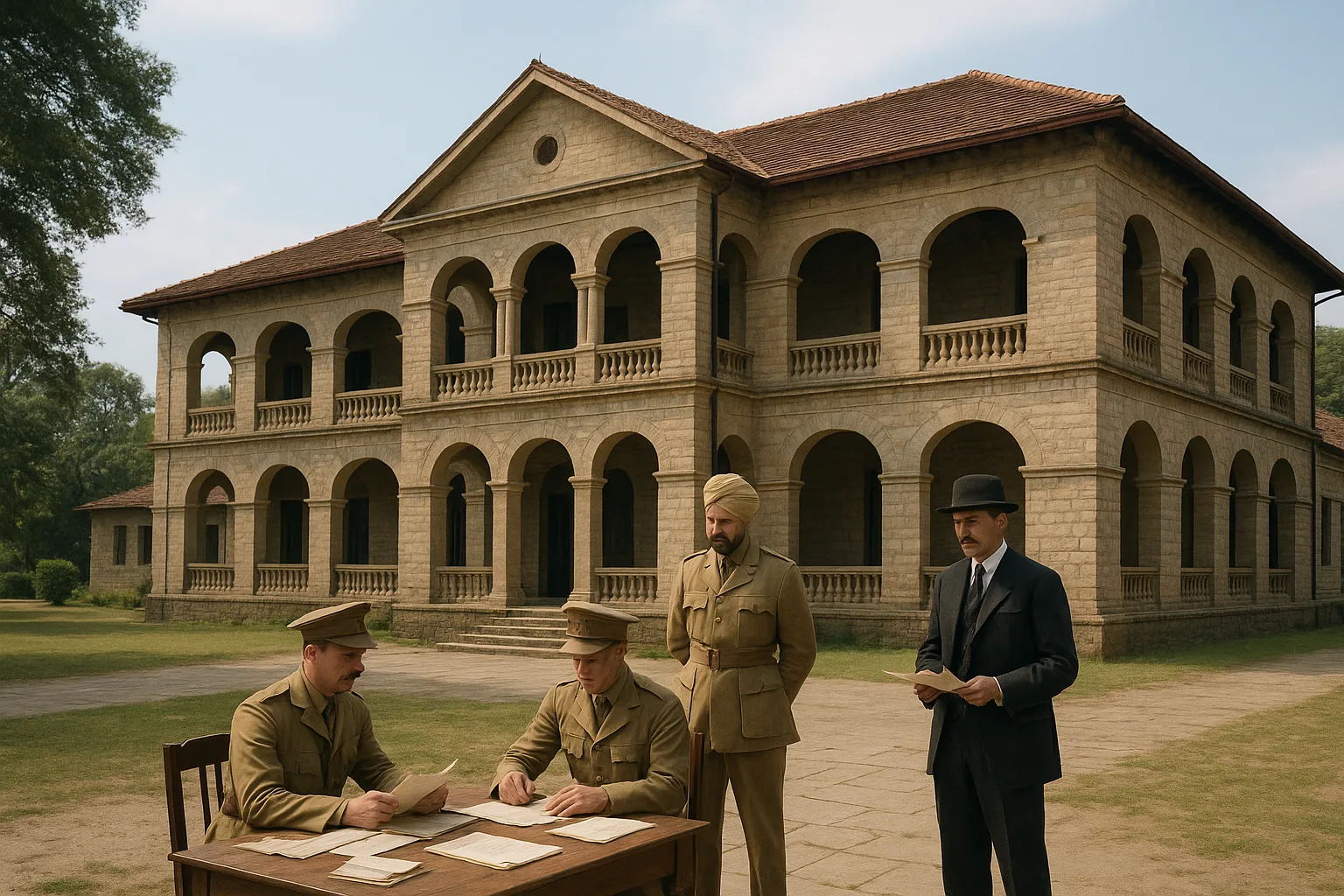
Series: Bilaspur Himachal History
Phase 4: British & Post-Independence — Part 18 of 29
Title: The Shadow of Partition: How Independence Reshaped Bilaspur
The Night the River Refused to Sleep
The Sutlej flowed quietly under a bruised August sky as Bilaspur’s people gathered at the riverbanks in 1947. Rumors had swirled for weeks—India was to be free, but at what cost? In the princely town of Bilaspur, torches flickered in the dusk, reflecting not only on the water but also in anxious eyes. Soldiers and villagers alike strained to hear news from the plains: Lahore ablaze, refugees on the march. In that suspended moment, the ancient hills watched a century-old order unravel. Independence had arrived, and with it, the uncertain shadow of Partition.
Bilaspur Before the Storm
For centuries, Bilaspur had been a quiet princely state, its rulers tracing lineage to the Chandel Rajputs. The city’s palaces and temples, perched above the Sutlej’s broad shoulders, bore testament to a history entwined with faith and feudal pride. Under British suzerainty since the mid-19th century, Bilaspur’s Raja—then Anand Chand—had walked a careful line, balancing loyalty to the Raj with the autonomy prized by the region’s hill states.
By the early 1940s, the wider world pressed in. World War II’s demands siphoned off young men, and the Indian National Congress’s calls for self-rule began echoing in the bazaars. Yet, in the courts of Bilaspur, the rhythm of royal durbars persisted—until 1947 shattered the old certainties.
Independence and the Question of Accession
As the Union Jack lowered across India, Bilaspur’s fate hung in the balance. Lord Mountbatten’s plan offered princely states a stark choice: join India, join Pakistan, or remain independent. For Anand Chand, the stakes were personal as well as political. Memories of the 1857 Mutiny, when loyalty to the Crown had ensured Bilaspur’s privileged status, mingled with the realization that the British lifeline was gone forever.
On August 15, 1947, the Raja faced his council in a candle-lit hall. The decision was fraught—Bilaspur’s Hindu majority favored joining India, but some courtiers whispered of autonomy. Ultimately, practicality prevailed. On October 12, 1948, Bilaspur signed the Instrument of Accession, merging with the Indian Union and ending nearly 800 years of dynastic rule.
The Human Cost: Partition’s Refugees Arrive
As Bilaspur’s leaders debated paperwork, the lived reality of Partition arrived by foot and bullock cart. Trains from Punjab, groaning with exhaustion and loss, disgorged families fleeing communal violence. The bazaars of Bilaspur, once insular, swelled with new faces—Sikhs and Hindus from Rawalpindi and Lahore, their stories heavy with grief and resilience.
Temples became makeshift shelters, and the Raja’s palace opened storerooms to feed the hungry. Local women gathered clothes for children who had lost everything. Despite language barriers and trauma, a spirit of shared survival emerged. The town’s social fabric, once tightly woven, stretched to accommodate the displaced—forever altering Bilaspur’s demographic and cultural landscape.
From Princely State to Indian District
The legal transfer of power brought new realities. In 1948, Bilaspur became a ‘C’ category state under the direct control of India’s central government. For the first time, elected representatives—rather than hereditary rulers—held sway. The change was jarring. Old officials, once loyal to the Raja, now reported to distant Delhi bureaucrats. Land reforms upended feudal patterns, redistributing fields that had been in the same families for generations.
In 1954, Bilaspur merged with Himachal Pradesh, becoming a district within the new state. The palace, once a symbol of royal authority, became a government office. The river town, so long isolated by hills and tradition, was now tethered to the sprawling experiment of Indian democracy.
The Bhakra Dam: Progress and Displacement
In the 1950s, a new force arrived—not an invading army, but engineers and surveyors. The Bhakra-Nangal Dam, among India’s first “temples of modern India,” would forever alter Bilaspur’s destiny. As the dam’s wall rose, the old town of Bilaspur prepared to drown. Homes, markets, and temples—some centuries old—disappeared beneath the rising waters. Residents relocated to “New Bilaspur,” their memories submerged along with the old city’s streets.
Yet the dam brought electricity, roads, and jobs. Bilaspur emerged as a symbol of both sacrifice and progress. The people’s willingness to accept displacement in the name of national development became a touchstone of post-independence India’s ambitions—and anxieties.
Echoes of Change: Society and Identity
Independence and Partition reshaped Bilaspur’s society. The arrival of refugees introduced new skills, cuisines, and customs. The end of royal rule democratized local politics, but also unsettled established hierarchies. Old alliances shifted. The memory of loss—of homes, of familiar landscapes, of royal certainties—lingered in family stories and local festivals.
Education expanded rapidly. Schools and colleges, once the preserve of the elite, opened to all castes and communities. Women, inspired by the freedom movement’s heroines, took larger roles in civic life. Yet, the trauma of Partition remained a silent presence—visible in the annual rituals that honored both ancestors and resilience.
The Legacy of Transition
What does it mean to belong to a place remade by departure and arrival, by water and memory? For Bilaspur, the shadow of Partition and the dawn of independence are not distant history but living inheritance. The town’s riverbanks still echo with the voices of those who lost and rebuilt, who watched the Union Jack fall and the tricolor rise.
Today, Bilaspur stands as a testament to adaptability. Its people, shaped by the trials of 1947 and the transformations that followed, remain custodians of a layered identity—rooted in tradition, yet open to the pulse of modern India. The lessons of that pivotal era continue to shape Bilaspur’s journey, reminding all who visit that history is not merely remembered, but lived anew with every generation.
Previous: Life Inside a Princely State: Bilaspur Under the British Crown
Next: The Railway’s Shadow: Bilaspur’s Encounter with British Engineering