
Series: Finance for Kids
Phase 2: Earning, Work & Allowances — Part 21 of 166
Using Chores to Teach Money Management Skills
Teaching children about money management can feel overwhelming, but it doesn’t have to be! One of the most effective ways to introduce money concepts is through chores. By connecting chores to money, children can learn the value of work and how to manage their earnings wisely. Here’s how you can get started!
Why Chores Matter
Chores help children understand responsibility and the importance of contributing to the household. When you link these tasks to money, you provide a tangible way for kids to see the relationship between work and earning. This connection lays the foundation for future money management skills.
Step-by-Step Tips for Using Chores to Teach Money Management
- Choose Age-Appropriate Chores: Start by selecting chores that are suitable for your child’s age. Younger kids can help with simple tasks like sorting laundry or setting the table, while older kids can take on more complex tasks like cleaning their rooms or doing dishes.
- Set Clear Expectations: Make sure to explain the chores clearly. Let your child know what is expected of them and how much they will earn for completing each task. For example, you might say, “If you clean your room, you will earn £2 this week.” This clarity helps them understand the connection between effort and reward.
- Create a Chore Chart: A visual aid, such as a chore chart, can be a fun way to track completed tasks. Use stickers or checkmarks to show progress. This not only motivates children but also helps them see how consistent effort leads to earnings.
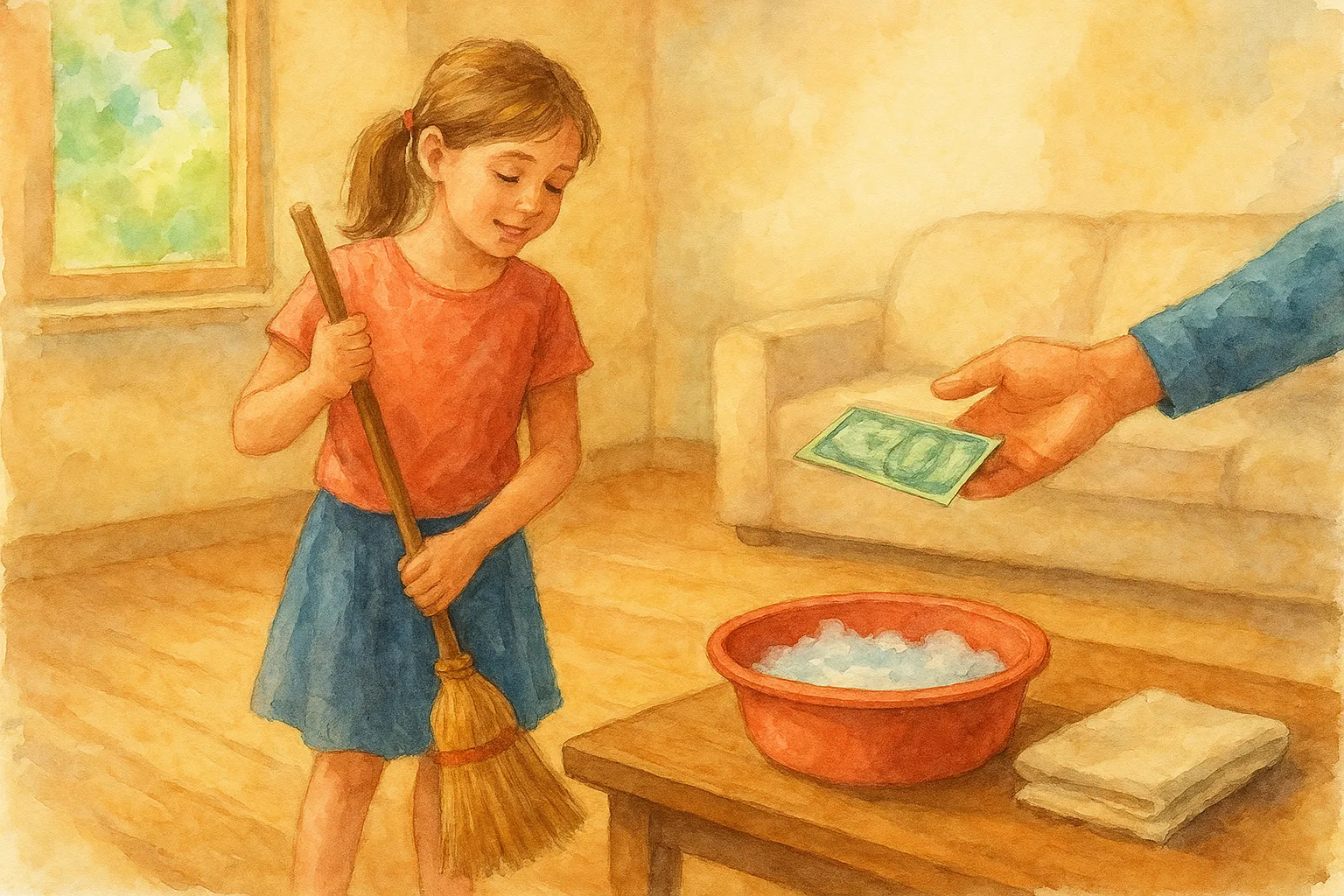
- Pay Promptly: When your child completes a chore, be sure to pay them right away. This reinforces the idea that hard work leads to earning money. You can use cash or, if you prefer, a simple ledger to keep track of their earnings.
- Encourage Saving and Spending Decisions: Once your child has earned some money, talk to them about how they want to use it. You can introduce concepts like saving for something special, spending on small toys, or even donating to help others. This conversation can help them understand the importance of budgeting.
- Reflect on Their Choices: After your child spends their money, engage them in a discussion about their choices. Ask questions like, “Are you happy with what you bought?” or “Would you have preferred to save for something bigger?” This helps them think critically about their spending habits.
Common Myths About Chores and Money
- Myth 1: Chores Should Be Done for Free. Many people believe that chores are part of being a responsible family member and shouldn’t be paid. However, linking chores to money teaches children the value of work and earning.
- Myth 2: Kids Will Only Work for Money. While some children may initially be motivated by money, many will learn that a sense of accomplishment and helping the family can also be rewarding.
- Myth 3: Money Management is Too Complicated for Kids. In reality, introducing simple concepts through chores can make money management accessible and fun for kids. Start small, and build on their knowledge over time.
Conclusion
Using chores to teach kids about money management can be a fun and rewarding experience. By setting clear expectations, creating a chore chart, and encouraging conversations about spending and saving, you can help your children develop important life skills. Remember, the goal is to make learning about money enjoyable and relevant to their everyday lives!
This article provides general educational information only and is not financial advice. Always seek guidance from a qualified professional for personal financial decisions.
Previous: Teaching Kids to Appreciate Non-Material Wealth
Next: Reward Charts vs Allowances: What’s Better for Learning Finance?