
Series: Bilaspur Himachal History
Phase 3: Mughal, Sikh & Gorkha Period — Part 11 of 29
The Daring Stand at Kot Kahlur
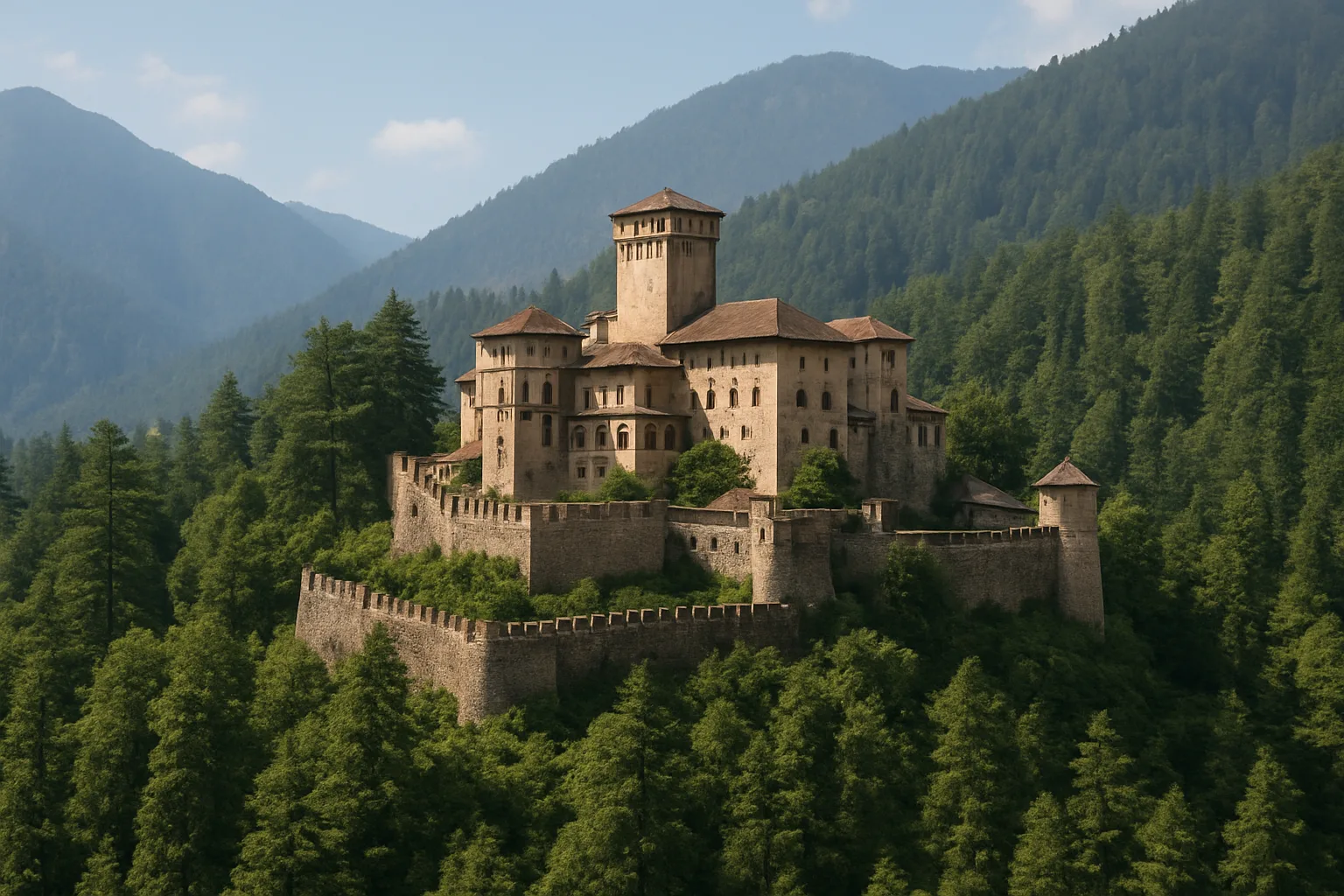
It is a late monsoon evening in the mid-17th century. In the shadowy corridors of Kot Kahlur—the formidable stone fortress perched high above the Satluj—Raja Dip Chand paces, listening to the distant echo of war drums. The Mughals, led by an imperial faujdar, have begun their push up the foothills. But Kahlur’s defenders, clad in homespun wool and carrying matchlocks and swords, hold their ground. Outside, the clouds roll down the forested slopes, turning the fortress into an island above a sea of mist. Within these walls, the story of Kahlur’s enduring independence is being written—one that would echo through the centuries.
The Mughal Shadow Descends
The Mughal Empire, at its zenith under Akbar, Shah Jahan, and Aurangzeb, cast a long shadow over the North Indian subcontinent. Their authority swept through Punjab and the Himalayan foothills, subduing the great plains and breaking many local kingdoms. Yet, the princely state of Kahlur—later Bilaspur—persisted, cradled by the rugged hills of modern Himachal Pradesh.
Kahlur’s fate was shaped by geography as much as by rulers. Hemmed in by steep ridges and dense forests, the state’s capital at Kot Kahlur was a natural citadel. Mughal ambitions in the hills focused on revenue collection, safe passage, and strategic control, but direct annexation proved elusive. Local rajas, proud of their Chandravanshi lineage, clung to their autonomy, navigating a precarious path between submission and stubborn resistance.
Akbar’s Diplomacy and the Early Encounters
In the late 16th century, Emperor Akbar’s policy toward the hill states was a mix of conciliation and coercion. He recognized the logistical challenges of outright conquest in the Himalayas. Instead, Akbar sought allegiance—demanding tribute and military support, but rarely pressing for full subjugation.
Raja Kahal Chand, after whom the state was named, and his successors offered ceremonial compliance. They sent gifts to the Mughal court and attended imperial durbars when summoned. But in the valleys and hilltops, Kahlur’s rajas continued to rule as before. The Mughals, pragmatic in their approach, accepted this arrangement—content to extract revenue and keep the peace without expending lives in an unwinnable terrain.
Fortresses and Family Feuds
By the time Jahangir and Shah Jahan ascended the Peacock Throne, Kahlur’s rulers had mastered the art of survival. The hill forts—Kot Kahlur and Sariun—were nearly impregnable, carved from local stone and guarded by fiercely loyal clans. Within these strongholds, the rajas organized their court, dispensed justice, and planned their defense.
The Mughal subahs of Lahore and Sirhind, responsible for policing the hills, faced constant frustration. Whenever imperial forces marched through the Satluj valleys, the rajas retreated to higher ground, their paths shielded by dense oak and pine. The Mughals could raid villages or seize lowland crops, but the heart of Kahlur remained out of reach.
Family feuds and rivalries among the hill states also played to Kahlur’s advantage. When neighboring kingdoms like Guler, Mandi, or Chamba fell out of favor with the Mughals, Kahlur’s rajas offered covert support or sanctuary, further complicating imperial efforts to establish control.
Raja Dip Chand’s Calculated Defiance
It was under Raja Dip Chand (reigned c. 1650–1692) that Kahlur’s resistance became legend. Dip Chand was a shrewd strategist, alternating between submission and open defiance. When Aurangzeb’s generals demanded tribute, he sent token gifts, but refused to allow imperial garrisons in his fortresses. When pressed, he rallied his clans—Ahluwalias, Pathanias, and his own royal retinue—using the terrain as his ally.
Local chronicles recall how Dip Chand’s messengers slipped through mountain passes to gather intelligence, while his warriors ambushed Mughal detachments sent to extract taxes. In the icy winters, Kahlur’s soldiers melted into the forests, their knowledge of the land giving them the upper hand. The Mughals, overextended on distant fronts, rarely committed their main armies to these stubborn hills.
Yet, Dip Chand was no reckless rebel. He knew the cost of outright confrontation. When the balance of power tipped, he would reaffirm loyalty to the Mughal court—sending envoys to Delhi and offering rare, symbolic gifts. He played a long game, waiting out the empire’s storms from behind his mountain walls.
Imperial Overreach and Local Autonomy
As the Mughal Empire began to fragment in the early 18th century, its grip on the hills slackened. Successive emperors, distracted by civil wars and Maratha raids, found the distant hill states less and less important. For Kahlur, this period offered a golden window. The rajas expanded their authority, annexing smaller neighboring estates and forging new alliances.
It was not just military strength that kept Kahlur free. The rajas fostered a distinct cultural identity—patronizing temples, supporting local fairs, and maintaining a proud oral tradition of independence. Local bards, or charans, composed ballads celebrating their defiance, and these stories passed from one generation to the next, cementing the legend of the unconquered hill.
The Tides Shift: Enter the Sikhs and Gorkhas
The decline of Mughal authority brought new threats. Sikh misls pressed northwards, and Gorkha expeditions swept through the hills. Yet, the same strategies that had frustrated the Mughals now served Kahlur’s rajas again. They played the powers against each other, forging temporary alliances and retreating to their fortresses when needed.
By the time the British arrived in the early 19th century, Kahlur’s reputation as a state that had never truly fallen to any outside power—Mughal, Sikh, or Gorkha—was firmly established. The British, always keen students of local history, noted this resilience and chose to recognize the state’s autonomy under indirect rule.
Memory, Identity, and Modern Bilaspur
The story of Kahlur’s resistance to Mughal domination is not merely a tale of battles and treaties. It is a living memory, woven into the identity of Bilaspur’s people. The ruins of Kot Kahlur still watch over the Satluj, silent witnesses to centuries of defiance. Local festivals, songs, and customs echo with pride in a heritage that refused to bow, even as empires rose and fell below.
Today, Bilaspur’s sense of self—rooted in independence and adaptation—can be traced to those misty fortresses and the enduring will of its rajas. In the face of rapid change, the lessons of resilience, strategic compromise, and cultural preservation remain as relevant as ever, guiding the community forward while honoring the past.
Previous: Bilaspur and the Mughals: Independence Under an Empire
Next: Culture and Court Life in Bilaspur During the Mughal Age