
Series: Bilaspur Himachal History
Phase 2: Medieval Period — Part 9 of 29
On a Misty Dawn: Bilaspur’s Perilous Frontier
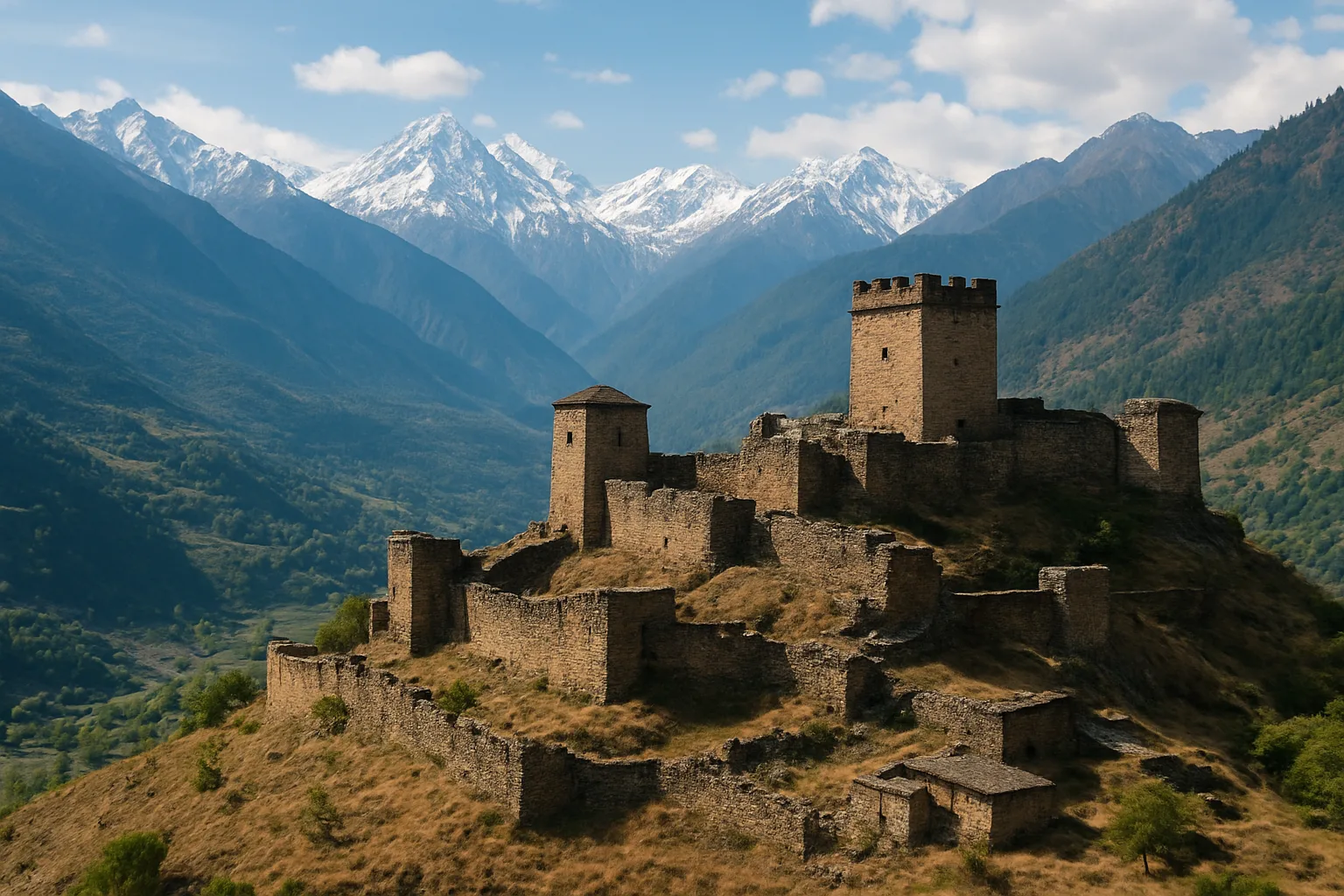
Picture a mist-laden dawn along the banks of the Satluj, sometime in the early 16th century. Atop the ramparts of the Bilaspur fort, Raja Bhim Chand stands silent, scanning the dark forests that shield his kingdom from rival eyes. Below, villagers hurry to gather crops before soldiers from Kahlur’s neighbor—Kullu or Mandi, perhaps—attempt another raid. For Bilaspur, this was not a singular morning but a pattern etched into centuries: a kingdom ever alert, surrounded by ambitious hill rulers, its fate balanced between sword and allegiance.
Hill States in Turmoil: A Landscape of Fragmented Power
Medieval Himachal Pradesh was not a land of peace. The region—then known as the Punjab Hill States—comprised dozens of principalities, each ruled by a raja who traced his lineage to ancient dynasties. Bilaspur, or Kahlur as it was known before the British era, lay at the heart of this web. Its location was both a blessing and a curse: the Satluj offered trade and water, but also marked a coveted gateway for neighboring states eager to expand their influence.
Historians like J. Hutchison and J.P. Vogel, in their early 20th-century accounts, describe the hill states as fiercely independent yet constantly at odds. The terrain—dense forests, swift rivers, and steep hills—made large-scale conquest difficult, but it also meant that alliances and betrayals shifted with the season. For Bilaspur, survival required more than just military might; it demanded a mastery of diplomacy, kinship, and timing.
The Chandelas of Kahlur: Founders of a Fortified Dynasty
The story of Bilaspur’s resilience begins with its founding dynasty. The Chandelas, who claimed descent from Raja Bir Chand in the 7th century, built their capital at Kahlur (near modern-day Bilaspur). Early rulers fortified their position with stone ramparts and alliances sealed through marriages with neighboring houses. By the 10th century, Kahlur had grown into a formidable state, its rajas respected—and sometimes feared—by their peers.
Yet, this respect was hard-earned. Throughout the medieval period, Bilaspur’s territory was frequently encroached upon by the rulers of Mandi, Keonthal, and Sirmaur. The Satluj valley witnessed not only pitched battles but also clandestine meetings in forest clearings, where emissaries from rival states bartered peace for tribute or kinship.
The Era of Bhim Chand: Wars with Kangra and the Rise of Alliances
One of Bilaspur’s most celebrated rulers, Raja Bhim Chand (ruled c. 1665–1692 CE), epitomized the art of survival amid chaos. His reign was marked by intense rivalry with the powerful state of Kangra, whose raja coveted the strategic passes of Kahlur. Bhim Chand, however, was no stranger to realpolitik. He skillfully aligned himself with other hill chiefs, forming a confederacy that could challenge Kangra’s dominance.
These alliances were not merely political. In one memorable episode, Bhim Chand is said to have hosted Guru Gobind Singh, the tenth Sikh Guru, at Anandpur Sahib—a settlement just across the border. This relationship was fraught; at times, the Sikhs clashed with Bhim Chand’s armies, while at other moments they found common cause against mutual enemies. The resulting tapestry of war, alliance, and religious diplomacy defined the region for decades.
Rivalries Turned Blood Feuds: The Battle for Prestige
Wars between the hill states were rarely fought for territory alone. Prestige, the right to collect tribute, and the honor of one’s house weighed just as heavily. The chronicles of the Kahlur rulers recount frequent skirmishes with the rulers of Suket, Mandi, and Nalagarh. These conflicts often began with border disputes—a contested pasture, a river ford—but quickly escalated into running battles that could last for months.
Yet, total victory was elusive. The geography ensured that even a defeated raja could retreat into the hills and regroup. Instead, power regularly shifted back and forth, and alliances were as likely to dissolve as they were to endure. In this unstable world, Bilaspur’s rulers learned to hedge their bets, sometimes supporting a neighbor, at other times undermining them through intrigue or calculated betrayal.
Marriage, Kinship, and the Art of Survival
If war was the open theater of power, marriage was its shadowy counterpart. The Chandelas of Bilaspur married their sons and daughters into the royal houses of Sirmaur, Mandi, and even distant Jammu. These ties created a web of obligations and loyalties that both checked open aggression and provided avenues for mediation during crises. Family ties could turn would-be invaders into reluctant allies, or at least ensure that an attack was delayed until a more opportune moment.
Royal chronicles mention the dowries exchanged—horses, jewels, and land—as well as the elaborate ceremonies that accompanied these unions. It was an era when a single wedding could tip the balance of power, and Bilaspur’s rulers proved adept at using kinship to their advantage.
The Mughal Shadow and Changing Alliances
By the late 16th century, the shadow of the Mughal Empire began to loom over the hills. Akbar’s expansion into the Punjab plains threatened to disrupt the delicate balance of the hill states. Some rajas, including those of Bilaspur, sought Mughal patronage—sending gifts, acknowledging the emperor’s suzerainty, and hoping to gain protection against their local rivals.
This period saw alliances shift yet again. Facing both Mughal demands and threats from ambitious neighbors, Bilaspur’s rulers walked a diplomatic tightrope. At times, they joined Mughal campaigns against recalcitrant hill chiefs; at others, they quietly supported local resistance. The aim was always the same: preserve the autonomy of Kahlur without inviting total subjugation.
From Conflict to Coexistence: Lessons from the Medieval Era
By the dawn of the 18th century, the cycle of war and alliance had left Bilaspur battered but unbroken. Its forts still stood, and its rulers continued to preside over a proud, if cautious, domain. The experience of surviving amid hostile neighbors shaped Bilaspur’s political culture—instilling both a wariness of outsiders and a talent for negotiation that would serve the state well into the colonial era.
Today, Bilaspur’s reputation for resilience and adaptability owes much to these medieval centuries. The memories of ancient rivalries linger in local folklore, while the legacy of alliance-building endures in the region’s openness to dialogue and cooperation. The ramparts may have crumbled, but the spirit forged by centuries of challenge remains woven into the fabric of Bilaspur life.
Previous: Temples, Gods, and Faith: Religious Life in Medieval Bilaspur
Next: Bilaspur and the Mughals: Independence Under an Empire